Introduction
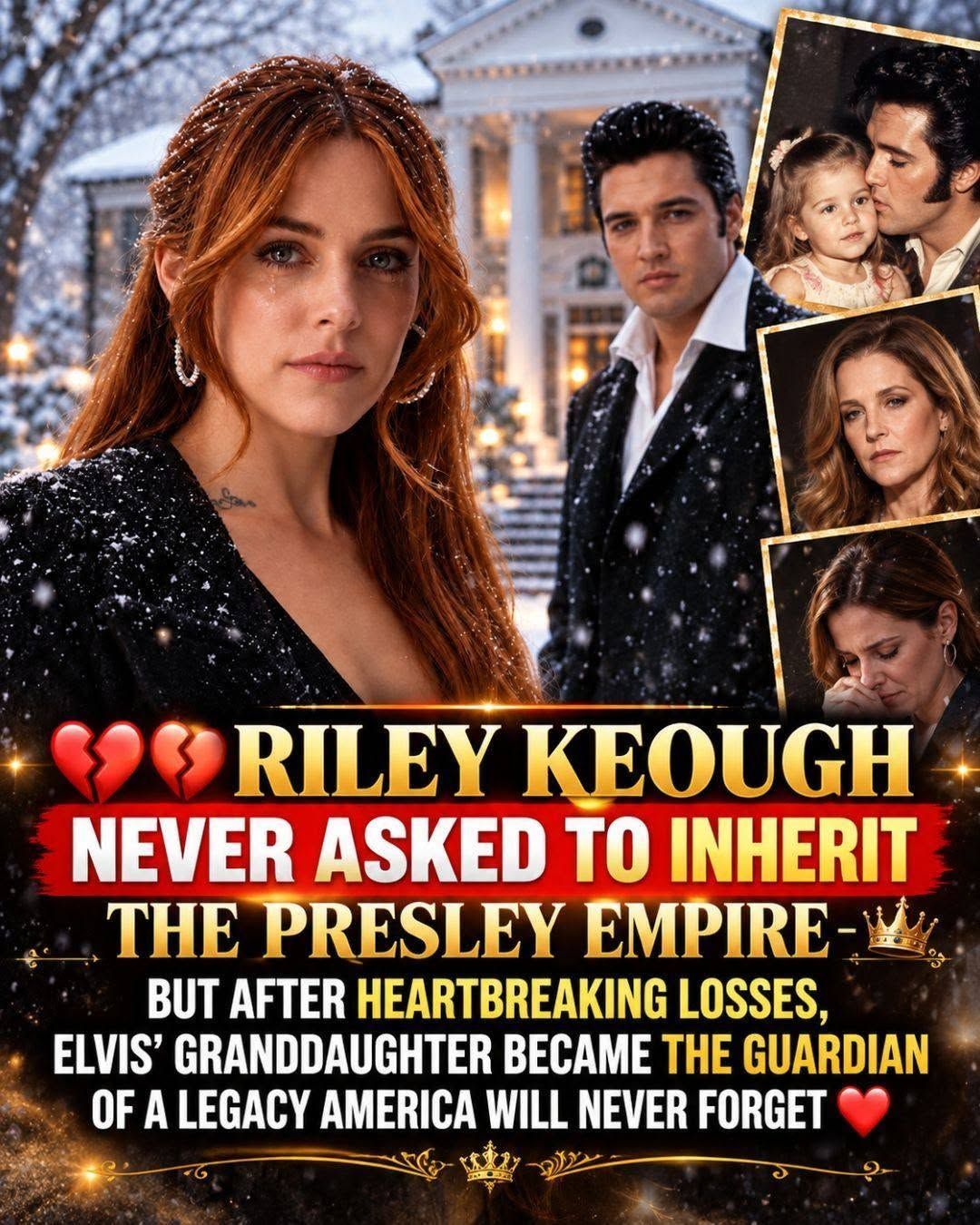
She Didn’t Ask for the Crown—But Riley Keough Faces a Responsibility Fame Could Never Prepare Her For
Some inheritances arrive with celebration. Others arrive in the silence after loss, carrying responsibilities that no family name can make easier. For Riley Keough, the granddaughter of Elvis Presley and eldest daughter of Lisa Marie Presley, the Presley legacy represents much more than a famous house, treasured recordings, or photographs recognized around the world. It holds the lives of people she knew as family—people whose private stories have often been overshadowed by their public images.
The image of a “crown” is a compelling metaphor, but it cannot fully explain Riley’s position. Her responsibilities are concrete: she became the sole trustee of her mother’s estate, which includes Graceland. In a 2024 interview, she spoke about preserving the property as her family’s home. That distinction matters. Millions of visitors approach its gates seeking a connection to music history; Riley also approaches it through the memories and obligations of a daughter and granddaughter.
For older listeners who remember Elvis’s arrival, his extraordinary performances, and the sorrow surrounding his death, the Presley story can feel woven into their own lives. His records accompanied first dances, long journeys, Sunday afternoons, and evenings when a familiar song offered welcome company. Over time, affection for the artist became an attachment to the family and the places associated with him. Riley now occupies a position where that enduring public affection meets a deeply personal inheritance.

Her role invites a thoughtful question: how do you preserve a legend while allowing the people within that legend to remain human? An archive can protect a recording. A carefully maintained room can preserve the appearance of a particular moment. Family memory requires a different kind of attention. It includes contradictions, ordinary tenderness, unfinished conversations, and experiences that may never belong to the public.
One meaningful example of Riley’s work is From Here to the Great Unknown, the memoir she completed using recordings left by Lisa Marie Presley. The book brought her mother’s recollections into a finished work, allowing readers to encounter Lisa Marie through her own memories as well as her daughter’s perspective. Its significance extends beyond another chapter in a celebrated family’s history: it gives greater space to a woman whose identity was so often introduced through someone else’s fame.
There is a musical parallel here. The most sensitive interpreter knows when to step forward and when to let the original voice carry the meaning. Completing another person’s story demands a similar balance. Too much intervention can obscure the individual; too little can leave important connections unexplained. Riley’s involvement offers a way to consider legacy as an act of listening—attending carefully to what someone left behind before deciding how to share it.

The restraint described in her public image can therefore be understood as a valuable approach, although no observer can know every private feeling behind it. We should be cautious about assuming what she wanted, how she experiences each responsibility, or what grief looks like outside the moments she chooses to share. Respect for a family’s history also requires respect for those limits.
Riley Keough carries the Presley legacy into a generation that encounters Elvis through streaming services, films, archival performances, and stories passed down at home. Her task holds both practical duties and questions of memory: what to preserve, what to explain, and what deserves privacy. For longtime admirers, there is something moving in that responsibility. The songs remain available to everyone, while a granddaughter helps ensure that the family behind them retains its own voice, dignity, and place in the story.