Introduction
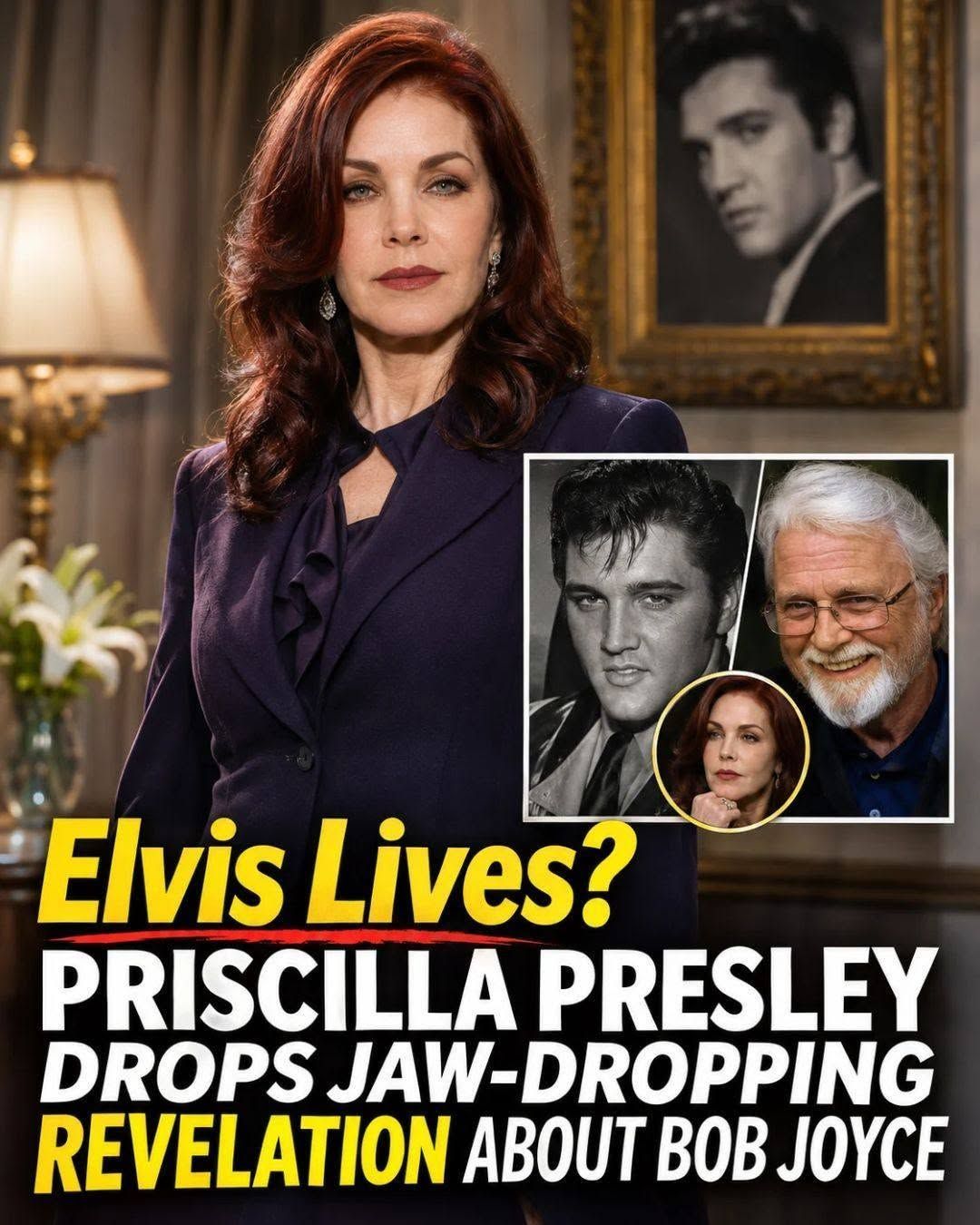
“ELVIS LIVES?” — The Bob Joyce Rumor, Priscilla’s Real Words, and the Voice Fans Cannot Forget
A familiar voice can make time stand still. For someone who first heard Elvis Presley on a kitchen radio or watched him perform on a flickering television screen, a certain warmth in a singer’s lower register can bring decades of memories rushing back. That emotional recognition helps explain why Bob Joyce, an Arkansas pastor whose singing has attracted comparisons with Elvis, has become the subject of persistent online speculation. Yet hearing something familiar and discovering someone’s identity are very different things.
The claim that Bob Joyce is Elvis Presley belongs to the long history of theories suggesting that the singer survived his death in 1977. Joyce’s official ministry website identifies him as Robert Wayne Joyce, born June 19, 1952, and states that he has never claimed to be another person. It also warns that altered videos have misrepresented his words. These are essential facts to remember before treating an intriguing performance clip as a hidden confession.

Priscilla Presley has addressed the broader belief that Elvis is still alive. In a September 2025 interview with PEOPLE, she rejected stories that he was living somewhere in hiding and added the poignant words, “I wish he was still alive.” However, that published interview did not name Bob Joyce. Presenting her remarks as a specific confrontation with the pastor, or as a newly delivered response to his singing, would go beyond what the interview establishes.
For music lovers, the more rewarding question is why a voice can inspire such a powerful sense of recognition. We remember singers through more than pitch alone. The weight of a phrase, a gently sustained vowel, the pause before a meaningful word, and the movement from restraint to intensity all shape our response. When another performer shares even a few of those qualities, the resemblance can feel remarkably personal.
Gospel singing provides especially fertile ground for that experience. Its familiar melodies and language of faith encourage listeners to bring their own memories into the performance. A hymn may recall a parent singing in church, a Sunday afternoon at home, or a record played during a difficult season. When listeners associate that same musical world with Elvis, a resemblance can carry an emotional force far greater than an ordinary comparison between singers.

That feeling deserves understanding, but it does not establish the rumor as fact. A moving performance can be appreciated on its own terms. Bob Joyce’s ministry explicitly places its focus on Jesus Christ, and its official account rejects attempts to promote him as another person. Allowing him his own identity also gives listeners the opportunity to hear his singing without expecting every gesture or phrase to solve a celebrity mystery.
For longtime Elvis admirers, there is something deeply human beneath the enduring question, “Elvis lives?” Beloved music often makes absence difficult to comprehend. Press play, and the voice returns with its familiar immediacy; the years seem briefly to disappear. It is understandable that listeners might wish the person could return just as easily.
But Elvis’s recordings already offer something substantial and lasting. They preserve performances that can still comfort, surprise, and move people who know every phrase. The strongest tribute is to listen closely, share those songs, and distinguish cherished memories from unsupported claims. His musical presence remains powerful enough to fill a room—and to bring an old memory vividly back to life.