Introduction
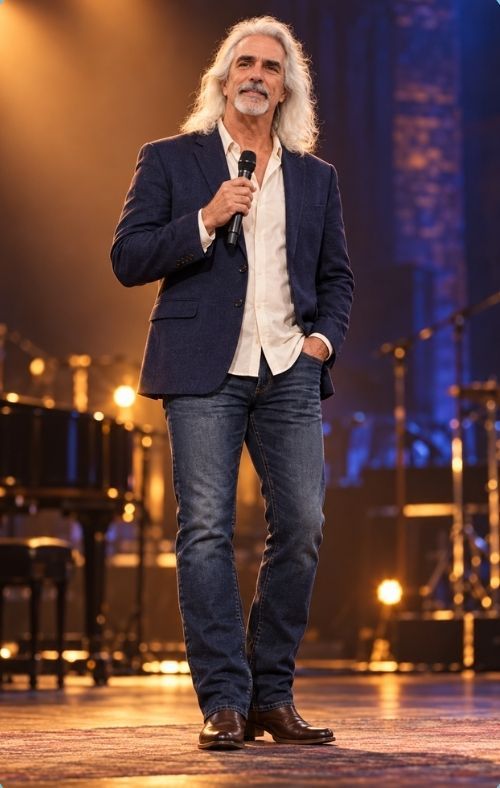
For anyone who spent Sunday afternoons listening to the Gaither Vocal Band, Guy Penrod remains an unmistakable presence. There was the long silver hair, the relaxed bearing, and, above all, that commanding voice—a voice capable of filling a concert hall while making a familiar gospel song feel deeply personal. When he stepped away from the group, listeners naturally wondered what could lead someone to leave a musical home that seemed to fit him so well.
The answer becomes more meaningful when we listen to Penrod’s own explanation. In an interview with CBN, he described his years with the Gaither organization as demanding, purposeful, and filled with relationships that had become like family. He also explained that he struggled to divide his attention among several responsibilities. With his children entering important stages of life, he felt a growing need to reconsider how he spent his time. His account presents a thoughtful decision shaped by family, faith, and a desire to communicate through a different musical approach.
That explanation will sound familiar to many older listeners. There comes a point when achievement is measured alongside other things: the conversations we have time for, the people who depend on us, and the responsibilities that cannot be handed to someone else. A successful career can be deeply rewarding while still requiring difficult choices. Penrod’s reflections invite us to consider the human being behind the performances—the father and husband whose life continued after the applause faded.
His family was central to that life. Gaither’s official biography identifies Guy and Angie Penrod as the parents of eight children and describes their home on a Tennessee farm. It also places his arrival in the Gaither Vocal Band in 1994, beginning the chapter that introduced his powerful singing to audiences around the world. Those details give substance to the competing commitments he later discussed: a substantial musical vocation and an equally substantial life at home.
There was also an artistic ambition worth understanding. Penrod told CBN that he wanted to express his Christian outlook through everyday stories and the musical language of country music. That is a revealing distinction for anyone interested in how a singer develops. Gospel harmony can gather listeners around a shared declaration of belief; a country narrative can approach similar convictions through a recognizable person, a difficult day, or a small act of kindness. His solo project, Breathe Deep, offered a setting for that interest in storytelling.
For listeners, the appeal lies in how naturally those traditions can meet in his voice. Penrod’s strength as an interpreter is the sense of conviction he brings to a phrase. His fuller passages carry authority, but the quieter moments allow the meaning to settle. That combination helps explain why audiences can follow a singer from carefully arranged group harmonies into more personal musical territory: they recognize the character of the voice even when its surroundings change.
The achievements of his group years remain part of that story. Lovin’ Life, recorded by the Gaither Vocal Band, won the 2009 Grammy Award for Best Southern, Country, or Bluegrass Gospel Album. It stands as a documented milestone in the ensemble’s history and a reminder of the musical standard associated with that period.
The supplied video builds its emotional climax around a private exchange with Bill Gaither and a supposed “eight-word reply.” Without an independently verified source for that conversation, the exact wording deserves caution. Penrod’s published remarks already offer something compelling: he spoke warmly of the people he had worked with and described continuing contact with them after his transition. There is considerable feeling in that quieter, documented account.
Ultimately, Guy Penrod’s departure gives longtime fans a reason to listen again with greater understanding. Behind that familiar voice was a man weighing the use of his time, the needs of his family, and the stories he still wanted to sing. For those who have faced a difficult change of their own, that may be the most moving part of his journey: the recognition that gratitude for one chapter can coexist with the courage to begin another.