Introduction
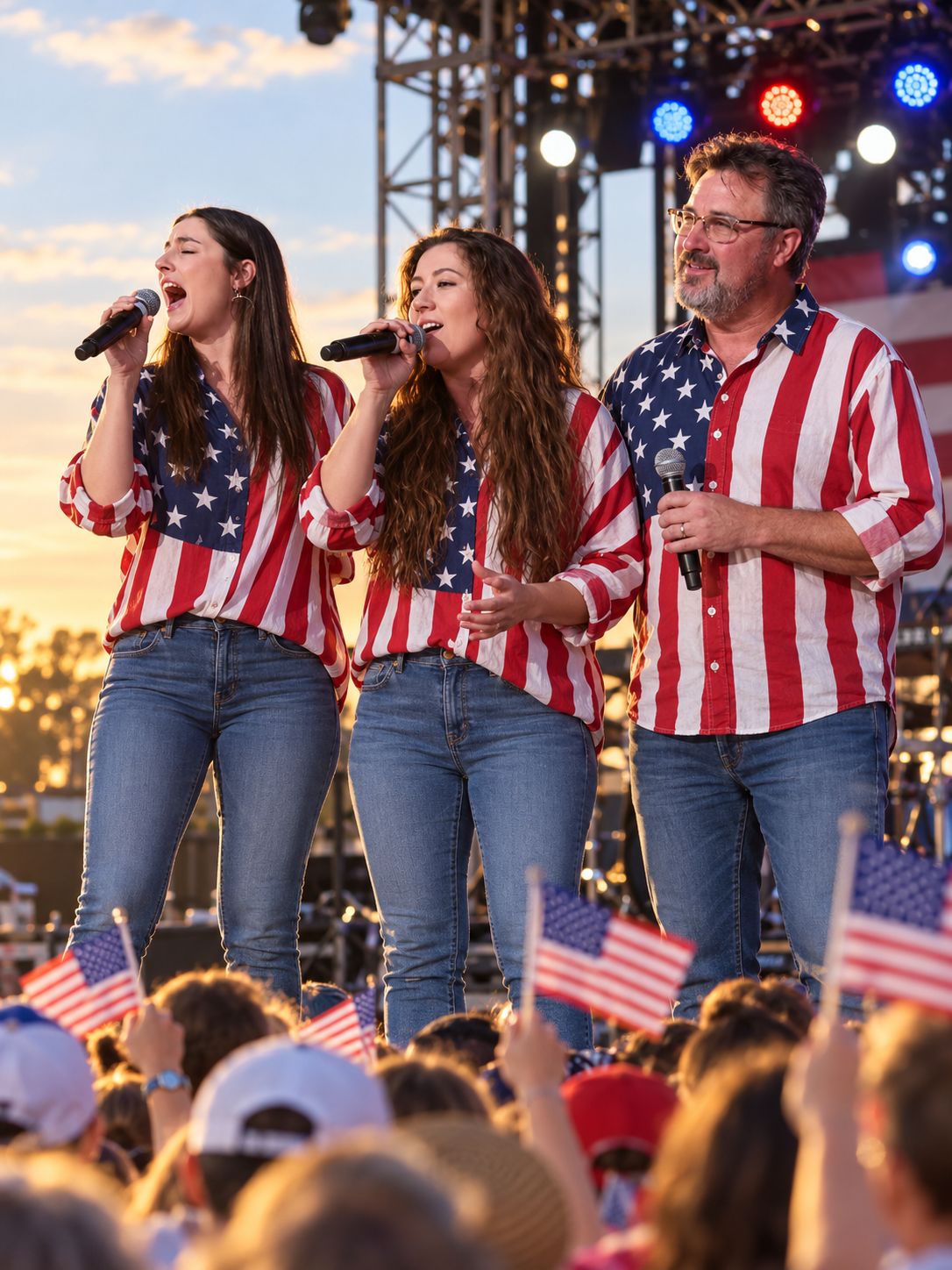
Some musical moments stay with us because of their grandeur. Others endure because they bring something familiar into a setting where we least expect to feel it so deeply. When Vince Gill joined his daughters, Jenny Gill and Corrina Gill, to sing “The Star-Spangled Banner” in Nashville, the appeal reached beyond the excitement of a sporting event. Here was a father sharing an important musical responsibility with his children, offering a song that belongs to generations of listeners.
The performance took place on May 2, 2017, at Bridgestone Arena, before the Nashville Predators faced the St. Louis Blues in Game 4 of their second-round Stanley Cup Playoffs series. That setting gives the occasion its particular character: a city celebrated for its music was rallying around its hockey team, and one of its most recognizable country voices arrived with his family beside him.

For those who have followed Vince Gill over the years, the attraction is easy to understand. His singing has always invited listeners to pay attention to the feeling within a melody. There is a gentleness to his musical personality, coupled with an assurance that allows a song to carry its own weight. Those qualities make the national anthem an especially interesting choice for him. It asks a singer to balance technical control with sincerity, while respecting words that many people have known since childhood.
“The Star-Spangled Banner” is a demanding piece to sing. Its melody moves across a broad range, and its unfolding phrases require careful breathing and a clear sense of direction. Yet its emotional meaning cannot be measured simply by the height of its notes. A memorable interpretation also depends on whether the performer communicates dignity, conviction, and a connection to the people listening. For an audience gathered before a major game, that connection matters as much as vocal strength.
The presence of Jenny and Corrina Gill adds another dimension to the occasion. A family performance invites us to think about music as something passed between generations: through listening, encouragement, practice, and the experience of standing together when the moment matters. Older listeners may recognize something especially moving in that image. Watching a parent share a public stage with grown or growing children can call to mind their own family milestones, and the quiet pride those occasions bring.

There is also something distinctly fitting about this scene in Nashville. Music is woven into the city’s public identity, and a playoff anthem provides a meeting point between that musical heritage and the enthusiasm of a sporting crowd. For a few minutes, the anticipation surrounding the game shares space with a familiar song and a family whose name carries considerable meaning for country music listeners.
What makes this appearance worth revisiting is that combination of family, music, and community. The game supplied the occasion, but the image of Vince Gill and his daughters singing together gives it lasting warmth. It reminds us how a brief performance can become part of a much larger memory—of a city coming together, of traditions continuing, and of music finding its place wherever people gather with hope and pride.