Introduction
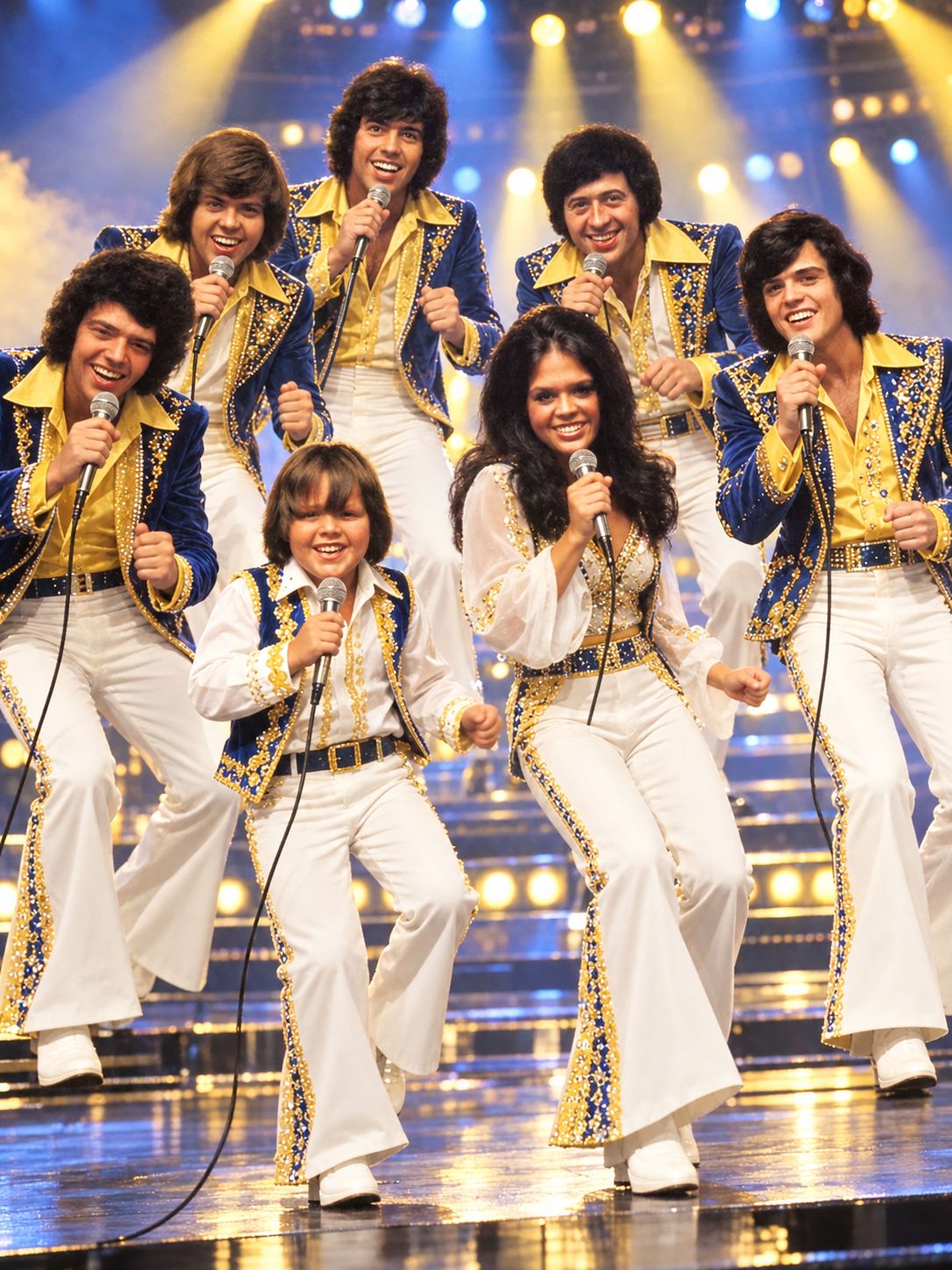
Some songs bring back a familiar face, a favorite radio station, or an afternoon we thought we had forgotten. Others return with such force that we remember exactly why they surprised us in the first place. “Crazy Horses” by The Osmonds belongs firmly in that second category. From its unmistakable opening, it demands attention, revealing a musical boldness that can still catch listeners off guard decades later.
Released in 1972, “Crazy Horses” introduced a harder, more forceful sound than many people associated with the group. Jay Osmond, the brothers’ drummer, shared lead vocals on a song the Osmonds had written themselves—a detail that helps explain the conviction behind the performance. This was music through which they could express their own creative instincts.
For listeners who remember the brothers’ polished appearances and approachable charm, the recording offers a fascinating change of perspective. The guitar sound is muscular, the rhythm presses forward, and the vocals carry a rough urgency. Yet the music never loses its sense of organization. Beneath the volume is a tightly coordinated performance, with each element contributing to the song’s momentum.
One of its most striking qualities is the way it makes sound itself part of the storytelling. The piercing instrumental figure resembles a restless animal’s cry, while the heavy accompaniment suggests machinery gathering speed. Together, those sounds create an atmosphere of movement and unease. Even before considering the words, a listener can sense that something powerful is running beyond comfortable control.
There is a thoughtful purpose behind that dramatic imagery. In a retrospective interview, Merrill Osmond explained that the song concerned ecology and the environment, with its horses representing gas-guzzling cars and the pollution they produced. That meaning gives the recording another dimension: its energy carries a warning about the consequences of everyday habits.

For an older listener, this connection may make the song especially rewarding to revisit. With time, we learn to hear familiar recordings differently. A track once enjoyed for its beat can reveal a concern we overlooked; a youthful performance can show more intention than we originally gave it credit for. “Crazy Horses” invites precisely that kind of second listening.
Its appeal also lies in the balance between discipline and excitement. The brothers allow the song to sound unruly without letting the performance become unfocused. The vocal delivery pushes against the instruments, the rhythm maintains its grip, and the repeated title becomes a memorable anchor. There is enough detail to reward attention, alongside an immediate impact that requires no musical training to appreciate.
Perhaps the most satisfying aspect of The Osmonds’ “Crazy Horses” is the confidence it communicates. Here is a familiar group asking its audience to hear a broader range of its abilities. The recording offers a reminder of how easily a public image can narrow our expectations of musicians—and how quickly one compelling song can expand them.
Return to “Crazy Horses” today, and its opening still has the power to startle. Stay with it, and there is more to discover: a purposeful arrangement, an environmental message, and a family ensemble playing with unmistakable commitment. For those who remember it, the song offers the pleasure of recognition. For those hearing it afresh, it offers something equally valuable—the surprise of discovering how much was there all along.