Introduction
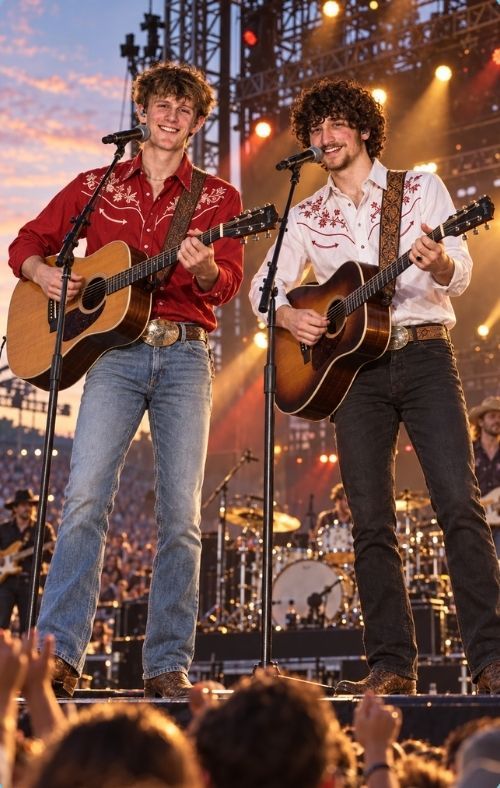
WHEN JACK AND DAVIS REID SANG THEIR GRANDFATHER’S SONGS, IT FELT LIKE THE HARMONY HAD COME HOME. That sentiment captures the warmth of this family’s musical story, although one detail deserves clarification: Jack Reid is the grandson of Harold Reid, while Davis Reid is the grandson of Don Reid. Their fathers, Wil and Langdon Reid, perform as Wilson Fairchild, giving the younger duo a connection to the Statler tradition through both branches of the family. Jack & Davis Reid Music
For listeners who have treasured The Statler Brothers, the appeal of that connection is easy to understand. Certain songs become companions over the course of a lifetime. We remember hearing them on a kitchen radio, playing them during a long drive, or recognizing their opening notes while sitting beside someone we loved. Years later, the melody returns, and with it comes a little of the world we thought we had left behind.

Hearing a younger generation take up that repertoire adds another layer of meaning. The songs carry familiar associations, but the voices offer a fresh invitation to listen. In the story presented here, Jack and Davis Reid represent the possibility that a musical inheritance can remain active and meaningful. It can be practiced, shared, and gradually made personal by those who receive it.
The enduring beauty of vocal harmony lies in its sense of cooperation. A singer must know when to step forward, when to soften a phrase, and when to leave room for another voice. The result depends on listening as much as singing. That quality helps explain why harmony music can feel so reassuring: it gives audible shape to the idea that people can contribute something individual while belonging to something larger.
For older listeners, this may be the most moving aspect of the Reid family’s continuing musical journey. A familiar surname naturally attracts attention, yet the deeper interest lies in how the next generation approaches the work. Every phrase presents a choice about timing, emphasis, and feeling. Respect for an older recording can guide those choices while still allowing a younger performer’s personality to emerge.
There is also a particular tenderness in hearing music associated with one’s grandparents. To the public, those songs belong to celebrated entertainers. Within a family, they may carry an additional meaning: a connection to people whose lives extended far beyond the stage. That distinction gives a family tribute its emotional depth, even without elaborate staging or dramatic declarations.
The account of Jack and Davis returning to Statler classics invites us to consider what makes a legacy last. Recordings preserve a voice with remarkable fidelity, but performance brings a song into the present. Someone must learn it, care about its meaning, and offer it to another audience. Through that process, an old favorite gains another opportunity to become part of somebody’s life.
Ultimately, the most compelling idea behind this family story is continuity. The younger singers have their own musical lives to build, and the songs offer a foundation from which to begin. For those who grew up loving The Statler Brothers, that is a comforting prospect: familiar music finding its way into new hands, with enough affection and care to keep the harmony feeling like home.