Introduction
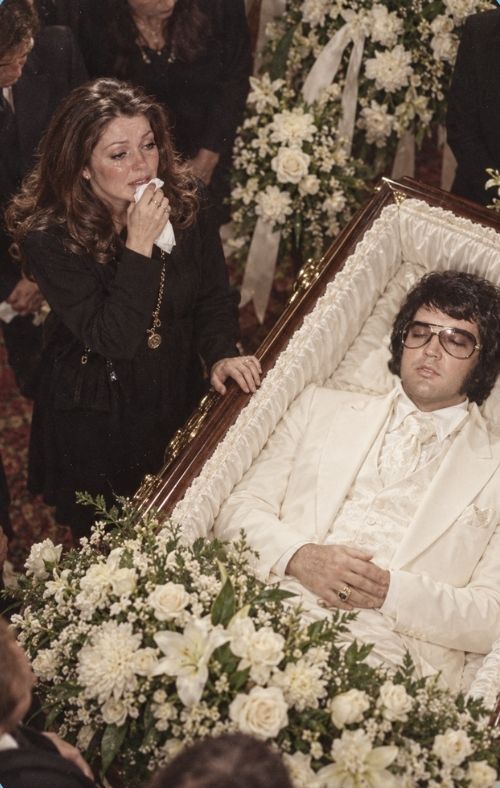
On August 16, 1977, Elvis Presley died at Graceland at the age of 42. He had been preparing to leave Memphis for another tour. Within hours of the announcement, fans began gathering outside his home. By the following day, their numbers had turned a family’s private loss into a public farewell.
The decision facing Vernon Presley was painfully human: how could he give his son’s admirers a chance to say goodbye while his own family was still trying to absorb the news? Vernon announced a public viewing at Graceland on August 17. It was initially scheduled for two hours, but the viewing was extended as mourners continued to arrive. Contemporary accounts describe thousands waiting in the Memphis heat, then moving through the house to pass Elvis’s open casket. It was an extraordinary gesture from a grieving father, though no amount of extra time could accommodate everyone who came.
For many fans, the journey to Graceland was about more than seeing a famous singer one last time. Elvis’s records had accompanied them through marriages, family gatherings, long drives, and difficult years. His voice could be exuberant, but it could also sound remarkably alone. That contrast helps explain why the crowd outside the gates felt such a personal loss. Each mourner had arrived with a different memory, yet all were waiting for the same brief moment of farewell.
The events inside Graceland have sometimes been folded into a more sensational story about Colonel Tom Parker, Elvis’s longtime manager. Business decisions did follow Elvis’s death, and some later became the subject of legal disputes. Court records show that Parker’s merchandising company made a licensing agreement on August 18; Vernon, as executor of Elvis’s estate, entered a related royalty arrangement on August 24. Years later, the estate brought claims challenging aspects of Parker’s dealings. Those records raise serious questions about money and management. They do not, by themselves, establish any connection between those business matters and the circumstances of Elvis’s death.
Then there is the question that has held the public’s attention for decades: what happened in Elvis’s final hours? Graceland’s account says he returned from a late visit to the dentist, attended to tour preparations, and went upstairs to rest in the morning. Its history describes his death as heart failure. A Shelby County medical examiner’s report, signed that October, listed cardiovascular disease as the probable cause and classified the death as natural. The available report is a medical examiner’s investigation record, not the family’s private full autopsy report. That distinction matters when accounts claim to settle every detail of the case.
Questions about Elvis’s health and prescription medications have persisted, and they deserve careful examination rather than an invented revelation. The documented medical finding does not answer every question people have asked about contributing factors. Equally, a question left open is not evidence of a hidden plot.
Perhaps that is why the image of Vernon Presley opening Graceland to the mourners remains so affecting. While the world searched for an explanation, a father faced the people waiting outside and gave as many as he could a final glimpse of his son. Beyond the disputed details and the later court papers, one truth has never been difficult to hear: Elvis’s music had made strangers feel close to him, and on that August day, they came to say goodbye.