Introduction
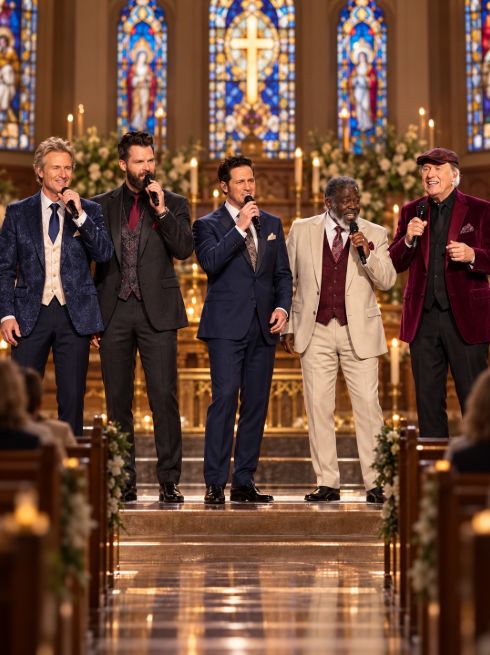
The Song That Brought Gospel’s Old Friends Back Into the Room
When Bill Gaither invited a group of gospel singers to record “Where Could I Go But to the Lord?”, the song offered a fitting reason to gather. Its question is direct, but it carries the weight of a lifetime: when comfort, certainty, or human strength fails, where does a person turn? For singers who had spent decades carrying gospel music from church to church and stage to stage, those words were more than familiar lyrics. They were part of a shared language.
The recording became closely associated with the beginning of Gaither Homecoming, a series built around the voices and friendships that shaped Southern gospel. What makes that early gathering compelling is the sense that the people in the room knew one another’s musical instincts. A singer could begin a phrase, and the others understood where to enter. Their harmonies carried years of listening, travel, and performance together. That history is something no studio arrangement can easily reproduce.
“Where Could I Go But to the Lord?” is especially suited to such a setting. The melody leaves room for the words to settle, while the central question invites a response from more than one voice. Sung by a group, it can sound like a conversation: one person admits a need, and others answer through harmony. The effect depends less on vocal display than on trust. Each singer gives the next one space, and the song grows stronger because of it.
That quality helps explain Bill Gaither’s lasting influence. He and Gloria Gaither wrote songs that became part of many listeners’ lives, but Homecoming also gave older gospel performers a place to be heard and seen together. The informal setting allowed audiences to notice details a polished concert might miss: a smile of recognition, a singer listening closely to an old friend, or a voice that had changed with age while retaining its character. Those moments made the music feel personal without diminishing the skill behind it.
For an older listener, this performance may bring back memories of singing in a church pew or hearing a favorite quartet on the radio. A younger listener can hear something equally valuable: how a musical tradition passes between people. The singers learned these songs, lived with them, and brought their own experiences to every return of the chorus. Their age gives the performance perspective, and their affection for one another gives it warmth.
The question in “Where Could I Go But to the Lord?” has no complicated wording, yet it remains open to deep feeling. In the hands of Bill Gaither and his fellow singers, the song became an invitation to listen to voices that had earned their place in gospel history. What stays with you is the sound of people gathering around a song they still believed was worth singing together.