Introduction
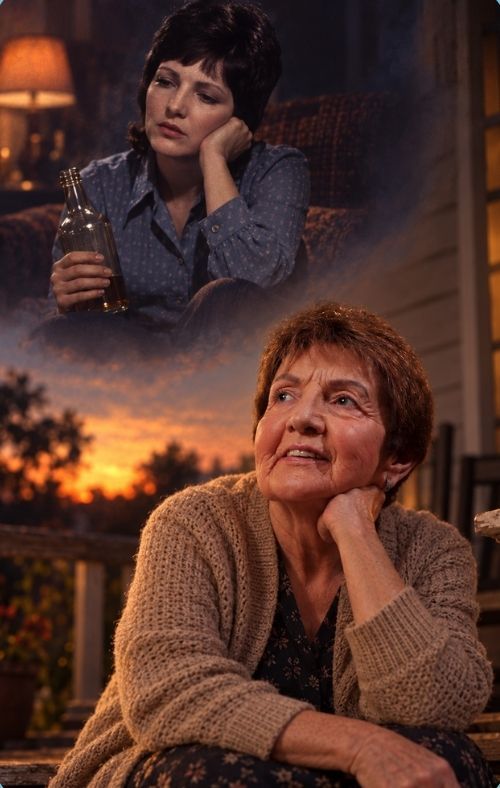
Documentary-style teaser: One order at a bar seemed ordinary: a vodka and orange. For Margo O’Donnell, it began a struggle she later said lasted into the 1980s. Behind the familiar voice of Irish country music was a private story her audiences could not hear. What does her candour reveal about the woman behind the songs?
For listeners who have followed Margo O’Donnell across the decades, her voice carries something deeply familiar. It recalls the dance halls, the journeys home and the Irish country songs that could make a large room feel intimate. She has sung with warmth and directness for so long that it is easy to imagine the person onstage as wholly at ease. Her account of her first drink asks us to look more carefully at the life unfolding beyond the microphone.
In a 2025 interview, O’Donnell recalled ordering a vodka and orange and feeling, in that moment, that it was what she needed. She said she had a problem from the first drink and that it continued into the 1980s. Those are her words about her own experience, and their plainness is what makes them arresting. She describes a moment that might have looked unremarkable to anyone nearby, then tells us how much it came to mean in the years that followed.
Her story reaches back well before that moment. O’Donnell writes that she sang in her church choir and at local concerts in Donegal, joined The Keynotes in 1964 and recorded her first single, “Bonny Irish Boy/Dear God,” in 1968. Her father died suddenly during the week of its release. In her account, the loss changed her life, while demand for the group’s performances grew. That overlap of grief, family duty and a developing career gives her later reflections a fuller setting, though it would be too simple to claim that any one event explains her drinking.
The music deserves to be heard in that fuller setting, too. Country and Irish music has long made room for plainspoken accounts of longing, separation, faith and endurance. Its appeal often rests on a singer’s ability to deliver familiar feelings without making them sound borrowed. O’Donnell’s career was built in that close relationship with her listeners: she sang songs they could carry into their own lives, and they kept coming back to hear her. Knowing what she has since shared about herself does not turn every performance into a confession. It does invite a more attentive kind of listening.
There is also a difference between admiring an artist’s perseverance and pretending that hardship was necessary for great music. O’Donnell’s struggle need not be romanticised to be taken seriously. Her achievement lies in the work itself, in the years she spent singing, recording and meeting audiences, as well as in her willingness to speak openly about a painful part of her history. On her official site, she looks back on more than five decades in music and thanks the fans whose loyalty helped sustain that career.
That is why her recollection holds such force. A public figure can become so familiar that listeners assume they know the whole person. O’Donnell’s words gently unsettle that assumption. They leave us with a more complete picture of Margo: the young singer from Donegal, the established performer and the woman able, years later, to describe a difficult beginning with remarkable clarity. The songs remain. What changes is the care with which we hear the person singing them.