Introduction
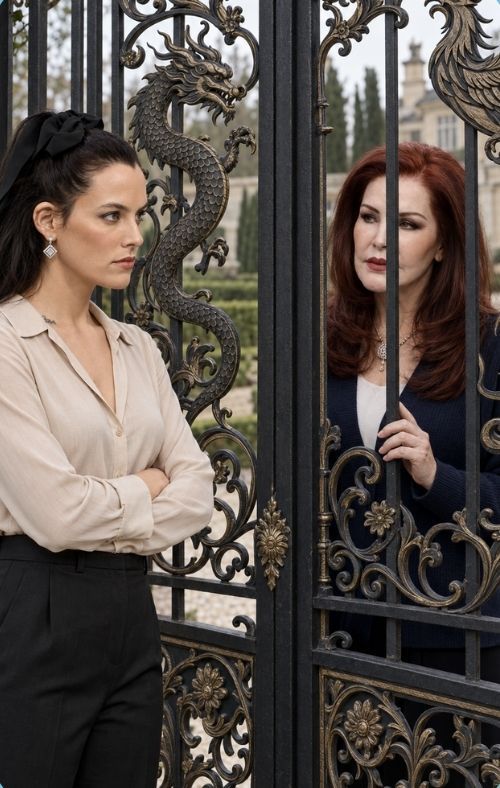
THE GRACELAND WAR: Priscilla Presley vs. Riley Keough — The Family Battle That Shocked Elvis Fans… What really happened behind the gates of Graceland after Lisa Marie Presley’s death?
For generations of admirers, Graceland has represented something almost sacred. It is more than the former home of Elvis Presley. It is where the young singer dreamed, where a musical revolution took shape, and where members of the Presley family were eventually laid to rest. Yet after Lisa Marie Presley died unexpectedly in January 2023, this enduring symbol of family continuity became connected to a deeply personal legal disagreement between her mother, Priscilla Presley, and her eldest daughter, Riley Keough.
The dispute was widely portrayed as a dramatic battle for Graceland. The verified story, however, was more complicated—and considerably more human.
For decades, Priscilla played a crucial role in protecting Elvis’s cultural legacy. After his death, she helped transform Graceland from an expensive private residence into a successful public attraction. Her stewardship contributed significantly to preserving the property when its financial future appeared uncertain. To many longtime fans, Priscilla was not merely Elvis’s former wife; she was one of the principal guardians of his memory.
Everything changed after Lisa Marie’s death.

Shortly afterward, Priscilla asked a Los Angeles court to examine the validity of a 2016 amendment to Lisa Marie’s living trust. That amendment had removed Priscilla and former business manager Barry Siegel as trustees, replacing them with Lisa Marie’s children, Riley and Benjamin Keough. Because Benjamin died in 2020, Riley effectively became the surviving successor named in the document.
Priscilla’s court filing raised several concerns. It claimed she had not been properly notified of the amendment, that her name was misspelled, and that Lisa Marie’s signature appeared inconsistent with her customary signature. The filing also noted that the document had neither been witnessed nor notarized. These were legal objections presented to a court—not proof that Riley had acted improperly or that Lisa Marie’s intentions had been deliberately ignored.
Nevertheless, the emotional implications were impossible to overlook. A grieving mother was questioning a document left by her only daughter, while a grieving daughter was being asked to defend the arrangement her mother had apparently created. Behind every headline about money, ownership, and power stood a family already carrying the losses of Elvis, Benjamin and Lisa Marie.
The disagreement was settled in 2023 without a prolonged public trial. Riley was subsequently confirmed as the sole trustee of her mother’s estate and assumed responsibility for Graceland and the trusts created for her younger twin sisters. Reports stated that the settlement included payments to Priscilla, as well as a continuing advisory role connected to the family legacy. Most importantly, the resolution avoided the spectacle of family members testifying publicly against one another.
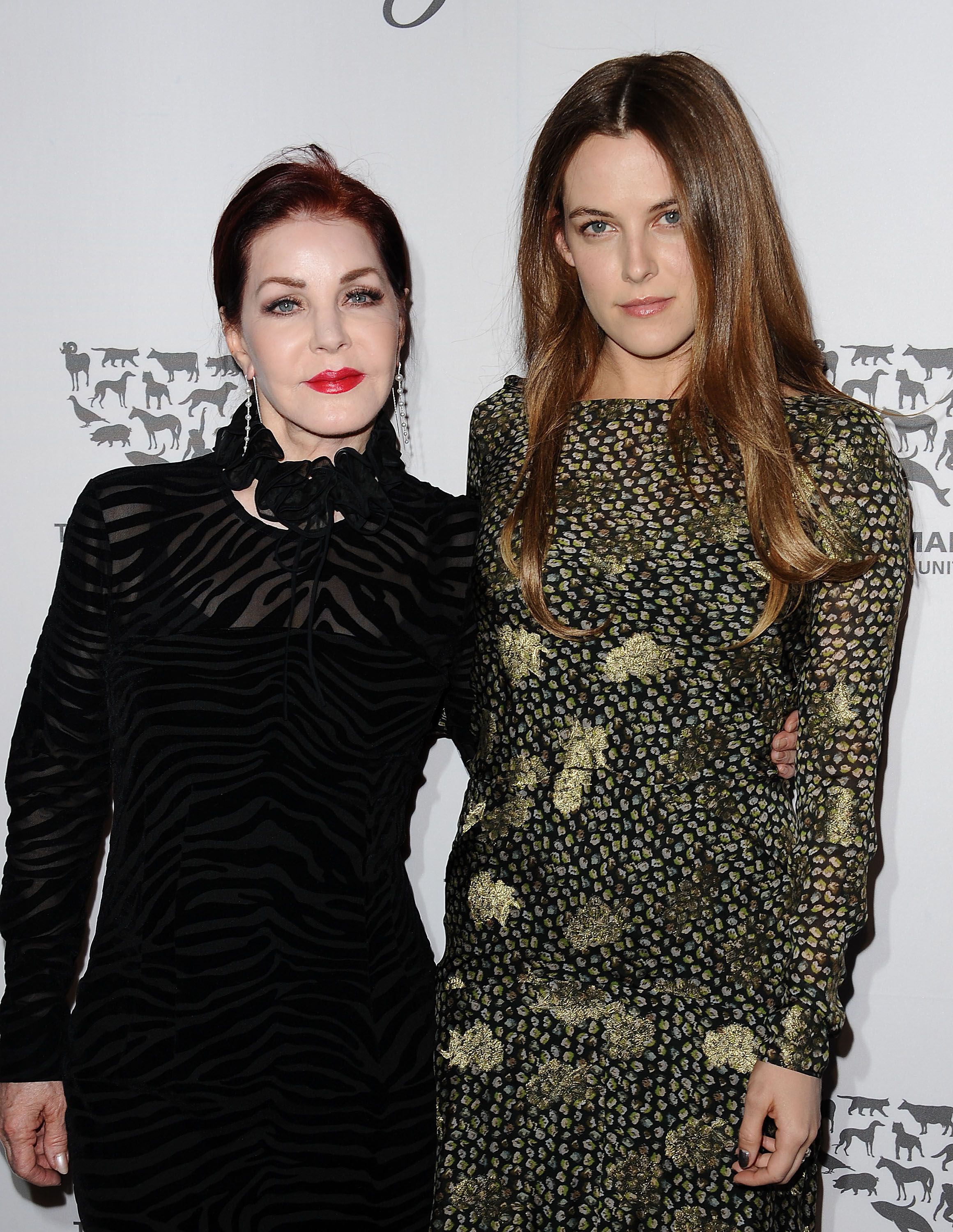
Riley later emphasized that her relationship with her grandmother remained intact. She also acknowledged Priscilla’s essential contribution to Graceland, explaining that her own goal was to continue the work begun by both Priscilla and Lisa Marie: preserving the mansion as their family home.
That distinction matters. The conflict was real, but descriptions of an unforgiving family “war” can obscure what the court record actually shows. Priscilla challenged the validity of a trust amendment; Riley ultimately became trustee; and the two women reached a negotiated settlement. There is no reliable evidence that Riley permanently banished her grandmother from Graceland or attempted to erase her from the Presley story.
In the end, the episode was not simply a struggle over a famous mansion. It was a painful confrontation with inheritance, responsibility and grief. Priscilla represented the generation that rescued Elvis’s legacy from possible financial decline. Riley represented the generation now entrusted with carrying it forward.
The gates of Graceland did not merely conceal a battle. They concealed a family attempting to decide how memory should be protected—and who must bear the burden of protecting it next.