Introduction
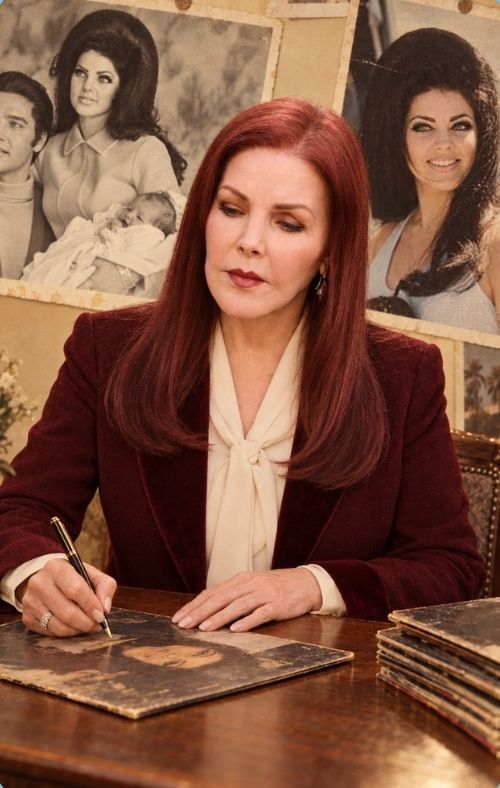
For more than four decades, Priscilla Presley has occupied a unique place in American cultural history. She was not merely the former wife of Elvis Presley or the mother of his only daughter. After Elvis died in 1977, Priscilla became one of the central figures involved in transforming Graceland from an expensive private residence into an internationally recognized destination.
That achievement helped preserve Elvis’s name for generations. It also contributed to the popular impression that everyone closely connected with the Presley legacy must possess enormous personal wealth.
Recent legal claims, however, present a far more complicated picture.
THE SHOCKING FALL OF PRISCILLA PRESLEY: She Helped Build the Elvis Empire—So Why Does She Now Need Public Appearances to Make a Living?
According to accounts of a sworn declaration, Priscilla said that appearances had become her principal source of income and the means by which she paid her bills. Her schedule reportedly expanded dramatically—from approximately 12 engagements during one period to 34 the following year.
Those engagements may include theater conversations, autograph conventions, fan photographs and public interviews. To admirers, such events offer a rare opportunity to hear memories from someone who witnessed Elvis’s life from extraordinarily close range. Yet viewed through the language of court documents, that demanding schedule raises a troubling question: How could a woman so closely associated with one of music’s most valuable names find herself depending upon convention tables and ticketed appearances?
The first answer is that connection does not necessarily mean ownership.

Elvis’s estate passed principally to his daughter, Lisa Marie Presley, under a trust established by her grandfather, Vernon Presley. Priscilla played an important managerial role and helped open Graceland to the public in 1982, but that did not make her the permanent owner of Elvis’s estate. Over the decades, the business structure surrounding the Presley name changed, while licensing rights, estate assets and personal wealth remained legally distinct.
That distinction became even more important following Lisa Marie’s death in January 2023.
Priscilla challenged a 2016 amendment to Lisa Marie’s trust that had removed her and former business manager Barry Siegel as trustees and placed Lisa Marie’s children in their position. The petition questioned procedural details surrounding the amendment, including its delivery, signature and lack of witnessing. It did not automatically establish that wrongdoing had occurred. Priscilla and her granddaughter, Riley Keough, later reached a settlement, and Riley became the controlling trustee. Priscilla has since denied reports of a personal feud and emphasized that her family remains united. The Guardian reported the original trust challenge, while later accounts described the reconciliation between grandmother and granddaughter.
A separate and still-disputed legal conflict has made the financial story considerably darker. Priscilla accused former associates of financial elder abuse, fraud and the misappropriation of more than $1 million. Her former business partners, Brigitte Kruse and Kevin Fialko, answered with their own lawsuit seeking more than $50 million and alleging fraud and breach of contract. Priscilla’s lawyer has rejected their allegations and described her as the victim. None of those competing accusations should be treated as proven simply because they appear in legal filings. The Associated Press has documented both sides of this continuing dispute.
The lawsuits nevertheless expose how vulnerable even a famous person can become when income rights, intellectual property, contracts and family trusts overlap.
There is also a deeper human dimension. Public appearances may be physically and emotionally demanding, but they are legitimate professional work—not necessarily evidence of destitution. The phrase “primary source of income” does not reveal Priscilla’s complete net worth, assets or financial security. Nor does working at an advanced age automatically mean that she has been abandoned by the Presley estate.

Still, the reported increase in engagements changes the emotional meaning of those appearances. What fans may see as a nostalgic evening with a cultural icon could also be part of a practical effort to maintain financial independence.
Priscilla’s story is therefore not simply one of riches lost. It is a story about the difference between preserving a legacy and owning it. She helped turn Graceland into a lasting monument, but control of the family inheritance ultimately followed a legal path through Lisa Marie and then to the next generation.
Did Priscilla lose the empire she helped build? In the strictest sense, it was never entirely hers to keep. Her power came from stewardship, family position and public trust rather than permanent ownership.
That may be the most startling truth of all. Priscilla Presley helped keep Elvis’s legacy alive for the world—but the empire bearing his name could never guarantee her personal security forever.