Introduction
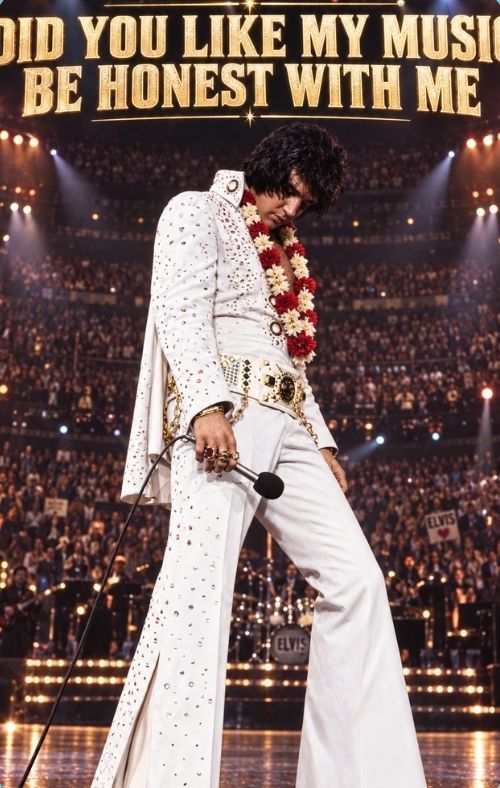
There are moments in life when the truth feels undeniable, and this is one of them. Hearing someone describe Elvis Presley after standing only a few steps from him onstage carries a weight that ordinary praise cannot match. From such a distance, Elvis was no longer merely the celebrated singer seen on television screens, magazine covers, or theater marquees. He became something more immediate—a living presence whose voice, appearance, and humanity seemed to transform the atmosphere around him.
People have spent decades calling Elvis handsome, yet that familiar description feels almost insufficient. Those fortunate enough to see him closely often remembered the brightness of his eyes, the warmth of his smile, and the unmistakable confidence with which he entered a room. Under the stage lights, with his hair carefully arranged and his costumes catching every shimmer of illumination, he seemed almost luminous. Cameras preserved his features, but they could not completely reproduce the energy that accompanied them.
That distinction matters. Beauty may attract attention, but presence holds it. Elvis possessed an unusual ability to command thousands of people without appearing to demand anything from them. He could quiet an arena with a glance, create anticipation with a pause, and make a familiar song feel as though it were being performed for the first time. When he leaned toward the microphone, even the smallest gesture appeared meaningful. Audiences did not simply watch him sing; they felt drawn into the emotional world of the performance.
Yet what stayed with those close enough to see him was not only how he looked—it was how he made them feel. Elvis understood the mysterious intimacy of live music. Although an audience might contain thousands of people, he could make each listener believe that the next lyric belonged personally to them. His voice could move from tenderness to power with astonishing ease. A quiet phrase might leave the room breathless, while a sudden rise in volume could send excitement rolling through the crowd like thunder.
Behind that legendary stage presence, witnesses also noticed something deeply human. They saw him laugh with the musicians, exchange playful looks with members of his band, and repeatedly thank the audience. These apparently small moments revealed that his appeal did not depend entirely on spectacle. There was kindness in his gestures and genuine gratitude in the way he acknowledged the people who had come to hear him.
This is why memories of Elvis remain so vivid. Fashions have changed, generations have passed, and countless performers have followed him onto the world’s stages. Still, the recollections of those who witnessed him closely have rarely dimmed. They remember not only the famous voice or extraordinary appearance, but also the atmosphere that seemed to surround him.
Up close, you saw the man behind the legend. You saw a performer capable of creating enormous excitement while still revealing humor, vulnerability, and grace. That combination made him difficult to explain and impossible to forget. His gift was not simply that he could sing beautifully or look remarkable beneath the lights. It was that, for the length of a song, he could make time appear to stop.
For many who saw him with their own eyes, Elvis Presley remains the most beautiful man they ever witnessed—not only in appearance, but in spirit, presence, and the quiet magic he left behind. Fame made him an icon, but humanity made him unforgettable. And perhaps that is the true measure of his lasting power: long after the applause disappeared, the feeling of having been in his presence remained.