Introduction
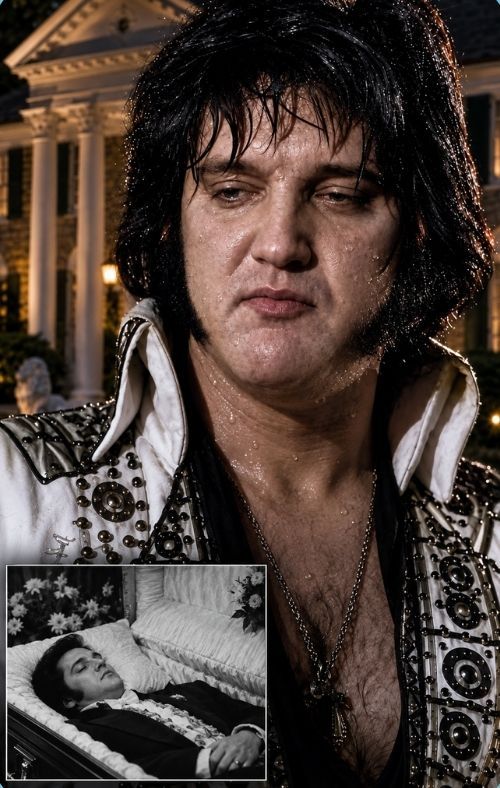
THE DAY ELVIS DIED, AMERICA DIDN’T JUST LOSE A STAR — IT LOST A VOICE MILLIONS HAD QUIETLY BUILT THEIR LIVES AROUND.
On August 16, 1977, the news traveled across America with the force of something almost impossible to accept: Elvis Presley was dead at only 42. Outside the gates of Graceland, strangers gathered beneath the heavy Memphis heat. Some carried flowers. Others prayed, wept, or stood without speaking, as though silence were the only response large enough for such a loss. It was not merely the passing of a famous entertainer. For millions, it felt as though a familiar voice from inside their own homes had suddenly disappeared.
To understand that grief, one must look beyond the glittering stage costumes, the screaming crowds, and the royal title of “The King of Rock and Roll.” Elvis had entered ordinary American life in a deeply personal way. His records played at school dances and family celebrations. His ballads accompanied young couples beginning their lives together. His gospel performances brought comfort to listeners during illness, mourning, and lonely Sunday evenings. Soldiers carried his music overseas, while families waiting at home heard in his voice both courage and homesickness.
That was the remarkable quality of Elvis Presley’s voice: it could sound commanding one moment and profoundly vulnerable the next. He could turn a rhythm-and-blues number into a burst of youthful freedom, then approach a spiritual song with the humility of someone standing before a church congregation. In recordings such as “Love Me Tender,” “If I Can Dream,” “In the Ghetto,” “You’ll Never Walk Alone,” and “How Great Thou Art,” listeners encountered more than technical ability. They heard longing, conviction, loneliness, hope, and the unmistakable sound of a man reaching for something beyond fame.
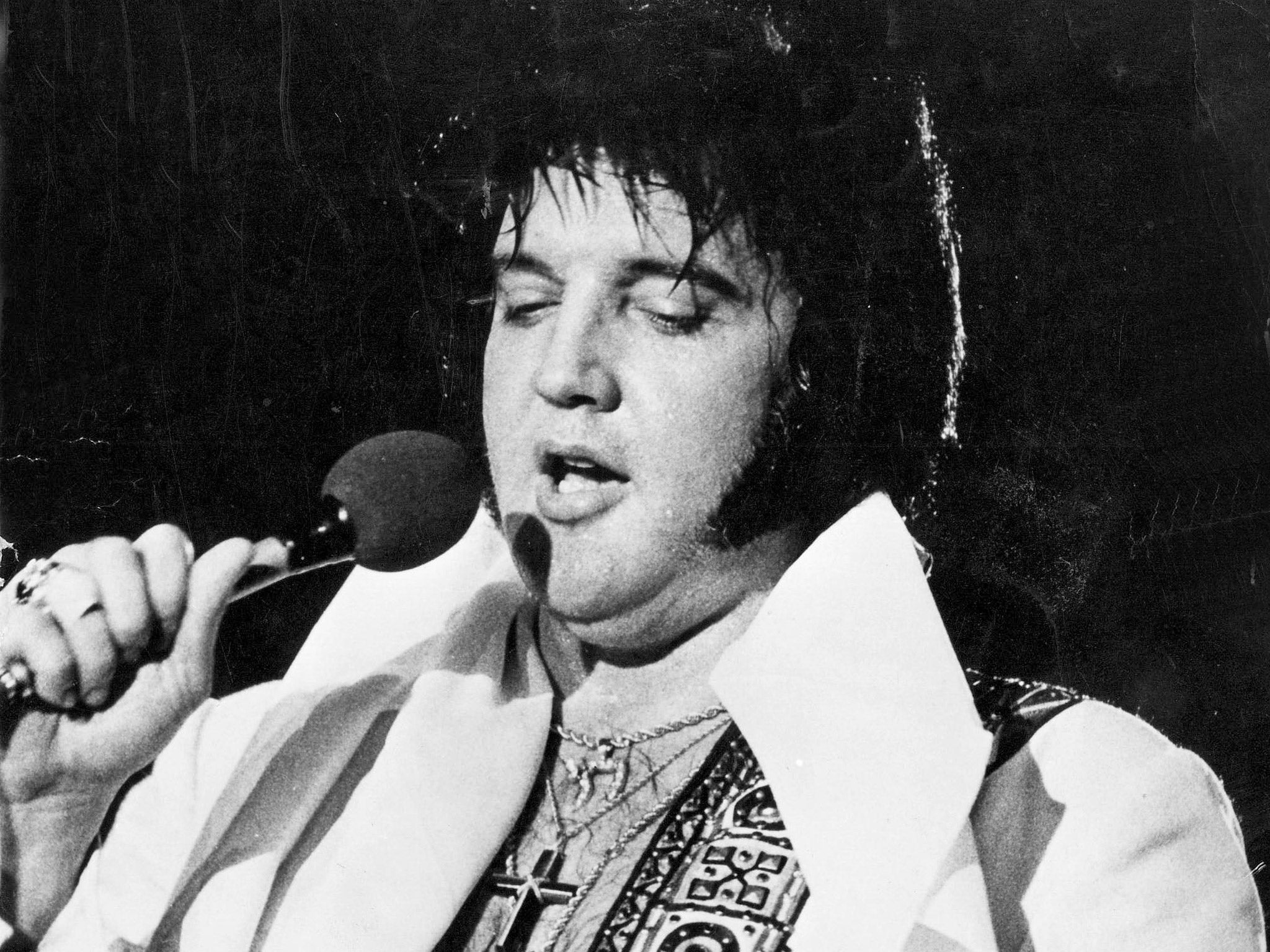
By 1977, Elvis was no longer simply the revolutionary young performer who had unsettled an earlier generation. He had become part of the national memory. Those who first heard him in the 1950s had grown older alongside him. They had married, raised children, endured wars, lost parents, changed jobs, and watched America itself pass through years of uncertainty. Elvis remained somewhere in the background of those lives—on the radio, inside record cabinets, on television screens, and in memories connected to people and places that could never be recovered.
This explains why the death of Elvis felt so personal even to those who had never met him. People were not only grieving the man. They were grieving their own younger years. Every familiar song opened a door to a first automobile, a crowded dance hall, a mother’s kitchen, a military barracks, or a loved one no longer present. His passing seemed to confirm that an entire chapter of American life was ending.
Nearly half a century later, the emotional connection has not vanished. New generations continue to discover the recordings, but longtime listeners hear something additional: the echo of the lives they once lived. His voice remains youthful even as those who first loved it have aged. That contrast gives the music an extraordinary emotional power. The singer is gone, yet the moment preserved in the recording never grows old.
Perhaps that is the true answer to the mystery of Elvis’s lasting absence. America did not simply lose a celebrity at Graceland. It lost a companion whose music had quietly witnessed millions of private histories. The public called him a king, but his greatest achievement was far more human. He made strangers feel understood.
And whenever that unmistakable voice rises again from an old record, Elvis does not sound like a distant monument. He sounds close—almost present—reminding listeners not only of who he was, but of who they were when they first heard him.