Introduction
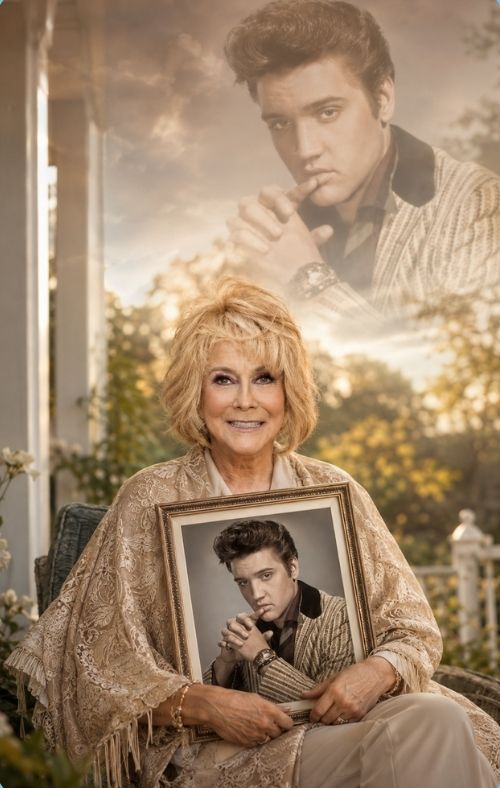
THE VIVA LAS VEGAS MOMENT ANN-MARGRET KEPT CLOSE TO HER HEART — AND WHY ONE ELVIS MEMORY STILL FEELS TOO PERSONAL TO EXPLAIN
More than six decades after Viva Las Vegas brought two extraordinary performers together, the fascination surrounding Elvis Presley and Ann-Margret has never entirely disappeared. The 1964 musical remains one of the most remembered films of Elvis’s Hollywood years, partly because audiences were not simply watching two famous stars sharing a screen. They were watching two performers whose musical instincts seemed remarkably compatible, each capable of answering the other’s energy without appearing to compete for it. The film was released on May 20, 1964, and became an enduring chapter in Elvis’s screen career.
In recent years, an especially dramatic story has circulated under the headline “Why Ann-Margret Still Refuses To Watch This One Scene She Filmed With Elvis In 1964.” According to versions of the story shared online, the mysterious moment was connected to “Today, Tomorrow and Forever,” a gentle number Elvis and Ann-Margret recorded together for Viva Las Vegas. Yet one important distinction deserves to be made: while the duet itself is unquestionably real, reliable historical sources do not appear to confirm the widely repeated claim that Ann-Margret has specifically “refused to watch” it or that she publicly gave the emotional explanation sometimes attributed to her online.
What can be documented is fascinating enough without embellishment. “Today, Tomorrow and Forever” was recorded as a duet by Elvis and Ann-Margret on July 11, 1963, during the sessions for Viva Las Vegas. Elvis’s official music archive confirms Ann-Margret as the duet vocalist, although the version ultimately heard in the finished movie featured Elvis alone. The duet recording was eventually released years later, allowing listeners to hear a performance that had remained outside the familiar theatrical version.
That recording matters because it captures something different from the spectacular title number most viewers associate with the movie. Instead of bright Las Vegas lights and grand movement, “Today, Tomorrow and Forever” depends on restraint. Elvis sings with an unusually gentle warmth, while Ann-Margret responds in a manner that feels conversational rather than theatrical. Their voices do not fight for attention. They seem to listen to each other.
For admirers who know what happened behind the scenes, that simplicity has acquired another meaning.
Ann-Margret later acknowledged in her autobiography that she and Elvis recognized an unusual connection almost immediately while rehearsing music together. Turner Classic Movies, discussing the production, recounts her description of discovering how naturally their movements and musical instincts mirrored one another. Their friendship became deeply important, but Ann-Margret would spend much of her later life protecting the private dimensions of that relationship rather than turning them into publicity.
That restraint may explain why stories about an unwatched scene have become so compelling.
When Larry King asked Ann-Margret about Elvis years later, she spoke warmly of his talent but declined to turn their history into a detailed public confession. She described him as someone who remained in people’s hearts and resisted questions she considered too private. Likewise, in a 1982 interview with Roger Ebert, she firmly refused to participate in sensational discussion about Elvis.
Perhaps this is the more meaningful story.
Whether Ann-Margret literally refuses to watch one particular piece of footage cannot presently be established from dependable interviews. But there is abundant evidence that Ann-Margret guarded her memories of Elvis Presley with extraordinary loyalty. In an age when famous relationships are repeatedly explained, analyzed, repackaged, and sold, she often chose silence.
And sometimes silence tells us more.
Listen again to “Today, Tomorrow and Forever.” Strip away the legends, the rumors, and the dramatic headlines. What remains is a young Elvis Presley and a young Ann-Margret standing before microphones in Hollywood in 1963, singing a quiet song for a movie that audiences would see the following year.
They could not have known how carefully people would study that performance more than sixty years later.
Perhaps that is why it still feels so moving. It does not sound like history while it is happening.
It sounds like a memory before anyone knew it would become one.