Introduction
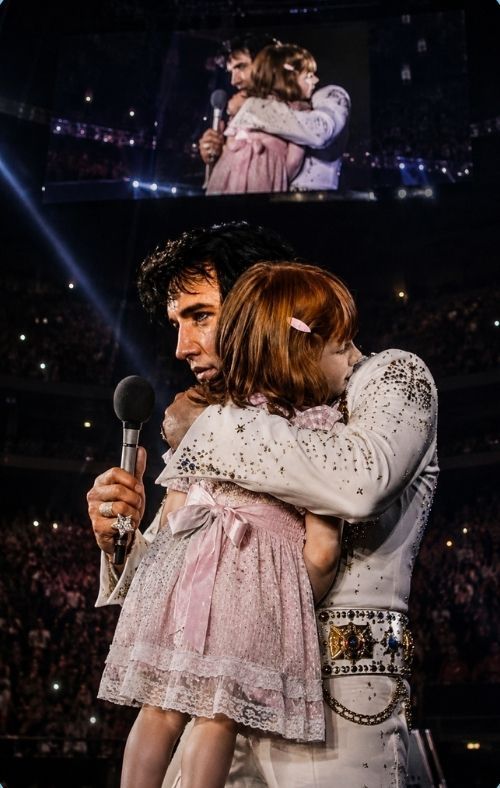
Norfolk, Virginia – July 20, 1975. It was supposed to be another triumphant stop in a career already unlike anything popular music had witnessed. Elvis Presley arrived at the Scope Cultural and Convention Center at a time when his name had long since become larger than any single record, concert, or generation. Demand was immense. Historical concert records confirm that Elvis performed twice that Sunday, at 2:30 in the afternoon and again at 8:30 in the evening, with approximately 11,300 people attending each performance. More than 22,000 admirers came through the building that day, demonstrating that nearly two decades after his first explosion into American culture, Elvis could still bring an entire city to attention.
The performances themselves contained everything audiences expected from Elvis in the mid-1970s: the dramatic opening, the unmistakable voice, humor between songs, familiar favorites, gospel, scarves distributed to admirers, and the extraordinary interaction between performer and audience that had become one of his trademarks. Songs including “Love Me Tender,” “The Wonder of You,” “How Great Thou Art,” “Mystery Train,” “Tiger Man,” and “Can’t Help Falling in Love” filled the program. Contemporary reporting from the evening show described fans approaching the stage as Elvis repeatedly placed scarves around them and greeted them personally.
Yet one remembered moment from the afternoon performance has endured for reasons having almost nothing to do with chart positions or vocal technique.
Photographs and long-circulated accounts from the Norfolk concert show Elvis approaching a young girl near the stage. According to accounts preserved by Elvis historians, he knelt before her, took her hands, and discovered that she was blind. Their conversation could not be heard by most of the audience because Elvis kept the microphone away from his mouth. Then came the gesture that made the encounter unforgettable: he reportedly kissed one of his scarves and gently touched it near the child’s eyes before holding the scarf against her face. Charlie Hodge stood nearby as the quiet exchange unfolded.
There is something striking about that image even half a century later. Elvis Presley was standing before thousands of people who had paid to see the King of Rock and Roll, yet for a brief moment he behaved as though the arena had disappeared. There was no grand speech and apparently no attempt to turn the encounter into a performance. The most meaningful part of their conversation was private.
That distinction matters.
Elvis understood perhaps better than almost anyone what it meant to be watched. Cameras followed him, crowds surrounded him, and millions knew his face. Yet the little girl before him could not see the famous hair, the jeweled stage clothes, or the expression that had appeared on countless magazine covers. She knew Elvis through something more fundamental: his voice.
And perhaps that is why the story continues to resonate.
Later versions of the story go considerably further, claiming that Elvis met the girl’s mother after the concert, learned that an operation might restore the child’s sight, paid the medical expenses, and that she eventually regained her vision and became a graphic designer. Those remarkable details have been repeated in modern accounts, but they are not documented as clearly in the surviving contemporary material as the onstage meeting itself. The distinction does not diminish what photographs and concert histories already preserve: Elvis saw a vulnerable young admirer in an enormous crowd and gave her his complete attention.
For older listeners who remember Elvis not as a historical figure but as a living presence on radio, television, and record players, that moment offers another way of understanding his enduring appeal. Musical revolutions eventually become history. Sales figures become statistics. Even spectacular costumes wind up behind museum glass. What survives most powerfully are often the small human moments that no publicity department could manufacture.
The Elvis Presley story is filled with enormous numbers—millions of records, packed arenas, television audiences spanning continents. But Norfolk, Virginia – July 20, 1975 reminds us that greatness can sometimes be measured differently: one performer kneeling, one child reaching out, and thousands of people suddenly witnessing tenderness where they expected spectacle.
Elvis could make an arena roar.
But on that Sunday in Norfolk, what people remembered was the moment he became quiet.
And perhaps that is the most revealing performance of all.