Introduction
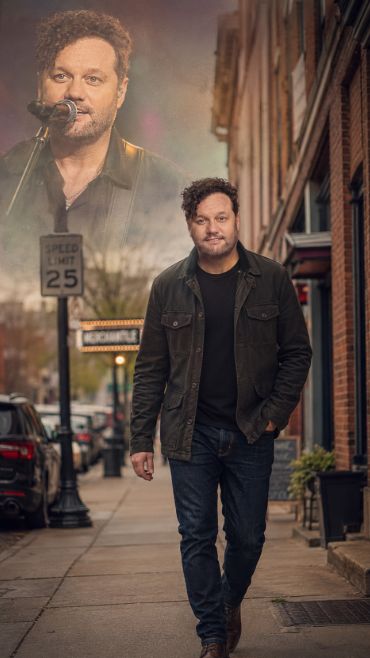
There are singers whose careers seem inevitable only after we know how the story turned out. David Phelps is one of them. For millions of listeners, his soaring tenor has become inseparable from gospel music, the Gaither tradition, and performances in which technical brilliance is placed in the service of something deeply personal. Yet listen closely to the extraordinary range, resonance, stamina, and control in that voice, and a fascinating question emerges: What If David Phelps Became an Opera Singer Instead of Gospel? It is more than a playful musical fantasy. It asks us to consider how much of an artist is created by natural ability—and how much is shaped by the world in which that ability is allowed to grow.
Phelps studied vocal performance at Baylor University, receiving the kind of formal musical education that reaches far beyond simply learning how to sing a beautiful melody. Classical vocal training demands disciplined breathing, careful placement, precise diction, an understanding of resonance, and the ability to move through different registers without sacrificing clarity or emotional meaning. Those qualities remain unmistakable whenever Phelps performs. Even listeners with little knowledge of vocal technique can sense that something unusual is happening when his voice begins to rise. The notes do not merely become higher. They seem to become larger, brighter, and somehow more commanding without losing their human warmth.
That is precisely why the opera question is so intriguing.
One can easily imagine an alternate version of Phelps standing beneath the lights of a grand opera house, facing an orchestra rather than a gospel ensemble. His exceptional upper register, dramatic intensity, and ability to sustain long musical phrases could have made him a fascinating candidate for serious classical repertoire. With years devoted entirely to operatic technique, perhaps audiences might have heard his voice in the works of Puccini, Verdi, or other great composers written for the tenor voice. The applause might have come from balconies lined with velvet instead of church auditoriums and concert halls.
But the fascinating part of this imagined story is not what Phelps might have gained. It is what he might have lost.
Opera is not simply gospel music performed without a microphone. It is a completely different artistic discipline, carrying centuries of tradition and very specific expectations about vocal production, language, interpretation, projection, characterization, and style. A singer entering that world must learn to serve the composer, the conductor, the dramatic role, and the established language of the repertoire. Individual personality remains important, of course, but it operates inside a carefully constructed tradition.
David Phelps, by contrast, developed a style in which classical discipline and personal freedom could live together. His performances can move from delicately controlled passages to enormous climactic moments without feeling as though they were created merely to demonstrate technical ability. There is often a sense that the note matters because of what the song is trying to say. That distinction may explain why listeners who cannot identify a high C, discuss resonance, or define a vocal register still respond so strongly to him.
When Phelps became part of the Gaither Vocal Band in 1997, he entered a musical environment that allowed his remarkable instrument to become something highly individual. He could bring sophisticated technique into Southern gospel without surrendering the emotional directness that defines the tradition. He could sing with extraordinary precision one moment and apparent abandon the next. Instead of being asked to become a conventional classical tenor, he gradually became unmistakably David Phelps.
And perhaps that is the greater achievement.
An opera career might have given his voice another kind of prestige. It might have placed him inside some of music’s most celebrated institutions and surrounded him with famous orchestras, conductors, and centuries-old repertoire. Yet gospel gave him an unusually intimate relationship with his listeners. A Phelps performance rarely feels like an exhibition viewed from a respectful distance. At its best, it feels like communication.
That connection becomes especially powerful for older listeners who have spent decades hearing technically accomplished singers come and go. With age, virtuosity alone often becomes less impressive than sincerity. One begins to value not merely the height of a note but the reason for singing it. Phelps possesses the unusual ability to offer both—the athletic brilliance that makes musicians pay attention and the emotional accessibility that makes ordinary listeners remember a performance years later.
There is also something wonderfully paradoxical about his career. The very qualities that make people wonder why he did not become an opera singer are the qualities that helped make him extraordinary within gospel music. His classical foundation did not disappear when he chose gospel; it became part of the vocabulary through which he expressed his faith, musical imagination, and individuality.
Perhaps, then, the question should not be whether opera would have made David Phelps greater.
Perhaps the better question is whether becoming an opera singer would have made him quite so completely himself.
In another life, there might have been a tenor named David Phelps walking onto an opera stage, waiting for the orchestra to fall silent before releasing one astonishing note into a vast auditorium. It is tempting to imagine the reviews, the roles, and the curtain calls.
But in the life we actually received, that voice found another home.
It joined harmonies. It carried hymns. It crossed the boundary between classical technique and gospel conviction. It reached listeners who might never purchase an opera ticket and made them understand, for several breathtaking minutes, what an extraordinary human voice can do.
Opera might have given David Phelps a magnificent stage. Gospel gave him a musical identity.
And after all these years, perhaps that is why the most memorable moments in his performances are not simply the moments when he reaches the highest note.
They are the moments immediately afterward—when the note has disappeared, David Phelps lowers the microphone, and an entire room seems reluctant to break the silence.