Introduction
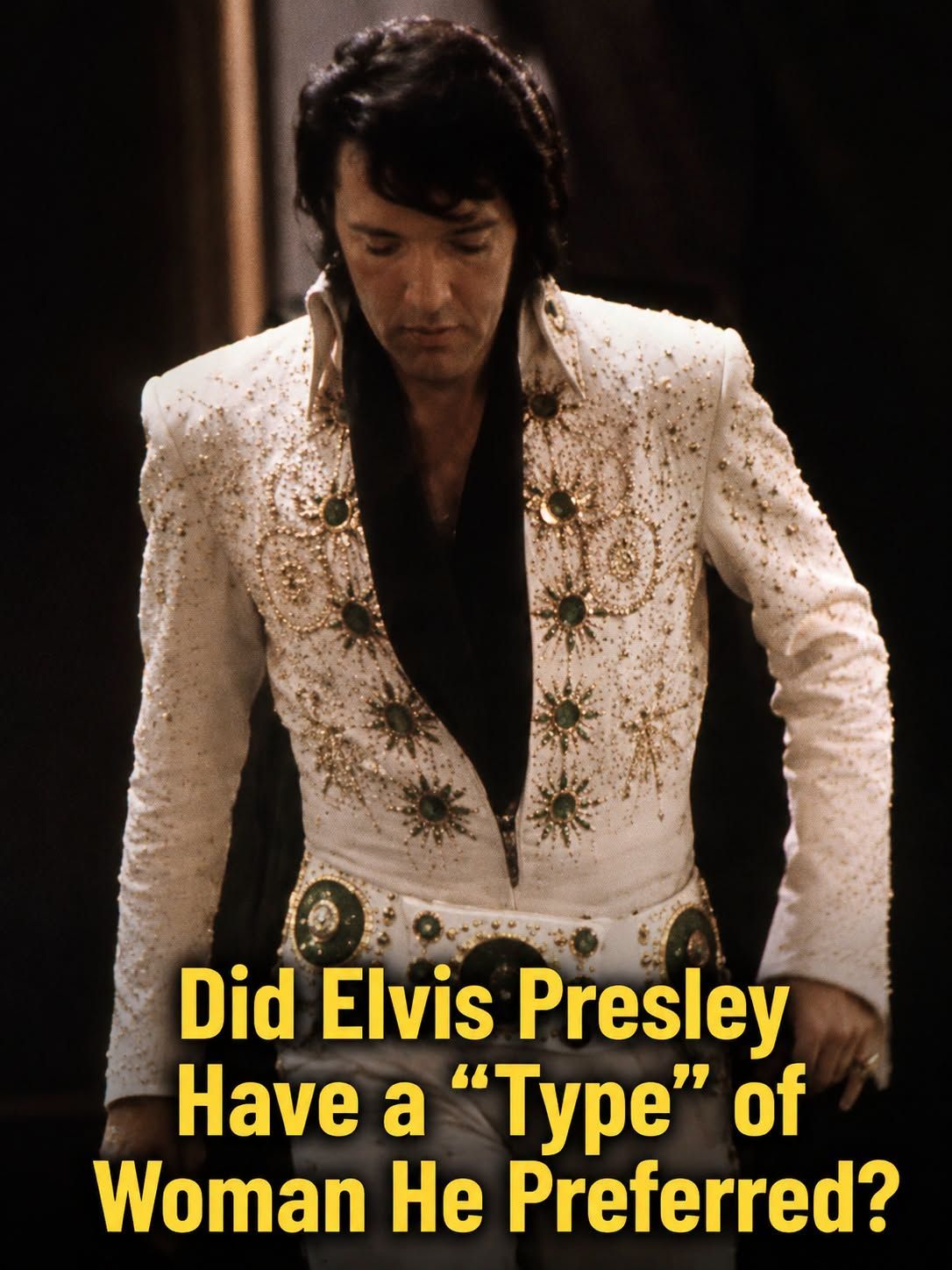
Elvis Presley lived in a world where admiration followed him almost everywhere. From the moment his career exploded in the 1950s, he became not merely a successful singer but a cultural phenomenon, surrounded by attention that few people could ever fully understand. Yet behind the famous image, the unmistakable voice, and the enormous crowds was a man whose personal relationships often revealed a very different side of his character. Looking at Priscilla Presley, Ann-Margret, Linda Thompson, and other women who became important in his life raises an intriguing question: Did Elvis Presley have a particular “type,” or was he searching for something deeper than appearance?
At first glance, certain similarities are easy to notice. Elvis was clearly drawn to beauty, elegance, femininity, warmth, and presence. The women associated with him often possessed a distinctive grace that suited the polished world surrounding a major entertainer. Yet reducing Elvis’s preferences to physical appearance misses the more interesting part of the story. Again and again, the relationships that seemed to matter most to him involved women who offered something emotionally reassuring: affection, loyalty, patience, companionship, and a sense of home.
That may help explain why Priscilla Presley occupied such an important place in his life. Their relationship became connected not only with romance but also with Graceland, marriage, family, and the possibility of creating a private world separate from the demands of celebrity. Elvis had spent much of his adult life traveling, performing, recording, meeting strangers, and being surrounded by people who wanted something from him. In such an environment, the idea of returning to someone familiar must have carried considerable emotional weight.
Ann-Margret, meanwhile, represented a different kind of connection. She was herself a gifted performer and understood the unusual pressures of entertainment. Their shared musical energy and charismatic personalities created a bond that has continued to fascinate Elvis historians and admirers. She could understand the excitement of the stage in a way that someone outside the profession perhaps could not. Their connection suggests that Elvis was attracted not merely to beauty but also to energy, humor, artistic understanding, and emotional intensity.
Later, Linda Thompson became another important presence during a period when Elvis’s personal and professional life was changing. Accounts of their years together frequently emphasize companionship and care. By this stage of his career, Elvis was no longer simply the young revolutionary who had shocked American television audiences. He was an established legend carrying enormous expectations, demanding schedules, and increasingly complicated personal pressures. A partner who could provide comfort, steadiness, understanding, and loyalty therefore meant something very different from ordinary admiration.
This is where the idea of Elvis having a single “type” begins to fall apart. The women in his life were not identical personalities. They came from different backgrounds and possessed different strengths. What seems more consistent is Elvis’s emotional search. He appeared to value women who could make him feel admired without making the relationship feel like another public performance. He wanted closeness in a life where genuine privacy was increasingly difficult to find.
There is a striking contradiction at the center of Elvis Presley’s personal life. He was one of the most famous men on Earth and could command the attention of enormous crowds, yet fame could not guarantee emotional security. In fact, celebrity may have made ordinary trust much harder. How could he always know whether someone loved Elvis the man or Elvis the King? How could any relationship remain completely ordinary when photographers, managers, fans, touring schedules, business obligations, and constant public curiosity were never far away?
That tension helps explain why examining the women Elvis loved tells us far more than a list of physical preferences ever could. His relationships suggest a man who repeatedly sought beauty and grace, certainly, but also something much more difficult to obtain: reassurance that he could still be known simply as a person.
Perhaps that was Elvis Presley’s real “type.” Not one particular hairstyle, personality, or appearance, but someone capable of giving him a temporary refuge from the extraordinary machinery of fame. Someone who could offer affection without spectacle, loyalty without applause, and companionship without expectation.
The tragedy is that the very fame that allowed Elvis to meet almost anyone he wished also made the ordinary relationship he seemed to desire increasingly difficult to preserve. Behind the rhinestones, the screaming audiences, and the mythology of the King of Rock and Roll was a man repeatedly searching for something remarkably simple: someone who could make an extraordinary life feel like home.