Introduction
THE SONG THAT CHANGED AS WE DID
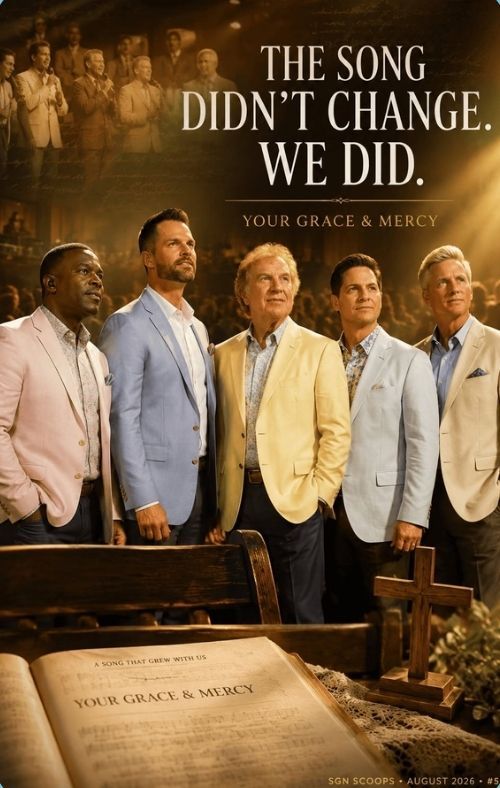
There are Gospel songs we admire when we first hear them, and then there are songs that seem to wait patiently for us to grow old enough to truly understand them. “Your Grace & Mercy” belongs firmly in the second category. There was a time when it could simply be heard as a beautiful expression of Christian faith: warm harmonies, familiar language, and a message rooted in gratitude. Yet as the years pass, the song begins to sound different—not because a single note has changed, but because the listener has.
Today, sitting at No. 51 on the August Southern Gospel chart, “Your Grace & Mercy” feels less like another entry on a ranking and more like evidence that certain songs refuse to disappear when their message still has work to do. Charts measure popularity for a particular moment, but Gospel music has always operated on another kind of clock. Its deepest songs are measured in funerals attended, prayers whispered, homes left behind, children raised, friendships remembered, illnesses endured, and ordinary mornings when someone simply needed the strength to continue.
That is where this song gains its unusual power.
When younger listeners encounter a phrase such as grace and mercy, they may understand its theological meaning immediately. But experience gives those words weight. After decades of mistakes, unexpected blessings, disappointments, reconciliations, and changes we once believed we would never face, grace stops sounding like an abstract religious idea. It becomes personal. Mercy is no longer merely something discussed from a pulpit; it becomes the name we quietly give to those moments when life could have turned out very differently.
That may explain why “Your Grace & Mercy” seems to deepen with age.

The melody does not demand attention through spectacle. Instead, it gives the words room to breathe. The Gospel harmonies carry the reassuring quality of voices gathered together rather than voices competing to be noticed. This is one of Southern Gospel music’s enduring strengths: its finest performances often feel less like demonstrations of vocal ability and more like shared testimony. The listener is not standing outside the song watching someone else believe. The listener is invited inside.
And once inside, memory begins doing part of the singing.
An older listener may hear the same chorus and suddenly remember a church that no longer exists, parents whose voices have gone quiet, a spouse sitting beside them years ago, or a Sunday morning when the family still occupied an entire pew. Another may think of a difficult season survived almost without understanding how. Someone else may simply recognize how much of life turned out differently from what they imagined at twenty-five.
This is the hidden story behind THE SONG THAT CHANGED AS WE DID. Perhaps the song itself never changed at all. Perhaps we did.

That distinction matters because it reveals something important about enduring music. Great songs do not always give us one fixed meaning. Sometimes they travel beside us, allowing life to rewrite our understanding of them. A lyric heard casually in youth may become devastatingly meaningful at seventy. A simple harmony that once sounded pleasant may later feel like the sound of home. Words we thought we understood can suddenly carry the accumulated weight of decades.
That is why the continued presence of “Your Grace & Mercy” deserves attention beyond its chart position. Its significance lies in the quiet recognition it awakens: none of us hears music with the same ears forever.
Years pass. Families change. Familiar faces disappear. Faith is tested, questioned, rediscovered, and sometimes strengthened in ways no one expected. Yet the song remains, waiting.
And when we finally return to it, we may discover that every note seems heavier, every harmony warmer, and every word more necessary than before.
The song stayed the same.
We were the ones who changed.