Introduction
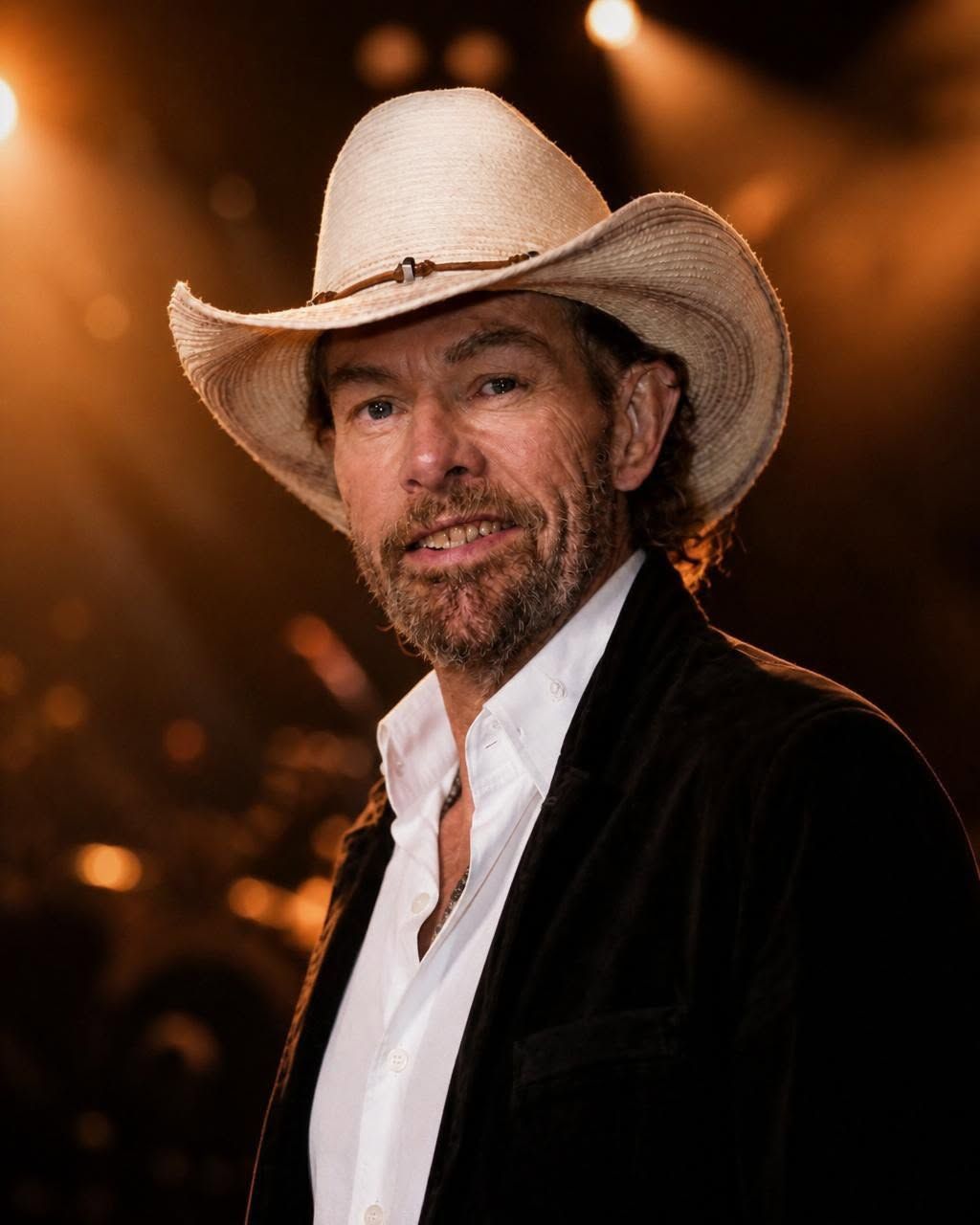
Toby Keith spent more than three decades performing farewells beneath bright arena lights. He sang about departing cowboys, aging men, distant soldiers, broken promises, and the long roads that eventually lead everyone home. Yet when his own journey ended, there were no television cameras waiting outside, no elaborate public procession, and no attempt to transform a family’s grief into one final performance.
Toby Keith Covel died on Monday, February 5, 2024, at the age of 62. His family said that he passed peacefully while surrounded by those closest to him, following his widely documented struggle with stomach cancer. Their first request was not for attention, praise, or public ceremony. It was simply for privacy.
That request established the tone of everything that followed.
One week later, the Covel family announced that a private funeral service would be held in mid-February. Attendance would be limited to relatives, members of Toby’s band, and the crew members who had traveled beside him during the long years of concerts, buses, rehearsals, airports, and late-night departures. These were the people who knew the man behind the familiar hat—the husband, father, grandfather, employer, friend, and fellow traveler whose life continued after the stage lights had been switched off.
The announcement offered no elaborate description of the ceremony. There was no published order of service and no attempt to satisfy public curiosity about every private moment. The family drew a quiet boundary around their farewell, allowing Toby’s final gathering to remain where it belonged: among the people who had shared not only his success, but also the ordinary days that surrounded it.
Instead of flowers, the family asked people to donate to the Toby Keith Foundation and OK Kids Korral, the home he helped create for families with children facing serious illnesses. The request reflected a charitable commitment that had occupied an important place in Toby’s life. OK Kids Korral provides cost-free lodging and support for families whose children are receiving treatment for serious medical conditions. Even during a period of profound personal loss, the Covel family directed public affection toward children and parents carrying burdens of their own.

Outside that private circle, Oklahoma found its own way to mourn. Flags were lowered. Governor Kevin Stitt ordered American and Oklahoma flags on state property to be flown at half-staff in recognition of a musician whose identity had remained deeply connected to his home state. It was a formal gesture, but also an unmistakably personal one for thousands of Oklahomans who had watched Toby rise from local beginnings to international fame.
The University of Oklahoma, where Toby had long been a familiar and enthusiastic supporter, also created a simple courtside memorial. At a Sooners basketball game, a guitar and a red Solo cup sat beside an empty seat. There were no complicated decorations. The guitar represented the work, the songs, and the unmistakable voice. The cup recalled one of his most recognizable recordings. The empty place said everything else.
Days later, during the Sooners’ game against Oklahoma State, supporters lifted red cups and sang “Red Solo Cup” together. For a few minutes, an ordinary basketball crowd became a country chorus, answering the silence Toby had left behind with one of the cheerful songs he had given them.
Fans later raised their cups and sang his words back to him. It was not the polished sound of a studio recording or the carefully balanced harmony of a touring band. It was something less perfect and perhaps more meaningful: ordinary people remembering a familiar voice together.

Toby Keith spent decades saying goodbye beneath arena lights. But the last goodbye belonged to the people who knew him when the stage was dark.
That distinction is what makes his private farewell so moving. The public knew the confident performer who could command a stadium, deliver a line with humor, or turn a chorus into a communal declaration. His family, band, and crew knew the man who arrived before the show and remained after the applause. They knew the conversations, the difficult days, the loyalty, and the countless unrecorded acts of generosity that never became headlines.
The world was allowed to remember Toby Keith through his music. His loved ones were allowed to say goodbye without an audience. For a man whose life had unfolded before millions, that final measure of privacy may have been the most respectful tribute of all.