Introduction
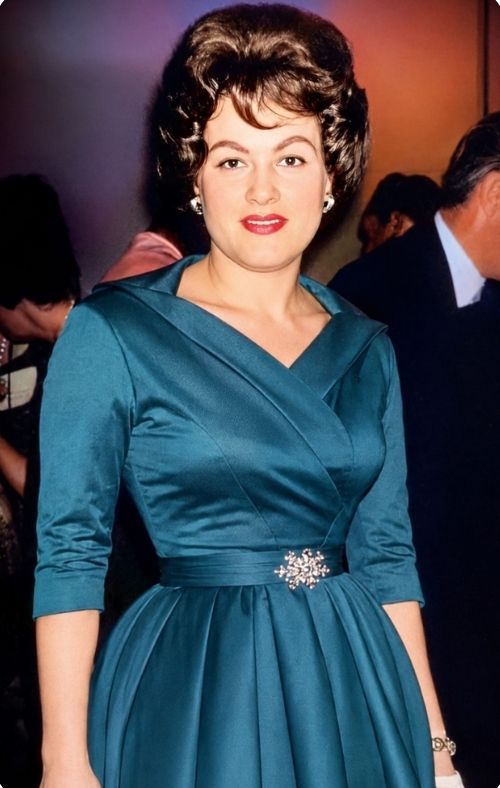
Happy Heavenly Birthday to Patsy Cline (Sept 8, 1932 – Mar 5, 1963 – She was 30) Rock in Peace More than sixty years after her passing, Patsy Cline remains one of those rare voices that never seems trapped in the past. Her recordings still arrive with startling freshness, as if they were made not for one generation, but for every generation that would later discover what honesty sounds like when it is sung with grace, strength, and unmistakable feeling.
Born on September 8, 1932, Patsy Cline became far more than a country singer with a beautiful voice. She became a bridge between worlds. At a time when country music was often viewed through narrow boundaries, Patsy brought a sound that could sit comfortably beside pop, traditional country, and the great ballads of American music. Her voice had polish, but it never lost its human warmth. It was elegant without feeling distant, powerful without needing to be loud, and emotional without ever becoming excessive.
Songs like “Crazy,” “I Fall to Pieces,” “Walkin’ After Midnight,” and “She’s Got You” are not merely famous titles. They are emotional landmarks. Each one carries a different shade of longing, reflection, courage, and heartbreak. Patsy had a remarkable gift for making listeners feel that she understood what they had lived through. For older listeners, especially, her music may recall a time when songs were played on radios in quiet kitchens, jukeboxes in small cafés, or record players late at night when memories felt close.

Her membership in the Grand Ole Opry confirmed her place in country music history, but her influence reached far beyond any single stage. Patsy Cline helped open the door for women in country music to be taken seriously not only as singers, but as major artistic voices. She proved that a female artist could carry emotional weight, commercial strength, and lasting cultural importance.
Her life ended tragically on March 5, 1963, when she was only 30 years old. Yet the brevity of her life only makes her legacy feel more extraordinary. She left behind a body of work that continues to echo through radios, playlists, tribute performances, and the hearts of listeners who still find comfort in her voice.
To remember Patsy Cline is not simply to mourn what was lost. It is to celebrate what remains. Her voice is still here — steady, tender, unforgettable — reminding us that true music does not disappear with time. It becomes part of the soul of a nation.