Introduction

With a powerful, expressive voice, Patty Loveless blended influences of bluegrass, honky-tonk, and West Coast country-rock into a sound that felt both timeless and deeply personal. In an era when country music was constantly shifting between tradition and modern appeal, Loveless stood apart because she never seemed to chase fashion. Instead, she sang as though every note had been earned through memory, hardship, family, faith, and the quiet strength of ordinary people.
What made Patty Loveless so remarkable was not simply the beauty of her voice, but the truth inside it. Her singing carried the unmistakable texture of the mountains — clear, weathered, emotional, and honest. The convincing, lived-in sincerity of her mountain-bred voice helped her songs ring true, whether she was singing about broken hearts, stubborn pride, family struggles, or the small moments that shape a life. She had the rare ability to make a listener feel that a song was not being performed for them, but shared with them.
In the process, she created a distinctive, tradition-based sound updated with a modern lyrical perspective on relationships, families, and other real-life concerns. That balance became the heart of her artistry. Loveless honored the past without sounding old-fashioned. She respected the deep roots of country music while giving her songs enough emotional clarity to speak to listeners of her own generation and beyond.

Between 1988 and 2003, Loveless achieved thirty-one Top Twenty country hits, a remarkable achievement that reflects both her consistency and her connection with audiences. Her catalog was never built on empty glamour or passing trends. It was built on songs that people could recognize from their own lives. Among them were five No. 1s, including “Blame It on Your Heart,” “Timber I’m Falling in Love,” and “Lonely Too Long.” These hits showed her range: spirited, wounded, defiant, tender, and always believable.
Yet Patty Loveless was never only a hitmaker. She was also a guardian of country music’s deeper inheritance. Her forays into bluegrass and mountain music, on “Mountain Soul” (2001) and “Mountain Soul II” (2009), received widespread acclaim. Those projects reminded listeners that country music did not begin under bright lights, but in family rooms, churches, hillsides, and communities where songs were passed down like treasured stories.
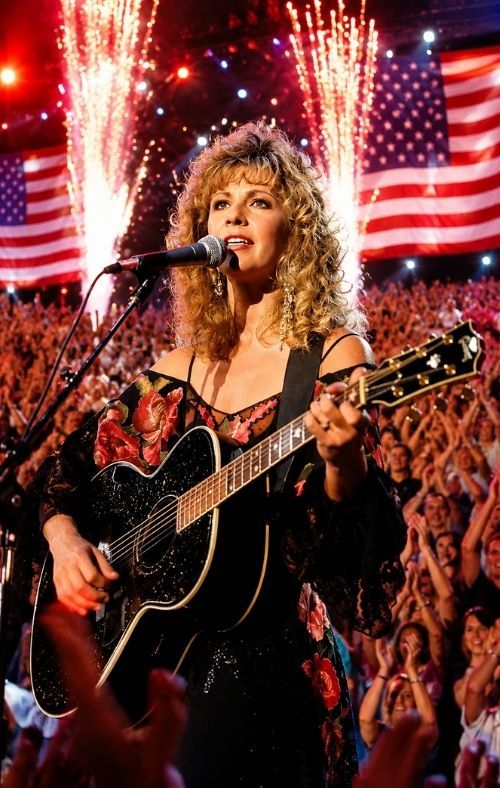
Her honors tell part of the story. She has been honored with two Grammys and five Country Music Association awards, including 1995 Album of the Year for “When Fallen Angels Fly” and 1996 Female Vocalist of the Year. But awards alone cannot fully measure what Patty Loveless gave to country music. Her true achievement lies in the emotional trust she built with listeners.
When Loveless was inducted into the Country Music Hall of Fame in 2023, it felt less like a surprise than a long-overdue recognition of a voice that had always belonged there. Patty Loveless represents country music at its finest: rooted, sincere, beautifully crafted, and unafraid to tell the truth. Her songs endure because they are not merely heard — they are remembered.