Introduction
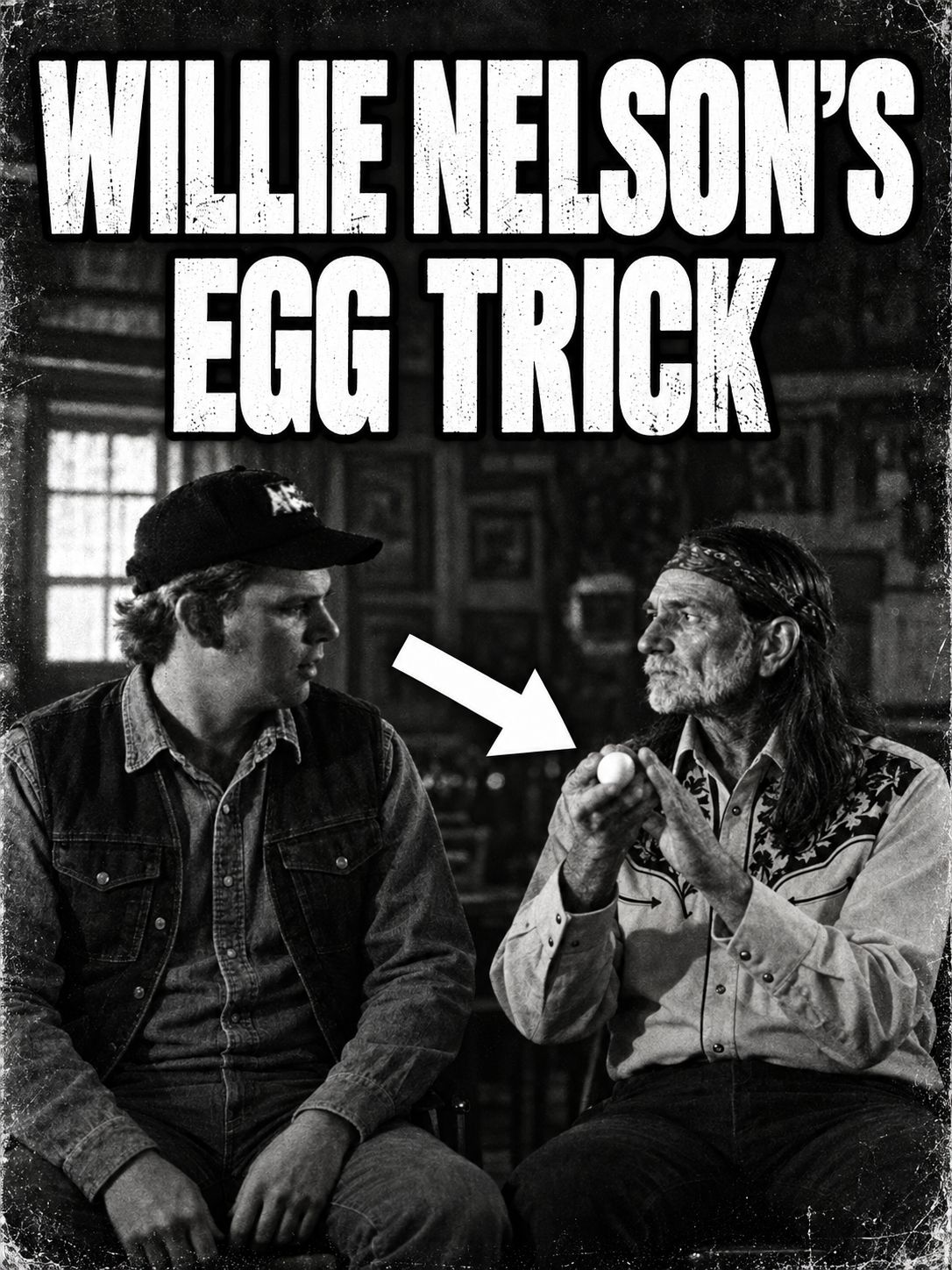
Willie Nelson Needed Only an Egg—And Suddenly, the Scene Belonged to Him
Most people remember Willie Nelson with a guitar in his hands, delivering a familiar song as though he were sharing a private thought across the kitchen table. Yet in a scene from Another Pair of Aces: Three of a Kind, he captures that same attention with something considerably less musical: an ordinary egg. Beside Kris Kristofferson, Nelson turns a simple wager into a small masterclass in timing, personality, and the pleasure of being pleasantly fooled.
The premise is wonderfully straightforward. Nelson’s character claims he can send the egg through the front of his head and bring it out the back. It is an impossible proposition, delivered with such relaxed confidence that the audience willingly follows along. Before long, the trick becomes less interesting than the man performing it—and that is where the scene finds its lasting charm.
For listeners who appreciate Nelson’s music, the rhythm feels familiar. His singing often creates its effect through unhurried phrasing, allowing a word to settle before moving toward the next thought. Here, his comic delivery works in a similar fashion. He lets the explanation stretch, gives his audience something to watch, and leaves just enough space for anticipation to grow.
That relationship between musical timing and comic timing gives the sequence its particular appeal. A successful performance requires more than knowing what comes next; it requires sensing when the audience is ready for it. Nelson makes the exchange feel conversational, inviting viewers into the joke while quietly controlling its pace.
Kris Kristofferson’s presence adds another layer of enjoyment. Their contrasting screen personalities give the scene texture: Nelson’s easygoing mischief plays against Kristofferson’s more grounded bearing. Watching them together offers a pleasure familiar to anyone who has enjoyed two distinctive voices sharing a song. Each performer gives the other room, and the exchange becomes richer because neither seems determined to overwhelm it.
The comedy also rests on a recognizable human weakness: the belief that possessing the right object will somehow provide the skill behind it. Once the egg becomes something another character wants to buy, the scene moves beyond a visual surprise. It becomes a gentle little story about confidence, wishful thinking, and the distance between watching a performance and understanding how it works.

For an older audience, there is something especially appealing about entertainment built on such modest materials. A few lines of dialogue, expressive faces, and a carefully judged pause can hold our attention without elaborate spectacle. The scene rewards the simple act of watching closely, even while its central performer encourages us to look in precisely the wrong place.
Ultimately, this moment offers another way to appreciate Willie Nelson’s storytelling gift. Whether he is shaping a melody or guiding a comic exchange, his strength lies in making a performance feel like a shared experience. The egg supplies the surprise, but his warmth and quiet assurance supply the reason to keep watching.
Come for the trick, and stay for the interplay between Nelson and Kristofferson. Beneath the easy laughter is a reminder of how much character a gifted performer can bring to the smallest moment—and how naturally the instincts of a great musical storyteller can travel beyond a song.