Introduction
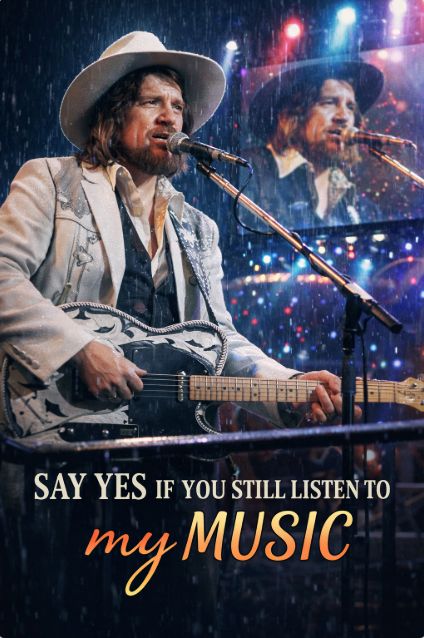
There are some songs that do not merely entertain. They seem to carry an entire way of life inside them. That is exactly what happens when listeners return to Waylon Jennings – Good Hearted Woman/Mamas Don’t Let Your Babies Grow Up to Be Cowboys. This pairing is more than a performance title, and more than a reminder of Waylon Jennings at his peak. It is a window into a strain of country music that spoke directly to ordinary people—working people, stubborn people, loyal people, and those who knew that freedom often comes with a price.
What makes this combination so powerful is the way it balances two truths that have always lived at the heart of classic country. On one side, “Good Hearted Woman” celebrates love, devotion, and the kind of woman who stands strong even when life is far from easy. On the other, “Mammas Don’t Let Your Babies Grow Up to Be Cowboys” offers a knowing, half-smiling warning about restless men who are never fully made for fences, routines, or neat endings. Put together, these songs create something larger than either one alone. They become a portrait of the country spirit itself: affectionate but unsentimental, rough around the edges but rich in feeling.

Waylon Jennings had a voice that never needed polishing to make an impression. It was firm, weathered, and unmistakably human. He sounded like a man who had seen enough of life to stop pretending. That was one of his greatest gifts. He did not sing as if he were trying to impress the audience. He sang as if he were telling the truth and trusting the audience to recognize it. For older listeners especially, that kind of honesty still matters. In an age when so much music can feel manufactured, Waylon remains a reminder of what happens when character matters as much as technique.
“Good Hearted Woman” has endured because it understands something timeless about love: not the glamorous version, but the durable one. It honors the woman who keeps giving grace to a man who may not always deserve it, yet still carries something worth loving. There is tenderness in the song, but also realism. It does not imagine romance as perfection. It presents love as patience, endurance, and the ability to see goodness through disappointment. That emotional maturity is part of why the song still lands so deeply with seasoned listeners.
Then comes “Mammas Don’t Let Your Babies Grow Up to Be Cowboys,” a song that became legendary because it captured the mythology and the melancholy of the cowboy image in one stroke. It is playful on the surface, but there is wisdom underneath it. The cowboy is not just a Western figure here. He represents the independent soul—the man who does not fit easily into society’s expectations, who may be admired from a distance but is difficult to live with up close. That tension is what gives the song its staying power. It is not just about the West. It is about temperament, identity, and the cost of living by your own rules.
Waylon Jennings understood that tension better than most artists of his era. He was one of the defining voices of the outlaw country movement, but his greatness was never just about rebellion. It was about dignity. He gave country music a harder edge without stripping away its heart. He could sound tough without sounding empty. He could sound independent without sounding cold. That balance is rare, and it is one reason these songs continue to resonate with listeners who value substance over spectacle.

For many older fans, performances like Waylon Jennings – Good Hearted Woman/Mamas Don’t Let Your Babies Grow Up to Be Cowboys bring back more than melodies. They bring back memories—long drives, kitchen radios, family gatherings, the sound of a simpler but harder-earned America. They remind listeners of a time when songs seemed built to last because they were grounded in recognizable people and recognizable emotions. Even younger listeners who discover Waylon today often sense that they are hearing something sturdier than nostalgia. They are hearing conviction.
In the end, that may be the real magic of this performance. It is not simply famous because Waylon Jennings sang it. It endures because it speaks to two great country truths at once: some people are born to love deeply, and some are born to roam. Between those truths lies the drama of countless lives. Waylon did not just sing about that world. He sounded like he came from it. And that is why these songs still matter. They do not feel borrowed. They feel lived.