Introduction
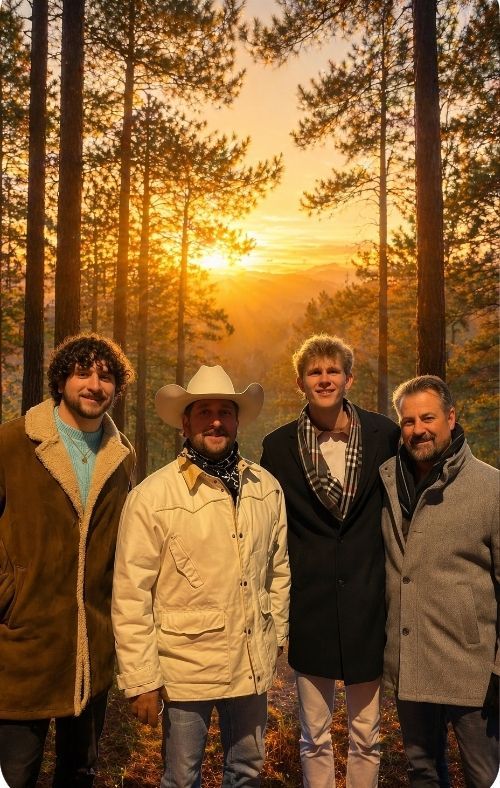
There are some songs that belong to the radio, some that belong to the stage, and a rare few that seem to belong to a family’s soul. The story behind HAROLD REID’S LAST SONG — HIS GRANDSON SANG IT BACK 6 YEARS LATER carries exactly that kind of weight. It is not simply a story about memory, or tribute, or even country music heritage in the usual sense. It is a story about continuity. It is about what happens when a voice that once helped define an era falls silent, yet somehow continues to echo through the people who loved it most.
Harold Reid was never just another singer in a successful group. To generations of listeners, he was the unmistakable bass voice of The Statler Brothers, a voice that brought gravity, warmth, humor, and conviction to songs that became part of the fabric of American country and gospel-rooted music. When he passed away in 2020 after a long struggle with kidney failure, country music lost not only a remarkable performer, but also one of those rare figures whose presence seemed larger than performance itself. By all accounts, he faced the end of his life with deep faith and calm acceptance. His reported words to Jimmy Fortune — that he had been blessed and was ready whenever the Lord called him — reveal something essential about the man: peace, humility, and gratitude.
And yet, what makes this story so moving is not only Harold’s departure, but what followed after it.

Many casual listeners may not realize that the Reid musical legacy never stopped breathing. Harold’s son, Wil Reid, and his nephew, Langdon Reid, have spent years honoring that heritage through Wilson Fairchild, the duo that has quietly built its own place in country music. Their work has not been flashy or built on nostalgia alone. It has been steady, respectful, and deeply rooted in the traditions that shaped them. From appearances at the Grand Ole Opry to years spent opening for George Jones, and from songwriting achievements to carrying forward the family’s musical values, they have served as living proof that legacy is not preserved by words alone. It is preserved through work.
But the most powerful chapter in this family story came when the next generation stepped forward.
On American Songbook, when Wil’s son Jack and Langdon’s son Davis joined their fathers to sing “I’ll Go to My Grave Loving You,” the moment became far more than a recording. It became an emotional bridge between generations. Here was Harold Reid’s grandson and grandnephew singing a Statler Brothers classic not as outsiders revisiting history, but as young men born inside that history. They were not borrowing the family name. They were inhabiting it. They were carrying it with tenderness and with pride.

That is what gives HAROLD REID’S LAST SONG — HIS GRANDSON SANG IT BACK 6 YEARS LATER such lasting emotional force. It speaks to something older country audiences understand instinctively: that music is often strongest when it is handed down, not manufactured. In an age that moves quickly and forgets easily, there is something deeply reassuring about three generations standing inside the same harmony. It reminds us that the best country music has always been about more than charts or trends. It is about home, memory, faith, family, and the quiet endurance of love.
Wil Reid’s reflection is especially revealing. When he said those songs were part of everyday life, and that they did not discover them later because they grew up with them, he captured the heart of the matter. This was never about reviving something dead. It was about continuing something alive. The music was already in the house, already in the blood, already in the daily rhythm of family life. By the time the younger generation stepped up to sing, they were not learning a legacy. They were answering it.
That is why this story feels so much bigger than one performance or one album track. It is a portrait of how musical heritage survives. Not through grand declarations, but through sons, grandsons, and shared songs sung around the table, on the road, in rehearsal rooms, and eventually before an audience. Some legacies do not end at the grave. They simply find new voices, new faces, and new seasons.
And perhaps that is the most beautiful truth in all of this. Harold Reid may be gone, but the love inside the music he helped create still lives on. It lives in the voices of those who came after him. It lives in the harmony of a family that did not let silence have the final word. And for those who still believe country music is at its finest when it tells the truth about love, loyalty, and remembrance, this is not just a touching story.
It is a reminder that some songs are never really finished.