Introduction
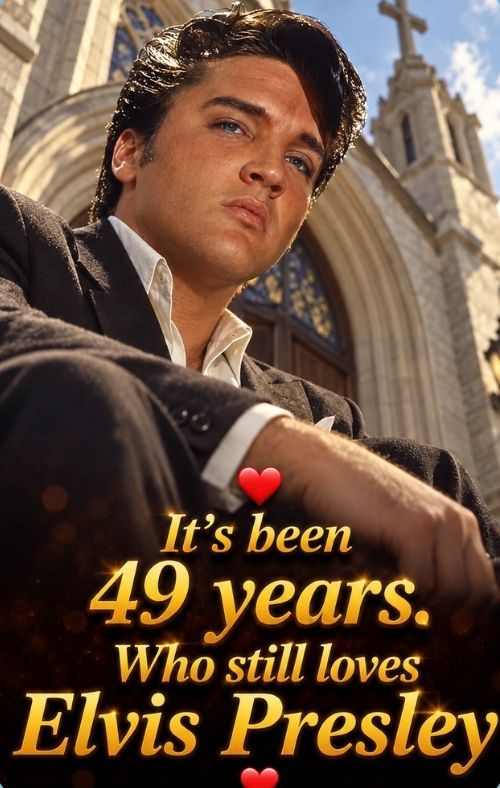
# **THE VOICE THAT WOULDN’T DIE: Nearly 50 Years After Elvis Presley’s Death, an Arkansas Pastor Reignites the Mystery Millions Still Refuse to Let Go**
Some voices belong to a particular moment in history. Others seem to remain in the world long after the person behind them is gone. Few examples illustrate that strange power more vividly than **Elvis Presley**, whose death in Memphis in 1977 brought an extraordinary career to an abrupt end but never truly ended the public fascination surrounding his life.
Nearly half a century later, that fascination has found an unexpected new chapter in Arkansas, where pastor and gospel singer **Bob Joyce** has attracted attention far beyond his church congregation. Joyce has never publicly claimed to be Elvis Presley. That distinction matters. Yet recordings of him singing have circulated widely among listeners who hear something remarkably familiar in his deep voice, phrasing, appearance, and devotion to gospel music.
And from those similarities, an old mystery has been given new life.
For longtime Elvis admirers, the story reaches far beyond simple resemblance. They remember the young man from Tupelo whose voice transformed American popular music, the performer who could move effortlessly from rock and roll to country, ballads, spirituals, and gospel. They also remember that faith was never merely a decorative part of Elvis’s musical identity. Gospel music remained deeply important to him throughout his career. Away from screaming crowds and glittering stages, sacred songs offered him a different kind of musical language—one built around humility, longing, hope, and home.
That history helps explain why hearing **Bob Joyce sing gospel** can be such an emotional experience for certain listeners.
Close your eyes, some fans say, and there are moments when the decades seem to disappear.
It is precisely there, however, that memory and reality must be separated. Elvis Presley was officially pronounced dead on August 16, 1977. The enormous body of historical evidence surrounding his death has not been overturned by the comparisons made between Presley and Joyce. Similar voices, facial characteristics, musical preferences, or mannerisms are not proof of a hidden identity.
But perhaps proof is not what makes this story endure.
Perhaps the deeper story is about the listeners themselves.
**Elvis Presley became more than a recording artist to generations of people.** His songs accompanied first dances, long highway journeys, family gatherings, military service, heartbreak, Sunday mornings, and quiet evenings beside the radio. When an artist becomes connected to that many private memories, losing him can feel surprisingly personal—even decades later.
That is why mysteries surrounding Elvis have survived far longer than most celebrity legends. People are not merely asking whether a famous man somehow escaped death. Beneath that sensational question sits something much more human: **What happens when millions of people are emotionally unprepared to let a beloved voice disappear?**
Bob Joyce has become part of that question almost unintentionally.

His calm gospel performances stand in striking contrast to the extravagance usually associated with Elvis’s Las Vegas years. There are no rhinestone jumpsuits required for the comparison to begin. Sometimes it takes only a low note, a certain pause between words, or the unmistakable emotional weight of a hymn for longtime listeners to feel transported backward.
For older audiences especially, that reaction can be powerful. They remember Elvis not as a historical figure discovered through documentaries, but as a living presence whose records arrived new in shops and whose television appearances could become national events. Hearing even an echo of that voice can awaken memories that have been sleeping for decades.
And perhaps that is the most fascinating part of **THE VOICE THAT WOULDN’T DIE**.
The enduring Bob Joyce mystery may ultimately tell us less about secret identities than about the extraordinary durability of music. A voice can outlive a stage. A song can outlast its singer. Memory can turn a few familiar notes into a doorway through time.
Whether listeners regard the comparisons as coincidence, curiosity, or something they still cannot explain, one fact remains undeniable: almost fifty years after Elvis Presley left the world, people are still listening for him.
Maybe that is why the mystery refuses to disappear.
Not because **Elvis Presley** secretly returned—but because, for millions who grew older with his music beside them, **the King never entirely left.**