Introduction

The Voice Nashville Never Replaced: Why Patsy Cline Still Haunts Country Music
THEY HELD HER FUNERAL IN WINCHESTER, VIRGINIA. 25,000 PEOPLE LINED THE STREETS TO SAY GOODBYE. SHE WAS 30 YEARS OLD. Those words still carry the weight of a national farewell, not simply to a singer, but to a voice that had become part of America’s emotional memory. Patsy Cline’s story was never just about fame, records, or applause. It was about a woman who sang as if every note had passed through real life before reaching the microphone.
Before the world knew her as Patsy Cline, she was Ginny Hensley, a young girl from Winchester, Virginia, singing wherever she could, helping her family, and learning early that music was not decoration — it was survival. That truth never left her voice. Even when the arrangements grew polished and Nashville began to understand what it had in her, there remained something deeply human in the way she sang. She did not merely perform heartbreak; she made it sound dignified. She did not chase emotion; she allowed it to rise slowly, with restraint, grace, and devastating honesty.
Her recording career was brief, almost impossibly brief. Three studio albums should not have been enough to build a legacy that lasted for generations. Yet Patsy Cline became one of the defining voices of country music because she did what only the rarest singers can do: she made a song feel inevitable. When she sang “Crazy,” written by a then-unknown Willie Nelson, she transformed it into something larger than a hit record. It became a standard, a confession, and a permanent fixture on jukeboxes across America. Her version seemed to understand loneliness without surrendering to it.
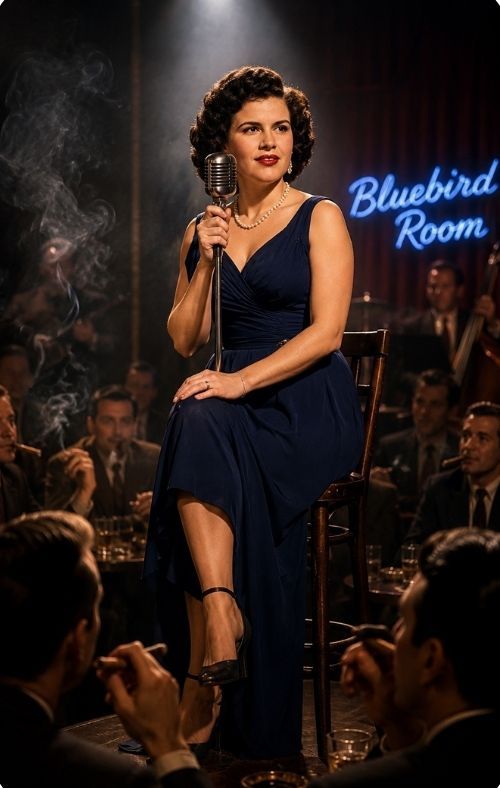
What made Patsy Cline extraordinary was not volume, drama, or spectacle. It was control. Her phrasing had patience. Her tone carried warmth and ache in equal measure. She could hold a note in such a way that older listeners, especially those who had lived through disappointment, hard work, family sacrifice, and quiet resilience, understood her immediately. She sang for people who did not always have the words for what they felt.
Her influence did not end with her passing. In 1973, the Country Music Hall of Fame inducted her as the first solo woman to receive that honor, confirming what listeners already knew: Patsy Cline had changed the future of country music. Artists such as Loretta Lynn, Linda Ronstadt, k.d. lang, Trisha Yearwood, and Wynonna all looked back to her as proof that a woman’s voice could carry authority, elegance, sorrow, and strength all at once.
The tragedy of Patsy Cline’s life is that she left so much unfinished — two children, a dream home, and a career that was still rising. But the miracle of her legacy is that the music never felt incomplete. More than sixty years later, country music has searched for another Patsy Cline and never truly found one. Perhaps that is because voices like hers are not replaced. They remain, quietly playing somewhere in the background, reminding America what truth sounds like when it is sung.