Introduction
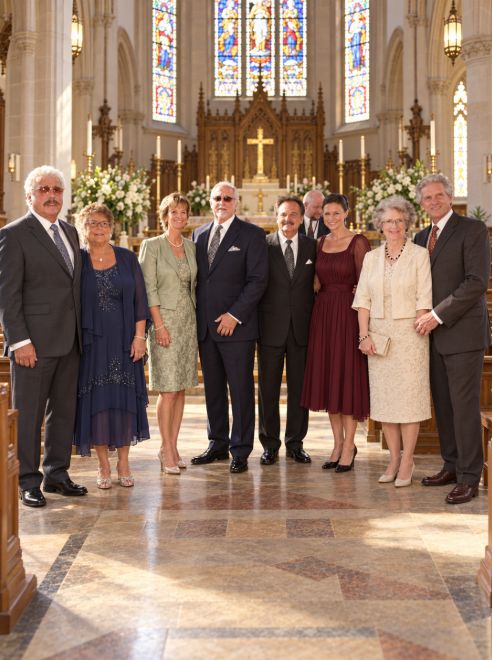
For generations of listeners, The Statler Brothers sounded like familiar company. Their harmonies carried the warmth of a Sunday gathering, the humor of old friends, and the gentle ache of remembering people and places that time had changed. Yet behind that reassuring sound lies a deeply moving story: Lew DeWitt, the founding tenor whose songwriting helped bring the quartet national recognition, eventually became too ill to continue the life he had helped build.
His story deserves close attention. But describing it as a calculated betrayal goes beyond the evidence. The documented account connects his departure to Crohn’s disease, and DeWitt himself recommended Jimmy Fortune as a temporary replacement. That detail changes how we understand the transition—and makes the human story more poignant.
To appreciate DeWitt’s importance, return to “Flowers on the Wall.” Written by him and recorded by the Statlers in 1965, the song became their extraordinary breakthrough, reaching No. 2 on the country chart and No. 4 on the pop chart. It helped introduce audiences far beyond country music to the quartet’s distinctive personality. Beneath its bright surface sits an unsettling portrait of isolation: a narrator insists that his uneventful existence is perfectly satisfactory, while the listener hears something considerably lonelier.
That tension is what makes the recording endure. Its buoyant rhythm invites a smile; its perspective encourages a second thought. For older listeners, especially those who have learned how often humor conceals disappointment, the song offers more than a clever refrain. It captures the distance between what a person says and what another person senses. DeWitt’s songwriting gave that distance a memorable musical shape.
His tenor also supplied an essential color within the quartet. Listen to the early recordings and notice how the upper voice gives the harmony lift and definition. The pleasure comes from the relationship among the singers: individual tones finding a shared balance. Calling DeWitt the sole architect would overlook his colleagues, but treating him as an interchangeable participant would diminish what listeners can hear.
Nor were Harold and Don Reid merely businessmen standing beside a musical genius. Their songwriting supplied many of the group’s important later recordings, including “The Class of ’57” and “Do You Know You Are My Sunshine.” The Statlers’ achievement grew from several creative contributions, each helping establish the group’s identity.
The painful turning point came as DeWitt’s health deteriorated. After hospitalization in November 1981, he needed an extended recovery. He briefly returned to recording and performing in 1982, but recurring symptoms made the demands of the group unsustainable. According to the Library of Virginia, he informed his colleagues that June of his decision to retire from the quartet.
There is considerable sadness in those facts without inventing a hidden war. A performer can help create something lasting and still reach a moment when his body prevents him from remaining inside it. For audiences, a new lineup may appear to be a straightforward continuation. For the person leaving, it marks the loss of a daily purpose, a familiar place, and a future once taken for granted.
DeWitt nevertheless continued making music on a less demanding schedule, performing with his Star City Band and releasing solo albums. Declining health brought his musical career to an end in 1989; he died on August 15, 1990, at 52. Those later efforts deserve remembrance because they show an artist continuing to seek expression beyond the group that made him famous.
Lew DeWitt’s legacy remains formally recognized: he is included in the Statler Brothers’ 2008 Country Music Hall of Fame induction. But the most meaningful tribute is still an attentive listen. Put on “Flowers on the Wall.” Hear the wit, the loneliness, and the unmistakable harmony. Behind a song that generations remember stands a musician whose contribution deserves to be remembered just as clearly.