Introduction

For many gospel music fans, certain voices become part of life’s soundtrack. They accompany us through seasons of joy, moments of grief, Sunday mornings, and quiet evenings when faith feels especially close. Among those unforgettable voices, few have left a mark as profound as Guy Penrod and David Phelps. Their years with the Gaither Vocal Band helped define an era of gospel music that continues to inspire listeners around the world.
But there is a fascinating question worth asking.
What if the greatest legacy of a gospel singer was never the applause, never the standing ovations, and never even the songs that touched millions? What if the greatest legacy was the lives they raised at home? Behind the powerful voices of Guy Penrod and David Phelps are stories that go far beyond the stage, stories of children, of faith, and of a legacy that didn’t end with them, but is still being lived out today.
In an age where success is often measured by awards, ticket sales, and social media attention, the stories of Guy Penrod and David Phelps offer a refreshing reminder that some of life’s most meaningful achievements happen far away from the spotlight.
When people think of the golden years of the Gaither Vocal Band, two voices immediately come to mind. Guy Penrod’s rich, commanding vocals carried a rugged strength that resonated deeply with audiences. David Phelps, meanwhile, possessed a remarkable vocal range that seemed almost impossible, blending technical excellence with heartfelt emotion.
Yet their most enduring work may not be found on any recording.
For fourteen memorable years, Guy Penrod stood at the center of one of gospel music’s most beloved groups. His voice became instantly recognizable, helping shape songs that continue to inspire generations. However, after stepping away from the constant demands of the spotlight, Penrod devoted himself to something even more important.
Together with his wife Angie, he raised eight children—seven sons and one daughter—in a home built upon faith, discipline, and service. Music remained an important part of their lives, but it was never the primary goal. The focus was always on character.
Many fans have been moved by performances featuring the Penrod sons singing together in pure harmony. Without elaborate production, without flashy effects, and often without instruments, their voices reflect something deeper than musical talent. They reveal a family culture shaped by worship, humility, and unity.
What makes the Penrod family particularly remarkable is that most of the children chose paths away from public fame. Some pursued higher education, others entered professional careers, and several embraced private ministries and family-centered lives. Their choices reflect a lesson Guy Penrod has often emphasized throughout the years: the objective is not to raise famous children but faithful ones.
That philosophy is visible throughout the family’s story.

Growing up on a Tennessee farm, the Penrod children learned responsibility through daily work, homeschooling, and shared experiences. Seven of the sons achieved the rank of Eagle Scout, a distinction that speaks to dedication, leadership, and service. These accomplishments may never generate headlines, but they reveal the values that were carefully cultivated within the home.
One son, Levi Penrod, has quietly begun forging his own musical path. As a singer-songwriter, he has shared original music that combines youthful creativity with the spiritual foundation instilled by his parents. His work reflects a new generation carrying forward timeless truths while finding its own voice.
What makes Levi’s journey especially meaningful is the encouragement he receives from his father. Rather than expecting his son to duplicate his own career, Guy Penrod has celebrated Levi’s individuality and creative calling. It is a powerful example of legacy—not replication, but continuation.
The story of David Phelps unfolds differently, yet arrives at a remarkably similar destination.
Known for one of the most extraordinary voices in gospel music, David Phelps has spent decades astonishing audiences with performances that blend classical precision and heartfelt worship. But behind the celebrated career stands a family equally committed to ministry.
Together with his wife Lori, David raised four children in an environment where music and faith were inseparable. Their home became a place where spiritual growth, artistic excellence, and family life existed side by side.
Today, the Phelps children play active roles in what has become a genuine family ministry.
Cally Phelps DeSoto contributes both on stage and behind the scenes, helping shape the visual and creative direction of family events and tours. Maggie Beth Phelps brings passion and emotion to performances, combining theatrical skill with a heart for ministry. Grant Phelps has become known for his musical talent as both a guitarist and vocalist, while Kobe Phelps continues to grow into his own role within the family’s work.
Perhaps nowhere is this legacy more visible than during the annual Barn Bash gatherings.
What began as a unique event has evolved into something much larger—a celebration of family, faith, music, and community. Visitors often leave with the same impression. Beyond the exceptional talent, they witness genuine unity. They see a family serving together rather than competing for attention.
In an entertainment culture where success sometimes creates distance between family members, the Phelps family presents a different picture. Their ministry has become a shared mission rather than an individual achievement.
The comparison between the Penrods and the Phelpses is fascinating because their paths are not identical.
The Penrod family often reflects a quieter, more private expression of ministry. The Phelps family embraces a more public, collaborative approach. Yet beneath those differences lies the same foundation: faith, purpose, and intentional parenting.
Both families demonstrate that ministry is not merely something performed from a platform. It is something lived every day through relationships, choices, and example.
As we look at these two remarkable families in 2026, one truth becomes impossible to ignore. The greatest accomplishments of Guy Penrod and David Phelps may never be measured by record sales, concert attendance, or industry recognition.
Instead, their greatest achievement may be the lives they helped shape.
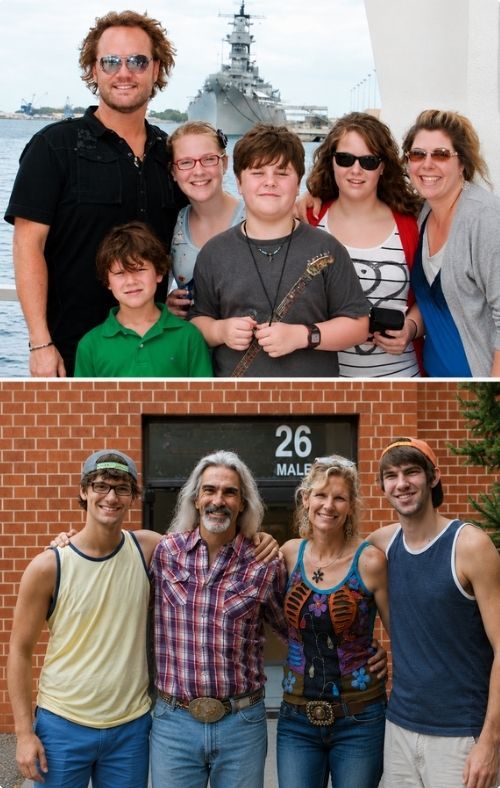
Their children stand as living testimonies to values that transcend popularity and fame. They remind us that while songs eventually fade and stages eventually grow quiet, character continues speaking long after the final note has been sung.
And perhaps that is the lesson that resonates most deeply.
In a world constantly chasing recognition, the stories of Guy Penrod and David Phelps remind us that true legacy is not built by the size of an audience. It is built through faithfulness, one life at a time.
Long after the applause has ended, their legacy continues to sing.
Not merely through music.
But through the children who carry their faith, their values, and their example into the future.