Introduction
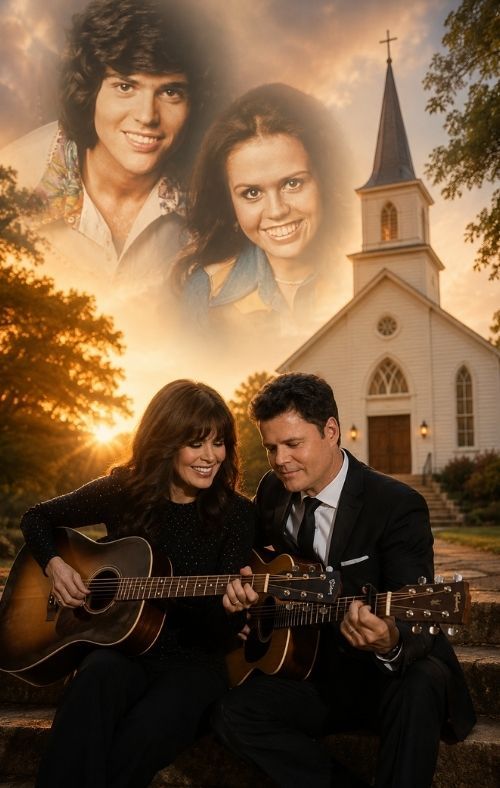
In revisiting Donny & Marie Osmond On Why Blacks Can’t Hold Priesthood In Mormon Church, we are not simply looking back at an old television interview. We are stepping into a difficult cultural moment, one where fame, religion, race, youth, and public accountability collided under the bright lights of American television. For older viewers especially, this clip may feel less like entertainment and more like a time capsule — a reminder of how openly certain questions were once asked, how cautiously public figures answered, and how deeply society has changed since then.
Donny and Marie Osmond were not ordinary celebrities in the 1970s. They represented a clean, family-friendly image at a time when American popular culture was changing rapidly. Their music, television presence, and polished sibling charm made them familiar faces in millions of homes. But behind the smiles and harmonies was also a public identity closely tied to their Mormon faith. That connection made interviews about their beliefs unavoidable, especially when those beliefs touched on painful social issues.
The subject of race and priesthood in the Church of Jesus Christ of Latter-day Saints remains one of the most sensitive chapters in modern religious history. The church’s own historical materials state that, beginning in the 19th century, Black men of African descent were restricted from priesthood ordination, and Black members were also restricted from certain temple blessings until 1978. The church later stated that previous explanations used to justify those restrictions are not accepted today as official doctrine.
That context matters because this interview appears at the edge of a turning point. In 1978, the LDS Church announced that worthy male members of all races could receive the priesthood and that temple blessings would be available regardless of race. For viewers today, the older language in the interview may sound uncomfortable, even shocking. Yet that discomfort is exactly why the clip still holds attention. It shows how young entertainers, raised inside a particular religious framework, responded when asked to explain a policy that carried enormous moral weight.

What makes the moment especially compelling is not that Donny and Marie were theologians or historians. They were performers, public personalities, and young representatives of a famous family. Their answers reveal the tension between loyalty to faith and the pressure of answering a national question in real time. For modern audiences, the clip invites a more serious reflection: how do public figures speak when inherited beliefs meet public scrutiny? How should history remember youthful answers given inside systems larger than the individuals themselves?
Viewed today, Donny & Marie Osmond become more than pop-culture icons in matching costumes and bright studio lights. They become figures caught inside a broader American conversation about race, religion, obedience, and change. This is not merely a clip about Mormonism, nor only about two famous siblings. It is a reminder that television sometimes preserves the questions society was not yet ready to answer honestly.
For readers who remember Donny and Marie as symbols of warmth, music, and family entertainment, this interview may feel jarring. But it also offers a chance to look at the past with seriousness rather than cruelty. The value of revisiting it lies not in condemnation alone, but in understanding the distance between then and now — and in recognizing how public conversations about faith and equality have evolved.
In that sense, Donny & Marie Osmond On Why Blacks Can’t Hold Priesthood In Mormon Church is not a song, but it carries the weight of a cultural performance. It is a moment when image met history, when innocence met controversy, and when America watched two young stars answer a question far larger than their stage.