Introduction
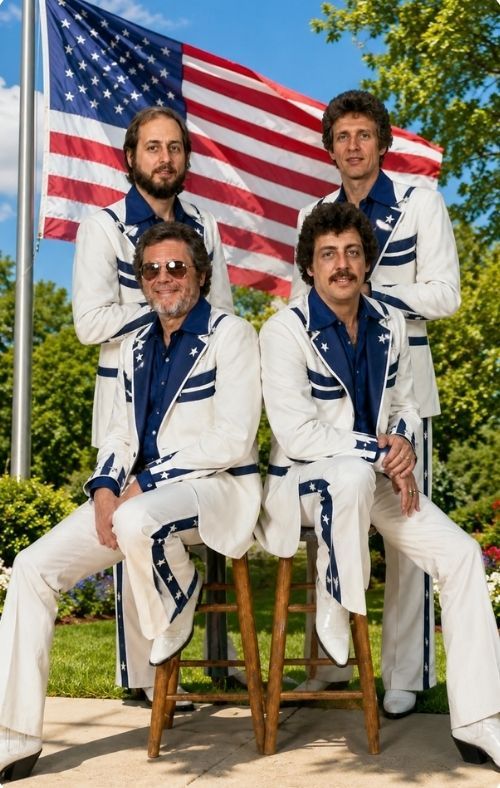
NASHVILLE EXPECTED THEM TO MOVE CLOSER TO THE BUSINESS. FOUR MEN FROM STAUNTON, VIRGINIA, SAID NO — AND MADE THE BUSINESS COME TO THEM.
In country music, success has often been measured by how close an artist can get to Nashville. For generations, Music Row stood as the center of ambition, the place where singers went to be discovered, shaped, polished, and transformed into stars. But The Statler Brothers never quite fit that pattern. They did not build their legend by abandoning their roots. They built it by honoring them. Four men from Staunton, Virginia, proved that a hometown could be more than a place you came from. It could be the foundation of everything you became.
Their story has always carried a touch of unlikely charm. They were not brothers by blood, and none of them was named Statler. The name came from a box of tissues in a hotel room, a simple accident of imagination that somehow became one of the most respected names in American harmony. But behind that unusual name stood something deeply real: four voices shaped by church music, small-town values, close friendship, and a kind of discipline that fame could not easily disturb.
When Johnny Cash encountered them in Virginia in 1964 and brought them onto the road, it changed the direction of their lives. Opening for Cash gave them an education no classroom could provide. They learned how to hold an audience, how to survive long miles, and how to treat music not simply as performance, but as a calling. Then came “Flowers on the Wall,” the breakthrough that introduced their wit, originality, and vocal precision to a national audience. Awards followed. Television followed. The industry began to look toward them with fresh interest.
And naturally, Nashville expected them to come closer.

That was what rising country acts were supposed to do. Move to the center. Join the machine. Be seen in the right rooms, at the right tables, with the right people. But The Statler Brothers made a different decision. They kept Staunton as home. That choice says almost everything about who they were. They understood that their music did not come from a boardroom or a trend. It came from memory, community, faith, humor, family, and the ordinary places where real people live.
Their decision to buy and renovate Beverley Manor, their old elementary school, was more than a business move. It was a statement of identity. They took the place where childhood lessons once began and turned it into headquarters for a career that had already reached the national stage. In doing so, they made Staunton part of the Statler story forever. Fans did not simply love the records; they loved the world those records seemed to come from.
Every Fourth of July, that bond became visible. Their hometown celebrations drew astonishing crowds, sometimes reaching numbers that would have seemed impossible for a small Virginia town. But that was the power of The Statler Brothers. They did not chase the crowd by pretending to be something they were not. They invited people into the world they already knew.
Their honors speak loudly: Three Grammys, nine straight CMA Vocal Group awards, another CMA honor years later, the Country Music Hall of Fame, and the Gospel Music Hall of Fame. Yet the deepest measure of their success may be quieter than any trophy. They proved that loyalty could be a form of greatness. They showed that staying rooted was not the same as staying small.
Some artists leave home to find themselves. The Statler Brothers reminded America that sometimes home is the reason the music matters in the first place.
Video
https://youtube.com/shorts/lgw97eRKcrE?si=YMrLegReRe-vDNLv