Introduction
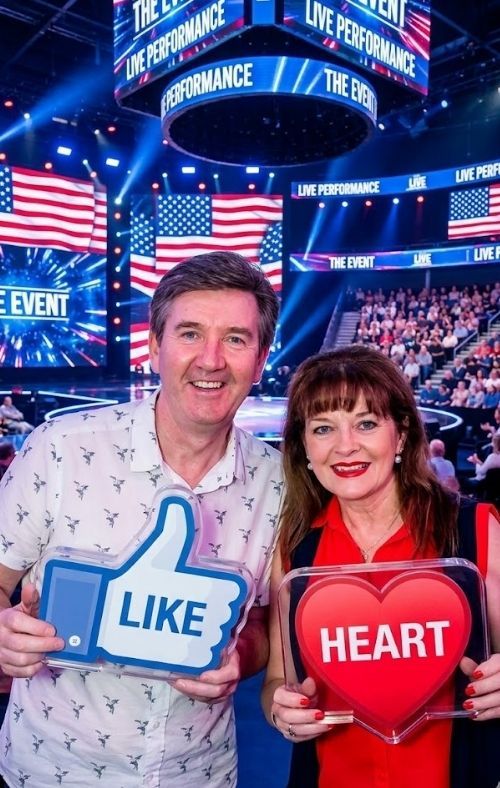
For listeners who have spent a lifetime appreciating melody over noise and sincerity over spectacle, few musical partnerships feel as warmly familiar as Daniel O’Donnell and Mary Duff. Their appeal was never built on theatrical excess or fashionable reinvention. Instead, it rested on something far more durable: trust, vocal balance, emotional clarity, and the kind of stage presence that made audiences feel welcomed rather than overwhelmed. That is why the simple prompt Which of Daniel O’Donnell and Mary Duff fit do you prefer. carries more feeling than grammar. Beneath it lies a real and lasting affection from listeners who have followed these two artists through decades of performance, recordings, and live duets that seemed to bring comfort as much as entertainment.
Daniel O’Donnell became one of the most recognizable Irish recording artists of his generation, building an unusually long chart run in the U.K., while Mary Duff rose as a respected Irish country and folk singer closely associated with him for many years. Their partnership became formal enough to produce a joint album, Together Again, released in 2007, filled with duets that reflected their easy musical compatibility. What listeners responded to was not merely the novelty of two beloved singers sharing a stage. It was the sense that each voice left room for the other. Daniel brought steadiness, gentleness, and unmistakable warmth. Mary brought brightness, poise, and an expressive softness that never felt forced. Together, they created the kind of musical conversation that older audiences especially value—civil, melodic, heartfelt, and free of unnecessary strain.
That is why the question of preference is so fascinating. When people ask, in essence, which Daniel and Mary performance they prefer, they are not only comparing songs. They are choosing emotional atmospheres. Some listeners are drawn to the tenderness of “Do You Think You Could Love Me Again,” a duet associated closely with the pair in live performance clips. Others may favor “Say You Love Me,” “Save Your Love,” or “You’re My Best Friend,” songs that showcase how naturally their voices sit together in material built on affection, memory, and quiet devotion. In each case, the pleasure comes from more than the lyric. It comes from the feeling that neither singer is trying to dominate the song. They share it. That quality has become increasingly rare, and perhaps that is one reason their duets continue to resonate so deeply.
For mature listeners, there is another layer to this appeal. Daniel O’Donnell and Mary Duff belong to a tradition of performance in which connection mattered as much as technical perfection. Their songs feel accessible, but never careless. Their delivery is warm, but never sentimental in a shallow sense. Even when the material is simple, they bring to it a depth that seems shaped by experience. Audiences who have loved, lost, endured, and remembered hear something in these performances that younger ears may miss: emotional steadiness. The songs do not shout. They stay. And the more one lives, the more valuable that kind of music becomes.
So when readers or viewers ask Which of Daniel O’Donnell and Mary Duff fit do you prefer., they may really be asking a larger question: which mood, which memory, which chapter of life do these duets awaken in you? That is the secret behind the pair’s lasting power. Their music invites personal memory. One listener hears companionship. Another hears reassurance. Another hears an echo of evenings when songs were chosen not for trend, but for comfort and meaning.
In the end, the real answer may be that there is no single definitive favorite because Daniel O’Donnell and Mary Duff never offered just one kind of duet. They offered a musical companionship that could feel playful one moment, tender the next, and deeply nostalgic throughout. That is why their partnership still matters. Not because it was loud, but because it was lasting. And for many listeners who still value grace, melody, and emotional honesty, that will always be more than enough.