Introduction
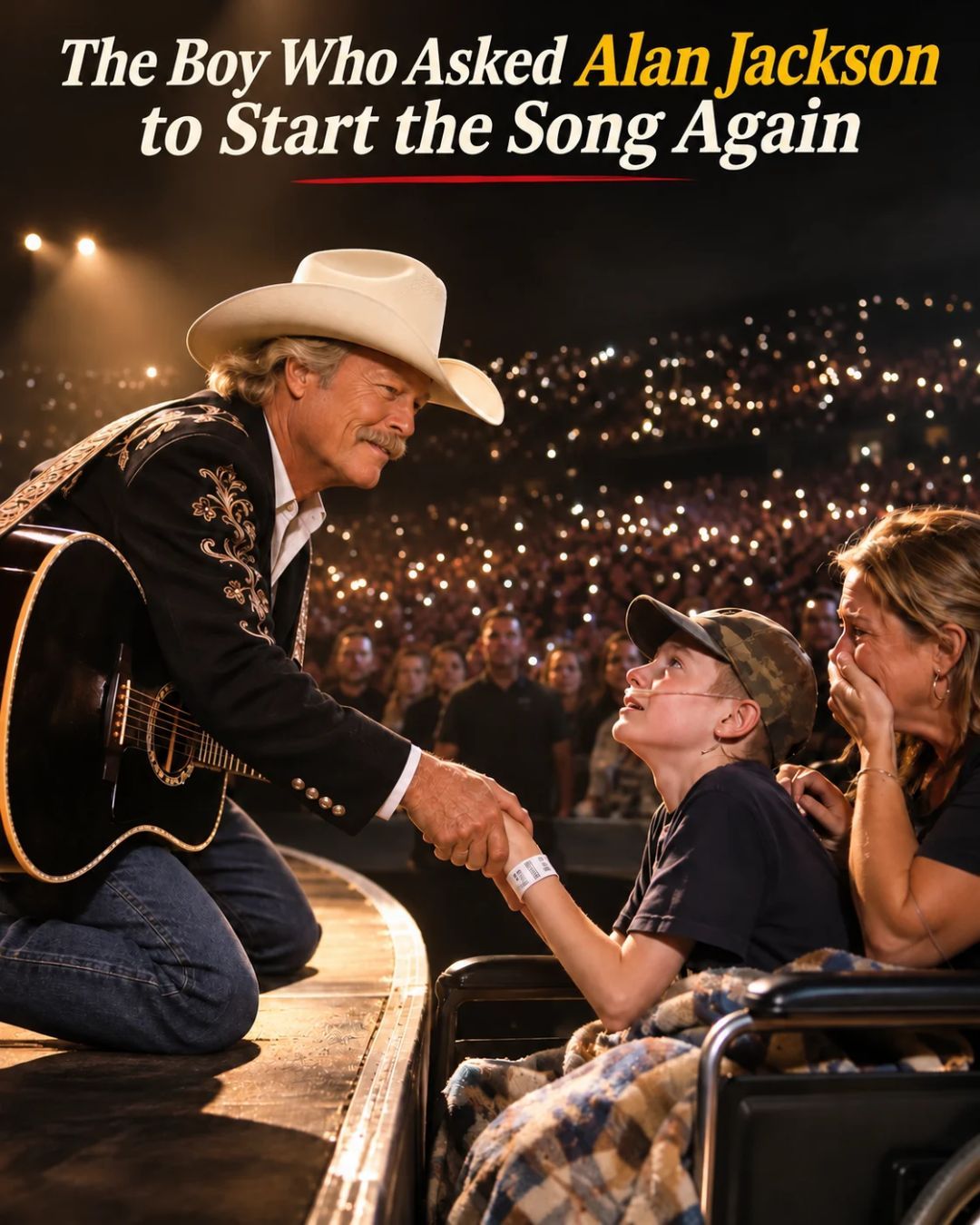
The Boy Who Asked Alan Jackson to Start the Song Again
In this imagined concert scene, Alan Jackson is halfway through “Drive (For Daddy Gene)” when he pauses to acknowledge a young fan in the front row. The boy, who is living with a terminal illness, has come with his father to hear the song they play together in the truck. When Jackson asks if there’s anything he’d like to hear, the boy has a request. Could he start that one again? His dad likes to sing the first verse. Jackson turns back to the band and gives them the signal to start from the top. The second time through, the boy watches his father as much as he watches the stage.
I chose “Drive (For Daddy Gene)” for this story because it understands what a child can remember about an afternoon that might have seemed ordinary to a parent. Jackson’s song begins with a boy at the controls of a little boat. Later comes an old truck, with his father beside him as he learns to drive. The pride the boy takes in both experiences comes through in the scale of his imagination. An old boat feels far grander when you’re the one steering it. Years later, the detail that stays with you may be the sound of your father’s voice telling you where to look.

Listen to the way Jackson sings those early verses. He makes room for details about motors and gears, delivering them with the ease of someone who’s been waiting for a chance to tell you about that old truck. Then the melody lifts, and you hear how big the experience felt to the kid behind the wheel. That change gives the record much of its pleasure. An adult can hear the patience it took to sit beside a beginner. A child can hear the thrill of being trusted with something that usually belongs to the grown-ups.
By the final verse, Jackson has become the father doing the teaching. His daughters get their turn behind the wheel, and the song leaves open the sweetest question of all. Which part of that afternoon will they remember when they’re old enough to tell the story themselves? A parent might remember giving directions or reaching over to help. A child might remember being allowed to try again after getting it wrong. Jackson’s official account of his songwriting notes that his daughters are part of “Drive (For Daddy Gene),” which gives that last turn an extra intimacy.
Back in the imagined arena, the father knows the opening verse well enough to sing without looking up. Maybe he’s sung it a hundred times while keeping his eyes on the road, his son beside him counting the miles to wherever they were going. This time, the boy gets to turn and watch him. And when Jackson reaches the part about a father letting his child take the wheel, you can understand why the boy wanted to hear the song from the beginning. He wanted to hear his dad sing it, too.