Introduction
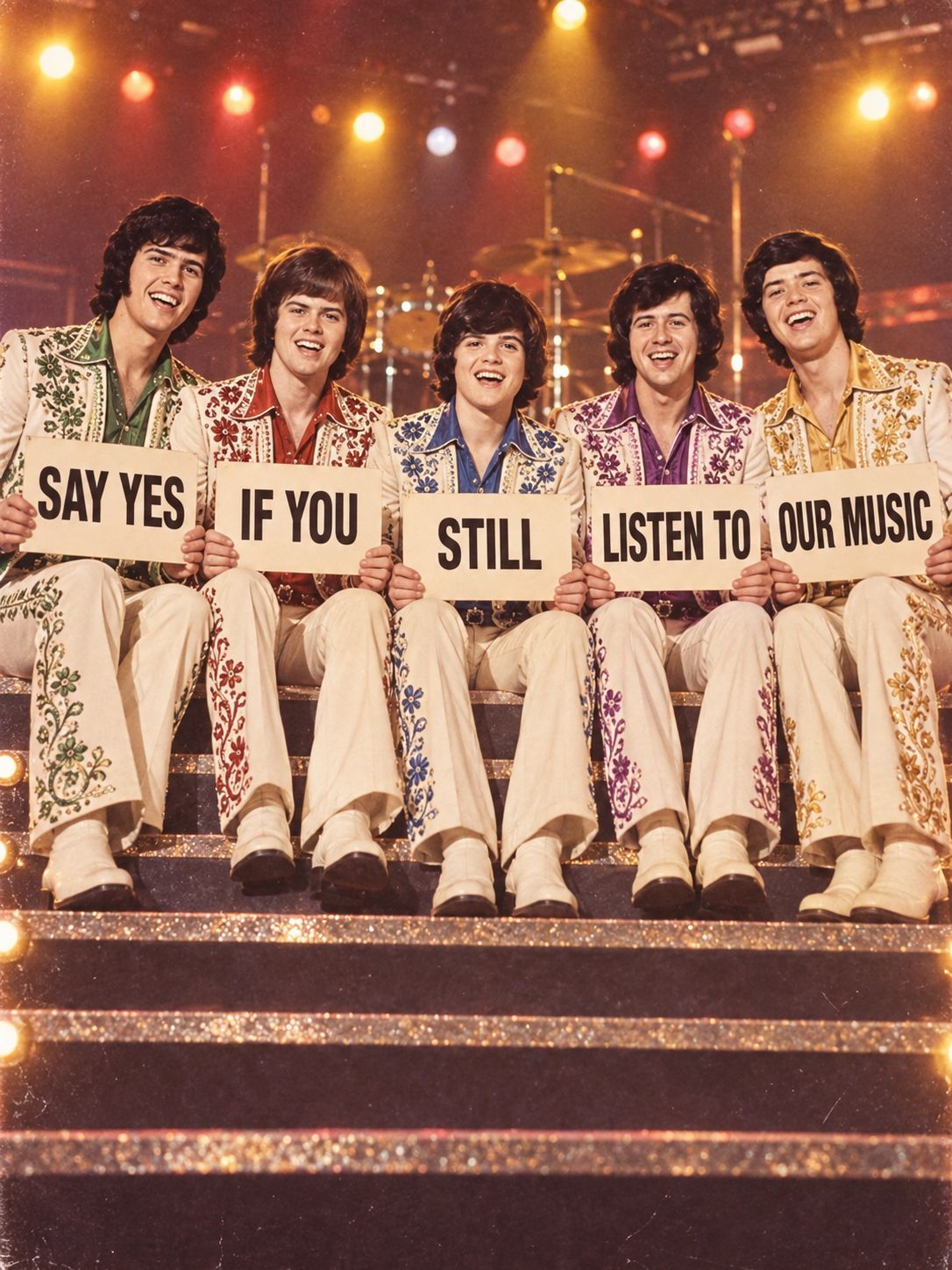
Some records bring back a particular year. Others bring back the feeling of being young enough to believe that a song on the radio could brighten an entire afternoon. The Osmonds’ “Yo Yo” belongs to that second category. Spirited, rhythmically engaging, and filled with vocal personality, it invites listeners to rediscover the pleasure of a pop performance that knows exactly how to hold their attention.
Recorded by The Osmonds in 1971, “Yo Yo” was written by Joe South and had previously been recorded by Billy Joe Royal. The brothers brought their own identity to the song, turning its central image of emotional ups and downs into an energetic musical exchange. Their recording reached No. 3 on the Billboard Hot 100, securing its place among the group’s memorable early hits.
What makes the performance appealing is the relationship between its unsettled subject and its confident delivery. The song describes the frustration of being pulled back and forth by someone whose feelings seem difficult to read. Yet the music moves forward with assurance. That tension gives “Yo Yo” its character: uncertainty becomes something listeners can recognize, follow, and even enjoy through the rhythm.
The title’s everyday image is particularly effective. A yo-yo travels away and returns, rising and falling while remaining attached to a string. As a metaphor for an unpredictable relationship, it needs little explanation. Joe South’s songwriting takes a familiar object and gives it emotional meaning without burdening the song with elaborate language. There is a quiet intelligence beneath the catchy surface, and that simplicity helps the idea remain memorable.
For listeners who appreciate the craft of group singing, The Osmonds’ vocal interplay offers another reason to return. The lead passages and answering voices create a sense of conversation. The ensemble gives the performance movement and emphasis, allowing a phrase to land before the next response carries it onward. Listen beyond the instantly recognizable hook, and the precision of those exchanges becomes part of the enjoyment.
The arrangement also rewards attention. Its rhythmic pulse keeps the song buoyant, while the instrumental accents give the voices something lively to push against. There is a pleasing economy to the performance: the musical elements support the central idea, and the momentum rarely slackens. “Yo Yo” demonstrates how much personality a compact pop recording can contain when rhythm, phrasing, and melody work together.
For many older listeners, hearing this song again may recall the ordinary settings in which music once became part of daily life: a kitchen radio, a record player in the living room, or a favorite station playing during a drive. Those associations are personal, but the record offers more than a reminder of another era. Its energy remains accessible even to someone encountering it for the first time.
Ultimately, The Osmonds – “Yo Yo” endures because it makes musical discipline sound effortless. Beneath its cheerful momentum lies a recognizable account of uncertainty, delivered with clarity and an infectious sense of motion. Return to it with fresh ears, and the familiar refrain becomes an invitation to appreciate the craftsmanship that made it so easy to remember in the first place.