Introduction
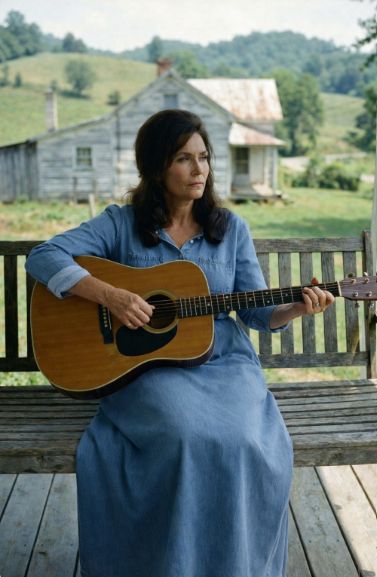
Loretta Lynn Didn’t Ask Permission — She Sang the Truth Loud Enough to Change the Room
Some songs arrive like a lightning bolt: sudden, controversial, and impossible to ignore. Others take years before we fully understand what they did to the culture. Loretta Lynn’s “The Pill” belongs to both categories. It wasn’t just a hit or a headline—it was a moment when country music, often painted as polite and cautious, revealed its sharper edge: the part willing to speak plainly about working-class life, women’s burdens, and the private decisions that shaped families behind closed doors.
SHE SANG WHAT WOMEN WERE ONLY WHISPERING. That sentence isn’t exaggeration—it’s a key to understanding why Loretta’s music still lands with such force, especially for older listeners who remember what the world felt like before public language caught up to private reality. Long before the modern vocabulary of “empowerment” and “lived experience,” Loretta wrote from the kitchen table, from the porch, from the back roads of Kentucky—places where people didn’t theorize about life. They survived it.
Before “empowerment” was a buzzword, there was Loretta Lynn in a gingham dress. In 1975, she released “The Pill.” The image matters: gingham dress, no pretension, no attempt to sound “important.” Loretta’s genius was that she didn’t dress up the truth to make it acceptable. She delivered it in a voice that sounded like your aunt, your neighbor, the woman in line at the grocery store—steady, funny, tired, brave. That’s why the song hit so hard.
And the backlash tells you everything: Radio stations banned it. Preachers condemned it. But Loretta stood firm. She wasn’t trying to start a revolution. This is where Loretta’s particular courage shows. She wasn’t a provocateur chasing scandal. She was a storyteller insisting that ordinary women’s realities were worthy of being sung. In a genre that prized “relatability,” she exposed how selective that relatability could be—how comfortable the industry was with certain kinds of hardship, and how panicked it became when a woman described her own life without softening the edges.
She was just telling the truth about her life in Kentucky. While the industry panicked, housewives across America turned up the volume. She gave a voice to the rural realities that polite society ignored. That’s the real legacy of “The Pill.” The song didn’t create those realities; it acknowledged them. It didn’t invent women’s fatigue, or the quiet strain of carrying responsibility year after year. It simply put language—and melody—around what many already felt but rarely said out loud.
Musically, Loretta delivered the message with the same clarity she brought to all her best work: direct phrasing, conversational timing, and that unmistakable mix of humor and steel. She could make a sharp point without sounding cruel, and she could be bold without losing warmth. That balance is why “The Pill” endures. It isn’t a lecture. It’s a life story set to music—one that asks the listener to stop pretending.