Introduction
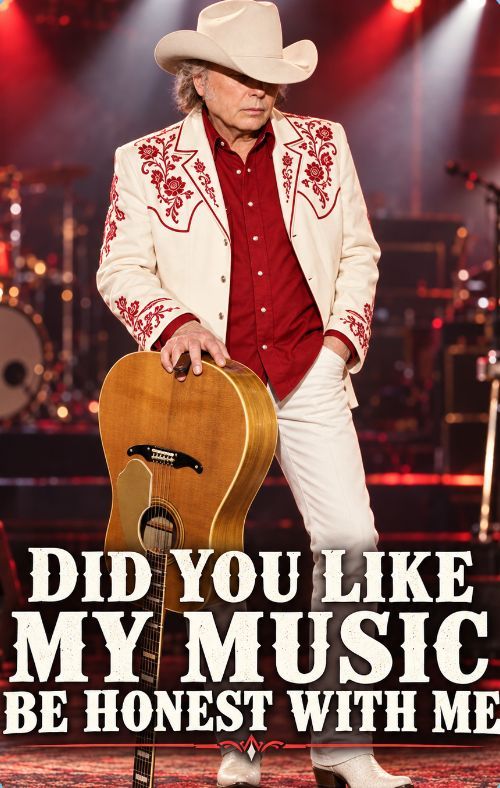
Before the familiar silhouette, before the unmistakable voice became part of country music’s identity, Dwight Yoakam faced a problem that talent alone could not solve: the music he wanted to make did not fit comfortably into the business he hoped to enter. His story raises a question that reaches well beyond Nashville. How much of yourself should you change simply to be given a chance?
For listeners who have spent a lifetime watching fashions arrive and disappear, that question carries weight. We have heard extraordinary singers become increasingly difficult to recognize beneath fashionable arrangements. We have watched individuality turn into imitation. Yoakam’s appeal rests partly in the opposite experience: hearing someone whose musical character remains clear from the first phrase.
His early difficulties in Nashville had a practical context. The Nashville Songwriters Hall of Fame describes a mismatch between his modern honky-tonk approach and the city’s more pop-oriented commercial climate. He eventually moved to Los Angeles, where his band found an audience in rock and punk clubs. What seemed difficult to place in one musical community became compelling in another.
That change of setting is essential to understanding his sound. PBS documents how Yoakam developed his brand of country music while playing the same nightclub circuit as acts including X, Los Lobos, and the Blasters. Those surroundings help explain the sense of urgency that listeners hear in his work: traditional country feeling delivered with an energy capable of reaching an unfamiliar room.
Listen closely to Dwight Yoakam, and the attraction becomes more interesting than a simple story of rebellion. His voice has a narrow, piercing quality that can make a line sound both defiant and wounded. He often seems to hold an emotion slightly in reserve, allowing the listener to discover the hurt beneath the rhythm. The performance moves forward even when the feeling inside it remains unresolved.
That tension gives his music much of its lasting power. A bright guitar figure can accompany a deeply lonely thought. A lively beat can carry disappointment without making light of it. For an older audience, familiar with the distance between outward composure and private sorrow, this is recognizable emotional territory.
The influence of honky-tonk and the Bakersfield sound provides another important foundation. The Kentucky Music Hall of Fame identifies those traditions as central to his stripped-down approach. In his recordings, that musical vocabulary offers space for sharp instrumental responses, rhythmic momentum, and a voice whose distinctive edges remain audible.
It is tempting to turn such a career into a dramatic confession: a secret finally revealed, a rumor finally settled. Yet the more rewarding revelation is available in the music itself. Yoakam’s performances invite us to consider how conviction sounds when it survives disappointment. There is pride there, certainly, but also vulnerability—the knowledge that choosing your own direction offers no guarantee that anyone will follow.
For those returning to his songs after many years, that combination can feel even richer. Youth may hear the swagger first. Experience notices the uncertainty beneath it, the ache inside the confidence, the care required to make an old musical language feel personal.
Dwight Yoakam’s outsider journey gives those songs an illuminating backdrop. He found a setting in which his differences could become strengths, and listeners found a voice they could recognize. Long after an attention-grabbing headline has faded, that recognition remains: the pleasure of hearing an artist sound unmistakably like himself.