Introduction
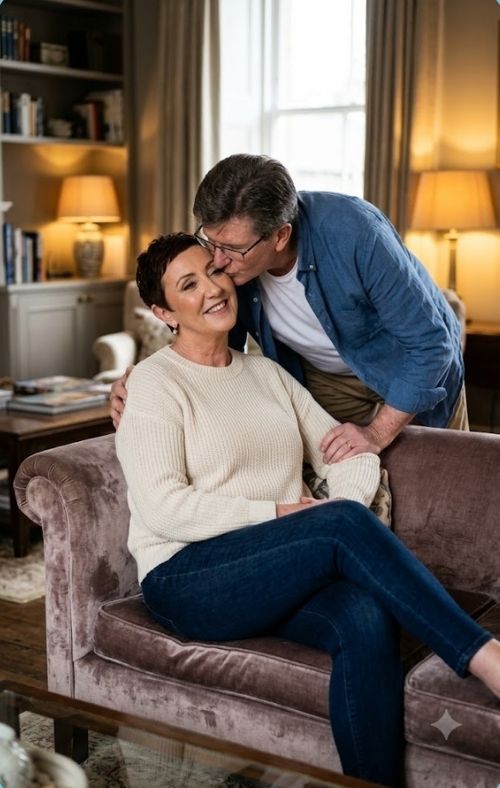
For admirers of Daniel and Majella O’Donnell, her story has long been about something deeper than celebrity. It is a story of courage, family, uncertainty, and the quiet determination to keep living normally when life suddenly becomes anything but normal.
It is important, however, to correct one serious detail circulating online. There is currently no reliable evidence supporting the claim that Majella O’Donnell was diagnosed with liver cancer. What has been publicly documented is that Majella O’Donnell was diagnosed with breast cancer in 2013, beginning a difficult period of treatment that she later discussed with remarkable openness.
Her diagnosis arrived at a time when many people knew Majella primarily as the warm, outspoken woman beside one of Ireland’s most beloved entertainers. Suddenly, audiences were seeing another side of her life—not the comfortable world of television appearances and music, but the frightening reality experienced by countless families when a doctor delivers a cancer diagnosis.
Majella underwent treatment that included chemotherapy, radiotherapy and surgery. Yet one of the defining moments of her public journey came when she chose to have her hair shaved on The Late Late Show while raising money for the Irish Cancer Society. The response was extraordinary, generating hundreds of thousands of euros and turning an intensely personal experience into support for others confronting the same frightening uncertainty.
That moment mattered because Majella was not presenting herself as someone untouched by fear. Instead, she demonstrated something far more recognizable to ordinary people: the ability to be frightened and still move forward.
Daniel’s presence throughout that chapter also gave the story an emotional weight familiar to longtime fans. When illness enters a marriage, it rarely belongs to only one person. Plans change, priorities shift, and everyday moments suddenly acquire greater meaning. Daniel reportedly considered stepping away from his work, but Majella encouraged him to continue because she did not want cancer controlling every aspect of their lives.
Years later, her experience continues to shape the way people regard her. She became associated not merely with surviving illness, but with speaking honestly about difficult subjects and encouraging others to seek help when something feels wrong.
Her public conversations have continued into 2026. Recent interviews have focused not on a new liver-cancer diagnosis but on other aspects of her health and wellbeing. In July 2026, Majella discussed treatment for depression and a recent ADHD diagnosis, while reflecting again on the breast cancer she faced in 2013. An RTÉ feature published earlier in 2026 likewise described that breast-cancer diagnosis as part of her past medical journey.

Perhaps that is why Majella O’Donnell’s story continues to resonate with an older generation that understands how quickly life can change.
There is no dramatic song capable of removing the fear contained in the word “cancer.” There is no stage light bright enough to make uncertainty disappear. But there can be dignity. There can be family. There can be humour, faith, friendship and the decision to continue putting one foot in front of another.
And that may be the most enduring part of Majella O’Donnell’s cancer journey.
Her story is not one that needs an invented new diagnosis to make it powerful. The documented truth is already moving enough: a woman faced breast cancer publicly, endured demanding treatment, helped raise substantial funds for others, and years later continues speaking openly about the difficult chapters of her life.
For the people who have followed Daniel and Majella for decades, that honesty may ultimately be more meaningful than any sensational headline.