Introduction
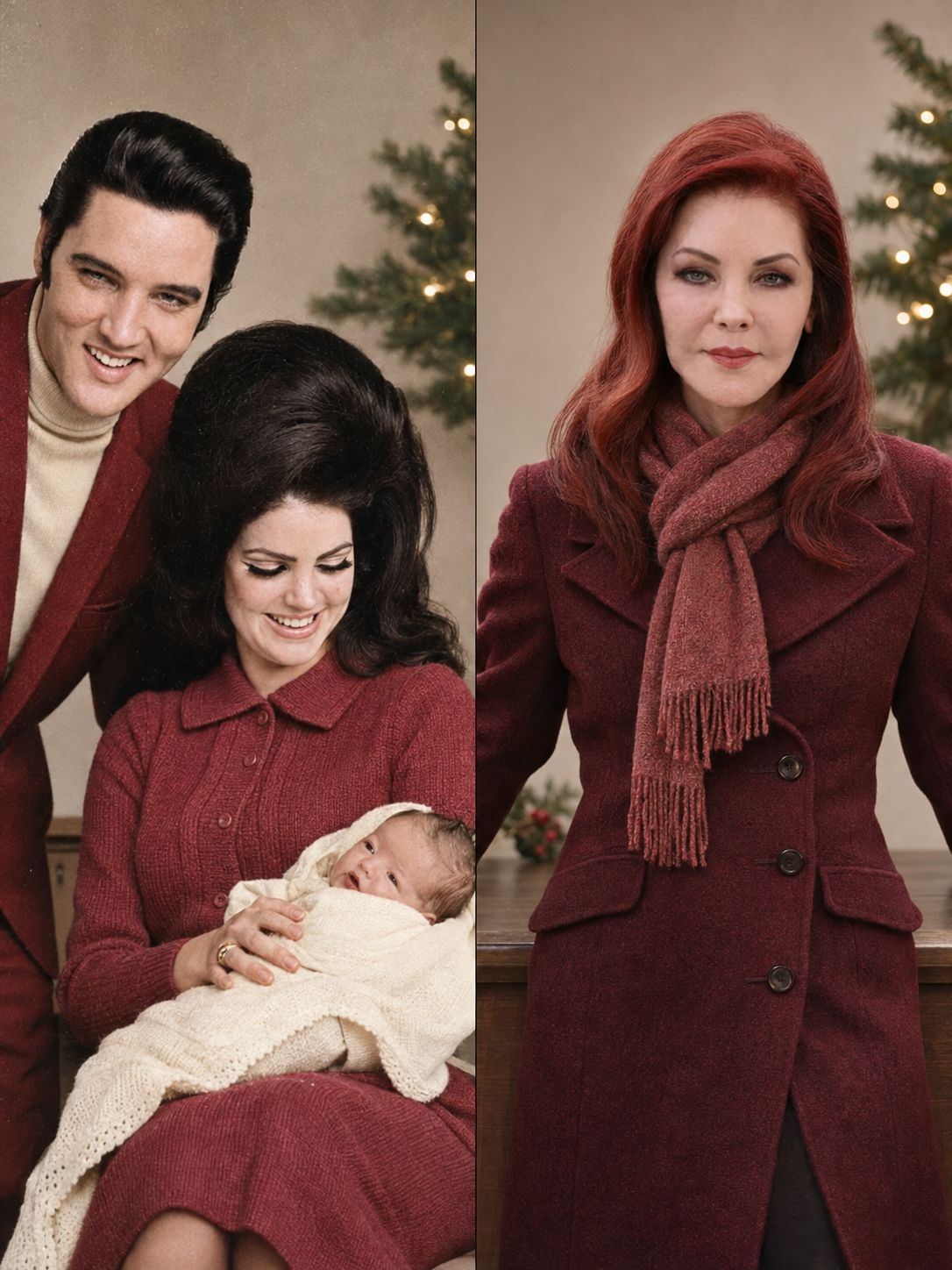
Put on “Can’t Help Falling in Love” and listen to how gently Elvis Presley begins. He takes his time with the melody, giving each phrase room to settle before he moves on. The performance has an air of certainty, as if the singer knows something his listener is only just beginning to understand. That quality makes the song an intriguing place to begin with a question Presley fans have long found tempting. What if Elvis and Priscilla had stayed together? Imagine them growing older side by side, hearing that familiar recording decades after it was made. Would it have sounded like a keepsake from their youth, or would the years have given its promise a different meaning?
The question has a particular pull because so much of Elvis and Priscilla Presley’s story survives in photographs. A wedding portrait holds two people at a moment when the future is still open. A photograph taken years later invites us to look for everything that happened in between. A recording works differently. Elvis’s voice comes back at the same age, with the same small hesitations and the same force, every time we press play. We are the ones who have grown older. Anyone who has rediscovered a favorite record after twenty or thirty years knows how sharply that difference can be felt. The familiar voice can bring back a person, a room, or an earlier version of ourselves in a matter of seconds.
Consider “Always on My Mind.” Elvis sings it with the gravity of someone who has had time to think about what he should have said sooner. Listen to the way the verses make room for ordinary regrets before the melody opens up on the title phrase. The movement gives the apology its weight. In an imagined life where Elvis and Priscilla remained together, the song might call to mind the small repairs that keep a long marriage going. A missed kindness is remembered. A difficult conversation is finally begun. Anyone who has shared a home for many years knows how much can depend on finding the right words on an otherwise ordinary day.
Then there is “Separate Ways,” a performance that makes the question harder to answer. Elvis lets the sadness come through in the phrasing, especially when his voice lingers at the end of a line. Heard alongside “Can’t Help Falling in Love,” it shows how much territory he could cover as a ballad singer. He could give a promise the quiet assurance of something already understood. He could also make a farewell sound like a decision that would take a long time to live with. Both performances have a tenderness that leaves room for the people on either side of the story.
It is tempting to picture Elvis and Priscilla in their later years listening to one of those records at home. The detail I find most moving is an ordinary one. Perhaps a song comes on, and one of them remembers the afternoon it was recorded while the other remembers where they first heard it. They have two memories of the same voice. That is what makes this particular what if worth sitting with. We know these songs by heart, and a different ending to a familiar story can draw our attention to a pause, a change in tone, or a line we used to sing past. Begin with the first few bars of “Always on My Mind.” After all these years, there is still something to hear in the time Elvis takes before he gets to the words he most wants to say.