Introduction
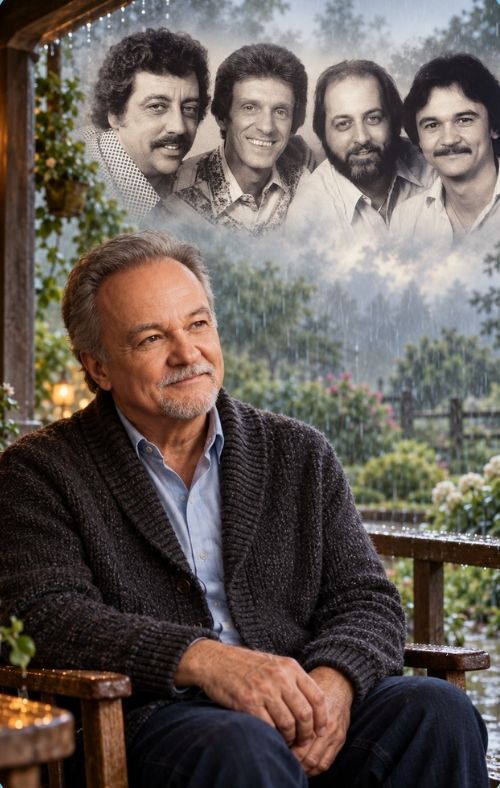
For anyone who has ever had to begin again after years of steady work and familiar surroundings, Jimmy Fortune’s story carries a particular weight. In the interview shared here, the singer recalls a moment when the applause of a celebrated career gave way to a much humbler reality: a microphone at a fairground racetrack, a small audience, and a horse trailer offered as a dressing room. What makes the story memorable is the warmth and humor with which he tells it—and the understanding he eventually found in an uncomfortable experience.
As a member of the Statler Brothers, Fortune had known the security of belonging to an established and deeply loved group. Yet stepping forward under his own name brought a question that many accomplished people face after leaving a successful organization: would anyone recognize what he had to offer on his own?

He remembers overhearing a radio interviewer acknowledge the Statler Brothers while admitting that he did not know Jimmy Fortune. That exchange stung. Still, Fortune’s response reveals the practical resolve beneath his gentle manner. Recognition would have to be earned again, one appearance and one listener at a time.
The New York fair engagement became an unforgettable lesson in that process. Arriving in his Suburban, Fortune discovered a sparse performance setup on the racetrack. When he asked where he could change clothes, a horse trailer appeared—and it had not been cleaned out.
His account is funny because he allows us to picture his disbelief. But beneath the laughter lies something more familiar: the private disappointment of realizing that past success does not guarantee comfortable treatment in the next chapter.
That evening, he recalls, roughly a hundred people were there to hear him while a much larger crowd attended a noisy demolition derby nearby. For a singer whose work depends on melody, phrasing, and an audience’s attention, those circumstances offered a formidable challenge.

Yet the fair organizer’s explanation softened the experience. He was a fan who wanted to give Fortune work. The arrangement may have bruised the singer’s pride, but the invitation had come from affection. Fortune could recognize that kindness even while acknowledging how difficult the evening had been.
This is where the interview becomes more than an entertaining backstage recollection. Starting over, in Fortune’s telling, required setting aside his ego without surrendering his purpose. He still had music to share and listeners to reach.
His Christian faith gives that purpose a clear direction. He speaks about wanting his performances to honor God and to welcome families. For older listeners, especially those who have introduced children and grandchildren to favorite singers, that commitment has an enduring appeal. A concert can become a shared family memory, connecting generations through a familiar voice.

Fortune’s affection for being called “Daddy” and “Papa” adds another revealing detail. The pride in his voice suggests that professional recognition occupies only one part of a meaningful life. Family provides its own measure of accomplishment.
That same preference for sincerity shapes his discussion of Songs of an American Dreamer and its accompanying filmed performance. He describes wanting the music and conversation to feel real, preserving the directness of musicians performing together. His account includes the admission that one song needed another attempt—a small, human detail that makes his explanation especially appealing.
For listeners who value expressive singing and songs with a lived history, this interview offers a compelling introduction to Jimmy Fortune’s music. The fairground story reminds us how much character can be revealed when familiar comforts disappear. Fortune kept singing, accepted the kindness available to him, and found a way forward. By the end of his recollection, that modest audience at the racetrack feels like the beginning of something worth hearing.