Introduction
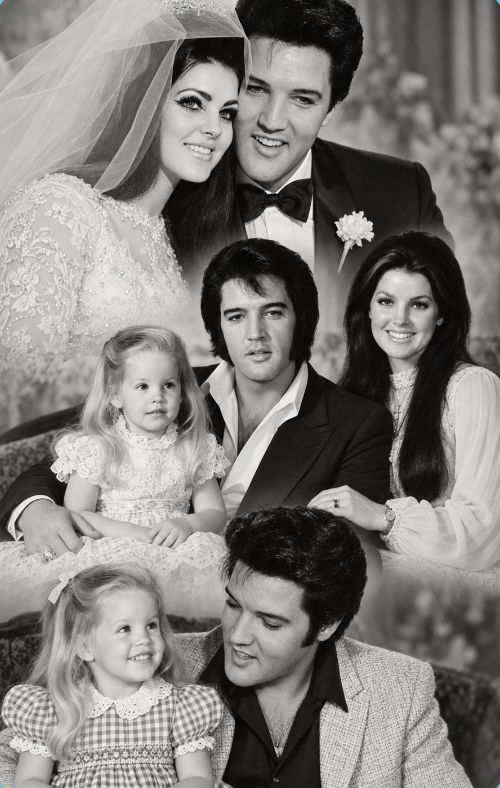
For those who grew up listening to Elvis Presley, January 8 has always carried a particular warmth. It is a day to revisit the records, remember the voice, and consider how a young man from Mississippi changed American music. But in 2023, that familiar anniversary was followed by devastating news. On January 12, just four days after her father’s birthday, Lisa Marie Presley died at 54. The closeness of those dates gave an already painful loss an almost unbearable poignancy. Elvis, born on January 8, 1935, had died at just 42.
For longtime admirers, the instinct to connect their stories was understandable. A father and daughter, both instantly recognizable, both gone far too young: the resemblance seemed to invite a darker explanation. Yet the most revealing part of this story lies in the distance between an emotionally powerful coincidence and what the evidence actually establishes.
Lisa Marie’s cause of death is central to that distinction. The Los Angeles County Medical Examiner determined that she died from a small bowel obstruction caused by scar tissue associated with previous bariatric surgery. Her death was classified as natural. Although reports of her final emergency referred to cardiac arrest, the official findings identified the bowel obstruction as the underlying cause. Describing her death simply as another Presley heart tragedy leaves out the most important medical fact.
Accounts of Elvis’ death, meanwhile, have generated discussion for decades. Initial findings cited a cardiac arrhythmia, and subsequent reporting has examined his heart disease and wider health difficulties. Those circumstances cannot simply be transferred to his daughter because they shared a surname or because both deaths involved sudden, desperate attempts to save a life. Their losses belong to the same family history, but the available findings do not establish an identical medical explanation.

What, then, should readers make of the so-called “Presley genetic curse”? It is a dramatic phrase, but it should not be mistaken for a diagnosis. Inherited heart conditions are real, and specialists investigating unexplained sudden deaths consider family history alongside medical records and, where appropriate, genetic testing. Establishing a shared inherited condition requires evidence of that kind. A sequence of heartbreaking events, however striking, cannot establish one by itself.
For music lovers, there is also something troubling about allowing the circumstances of death to dominate the memory of either artist. Elvis’ recordings remain moving because of what he brought to them: tenderness, conviction, vulnerability, and an extraordinary ability to make a familiar melody feel personally addressed to the listener. Hearing that voice decades later can return us to a kitchen radio, a first record player, or someone we loved who is no longer here.
Lisa Marie Presley deserves the same attentive consideration as a singer and songwriter. Her recordings offer listeners an opportunity to encounter a voice of her own, beyond the photographs and the famous family name. Approaching her music with curiosity gives her a fuller place in the story than any theory about fate ever could.
The four-day interval will always feel haunting to those who loved this family. But its emotional force should lead us toward remembrance, not certainty about an unproven explanation. The enduring connection between Elvis and Lisa Marie is a father and daughter whose lives became part of the public imagination—and whose music still offers a more personal way to remember them.