Introduction
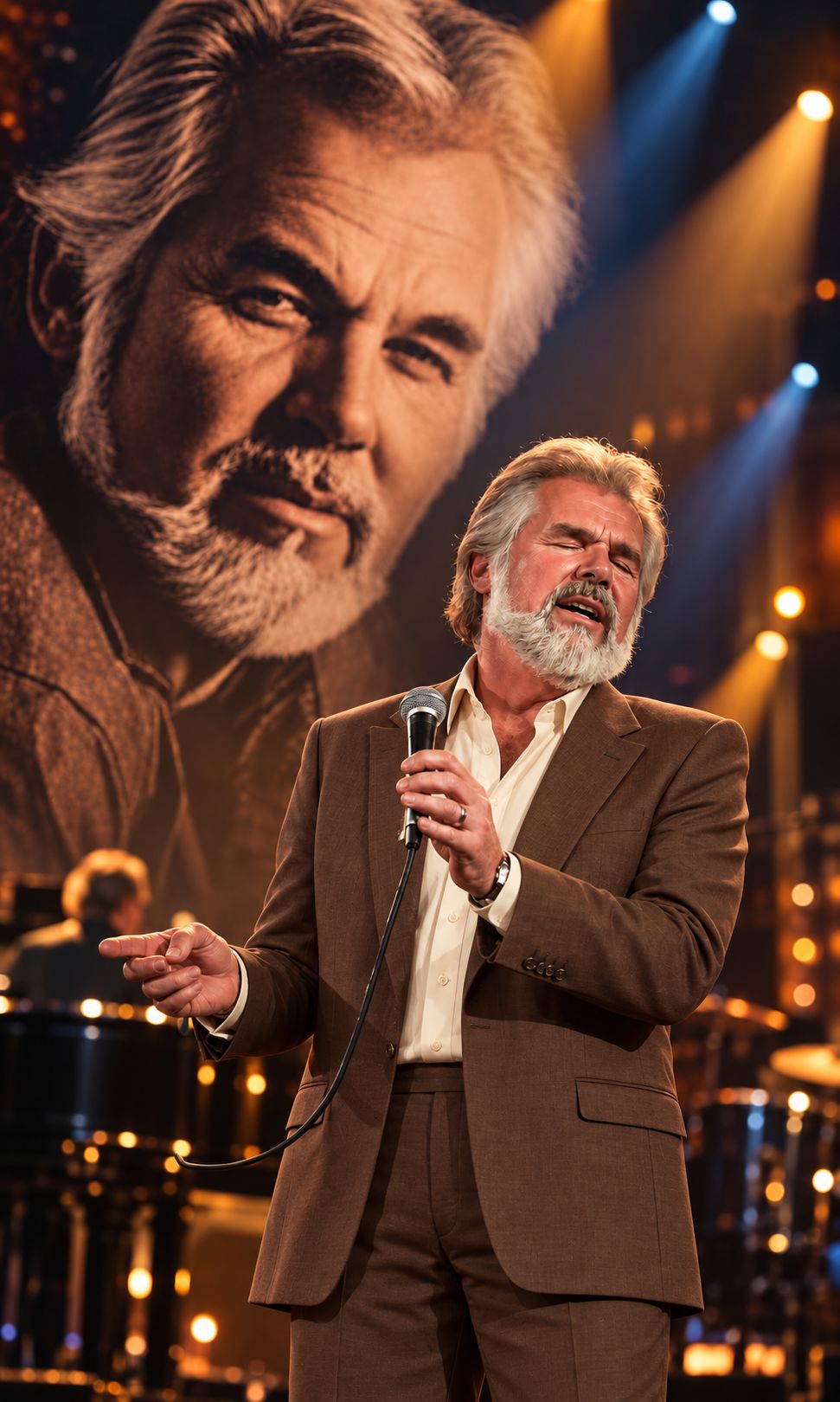
There is something immediately reassuring about Kenny Rogers’ voice. Warm, weathered, and unmistakably human, it could make a polished studio recording feel as personal as a conversation across the kitchen table. In “This Woman,” that familiar quality meets a brighter, more rhythmic musical setting, creating a performance that deserves a place alongside his better-known recordings. For listeners who remember when country and pop regularly shared the same radio dial, the song offers a welcome return to an era when a distinctive voice could move comfortably between musical worlds.
The recording’s history deserves a small correction. “This Woman” appeared on Rogers’ 1983 album Eyes That See in the Dark and became a single associated with his 1984 chart success; it was not the title track of an album called This Woman. Written by Barry Gibb and Albhy Galuten, it emerged from the collaboration that also brought Rogers and Dolly Parton together for “Islands in the Stream.” Its American chart achievements were No. 23 on the Billboard Hot 100 and No. 2 on the Adult Contemporary chart, rather than No. 1 on the country singles chart.
What makes the performance interesting is the meeting of two musical sensibilities. Rogers brings the conversational phrasing of a storyteller, while the arrangement carries the melodic elegance and rhythmic assurance associated with Gibb’s work. The result has movement and lift. Rather than unfolding as a slow, hushed ballad, the song advances with a steady pulse, allowing Rogers to sound both reflective and energized. His slightly rough vocal texture gives the smooth surroundings a welcome sense of character.
Listen closely to the way he handles a phrase. Rogers rarely needs to overwhelm a melody to make an impression. He gives certain words a little extra weight, lets others pass naturally, and maintains the feeling that a person is speaking through the music. That restraint is an essential part of his appeal. Even within an elaborate arrangement, his voice remains the listener’s point of connection. The production provides the scenery; Rogers supplies the human presence.
The song also rewards a more attentive reading than the simple description of a tribute to a woman who stayed. Its emotional atmosphere includes fascination, uncertainty, and the powerful impression one person can make on another. Hearing those shades makes the performance more compelling. Rogers allows confidence and vulnerability to exist together, suggesting a narrator whose feelings are stronger than his ability to explain them neatly.

For older listeners, that emotional complexity may be especially familiar. Experience teaches us that affection does not always arrive with clarity, and that meaningful encounters can leave questions as well as memories. A good singer makes room for those contradictions. Rogers had a remarkable ability to give a melody the weight of lived experience without making every line sound solemn.
Returning to Kenny Rogers — “This Woman” today is therefore more than an exercise in nostalgia. It is an opportunity to appreciate his versatility: the recognizable warmth, the careful phrasing, and the ease with which he inhabits a sophisticated pop arrangement. Beyond the famous duets and signature storytelling songs, this recording reveals another rewarding side of an artist who understood how to hold a listener’s attention—and how to make a song feel personal.