Introduction
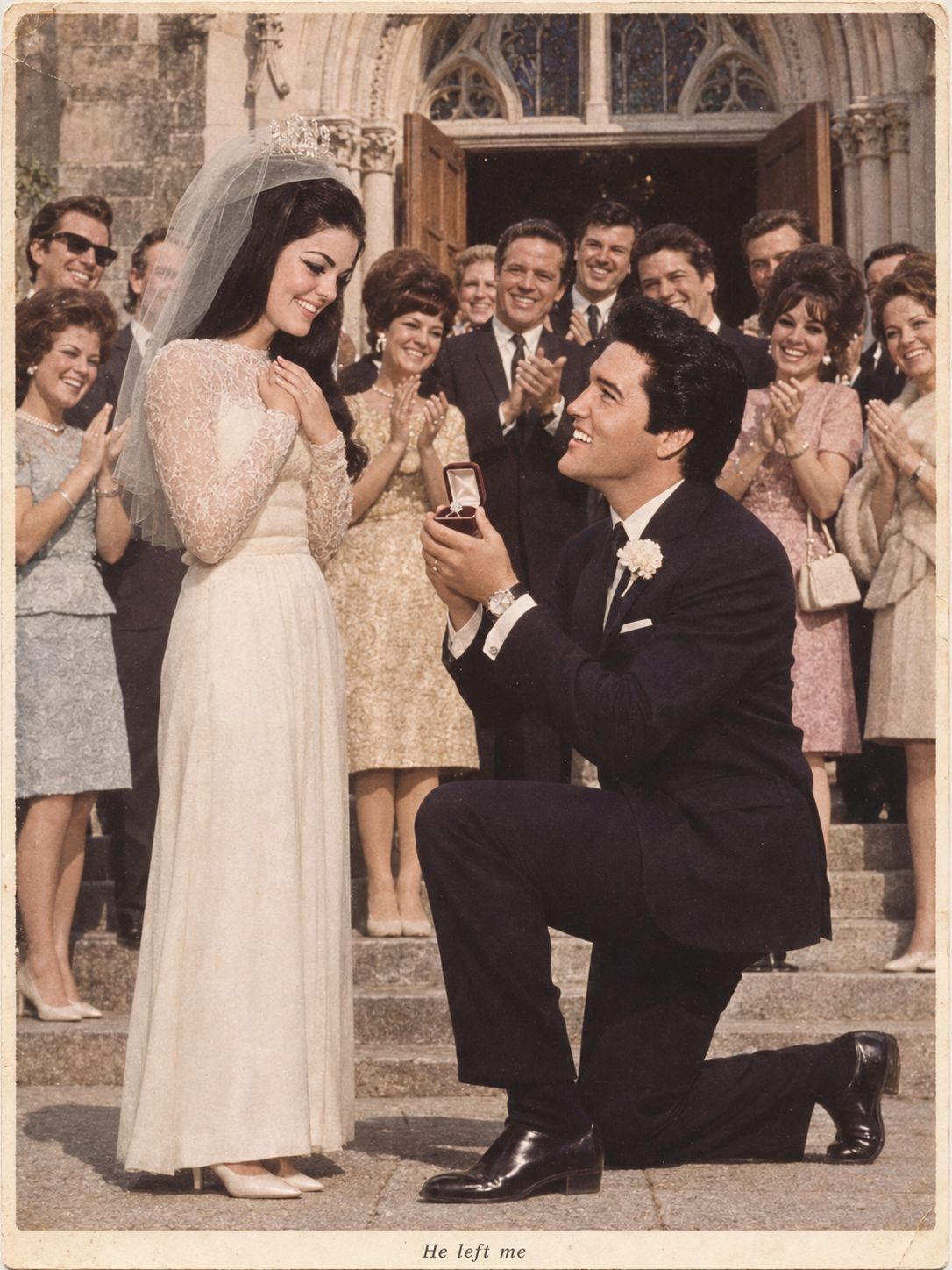
Some songs bring back a particular year. Others bring back the feeling of being young enough to believe that the best moments might last forever. “Young and Beautiful” belongs to that second, more enduring category. In the voice of Elvis Presley, its gentle melody becomes a tender expression of admiration, hope, and the wish to hold someone close through an uncertain future. Paired with photographs of Elvis and Priscilla Presley, the song invites a particularly poignant kind of listening: one shaped by affection, memory, and everything a photograph cannot tell us.
The recording has its own history, separate from the couple’s story. Elvis recorded “Young and Beautiful” on April 30, 1957, for the motion picture Jailhouse Rock. Its origins are in his film career; the connection to Elvis and Priscilla is best understood here as a way of interpreting the music alongside their images, rather than as a shared vocal performance.
What makes the song so affecting is the restraint of Elvis’s delivery. He allows the melody to unfold with an unhurried grace, giving ordinary words the weight of a personal promise. Listen to the way he sustains a phrase and then gently releases it. The emotional effect comes from that balance between assurance and vulnerability. His voice sounds confident enough to offer devotion, yet delicate enough to suggest how much the answer matters.
For listeners who remember the age of record players, handwritten letters, and photographs carefully arranged in family albums, that approach may feel especially familiar. Elvis Presley understood how to make a ballad feel conversational. Even within a polished recording, he could create the impression that a song was being addressed to one person. Here, that intimacy gives the performance its lasting warmth.
When the music accompanies images of Priscilla Presley, another layer of meaning emerges. A smile caught by a camera, two people standing close together, or a quiet glance can seem to echo the tenderness in the melody. Yet those images remain fragments. They cannot reveal every thought or explain an entire relationship. Their emotional power lies partly in that incompleteness: they preserve a moment while leaving the listener aware of all the years beyond its frame.

For an older audience, the title “Young and Beautiful” may also carry a meaning that deepens with experience. Youth passes, appearances change, and life rarely follows the course anyone first imagines. But a familiar voice can return us to the people we once were. The beauty we hear in this recording comes as much from its sincerity as from its youthful optimism.
That is why Elvis & Priscilla Presley — “Young and Beautiful” works so naturally as a nostalgic musical pairing. It offers room to remember without pretending that memory is complete. Elvis’s voice supplies the tenderness; the photographs supply a sense of time passing. Together, they invite us to consider how certain faces, songs, and fleeting moments remain vivid long after their circumstances have changed.
Listen closely, and the most moving quality of this performance is its simplicity. Beneath the famous name is a singer giving careful attention to a graceful melody. For a few quiet minutes, “Young and Beautiful” allows affection to speak in a voice that still feels remarkably near.