Introduction
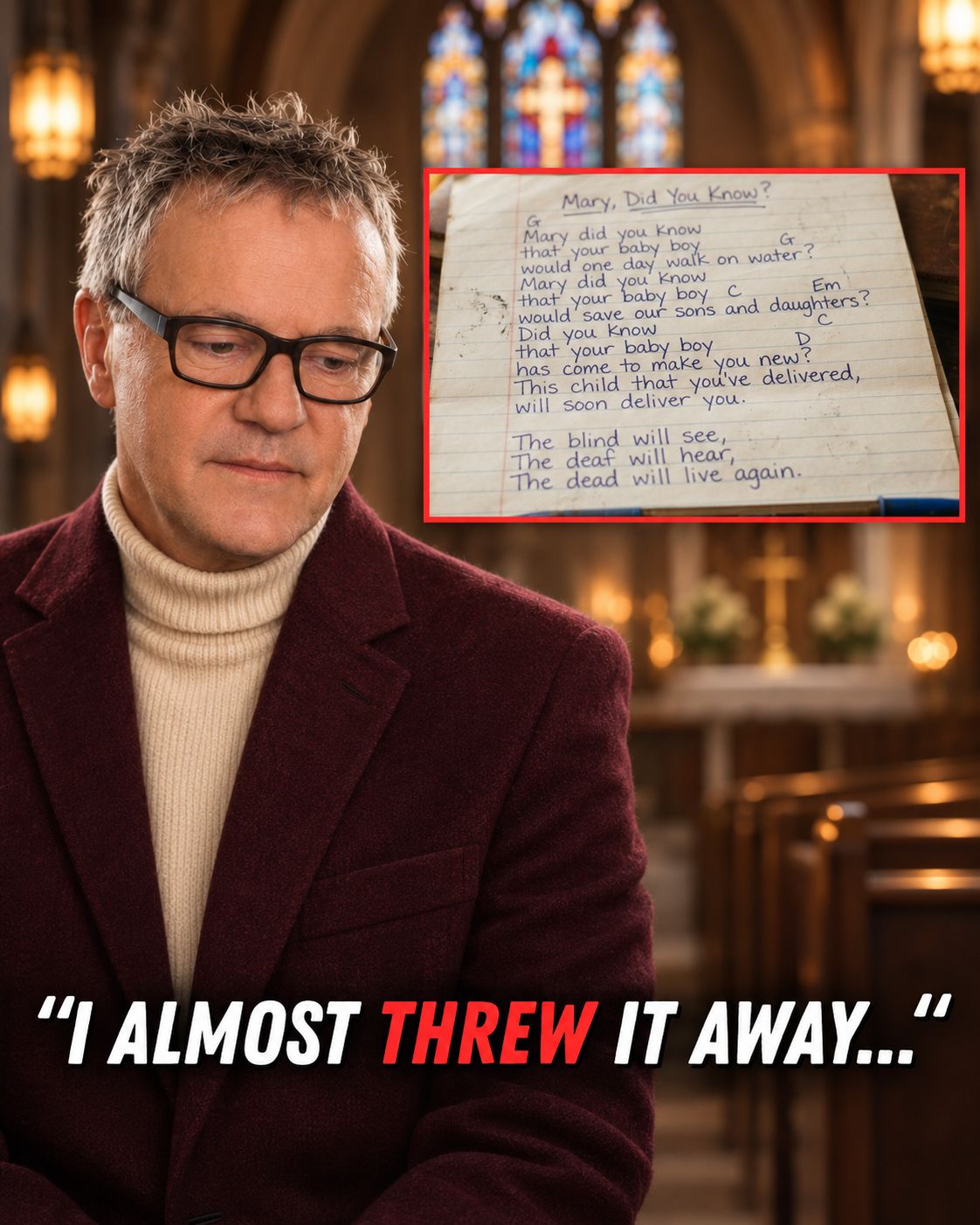
Some Christmas songs announce themselves with bells, bright choruses, and the familiar promise of celebration. “Mary, Did You Know?” takes a quieter path. It invites us to pause beside a mother and her child, then consider the extraordinary future hidden within an apparently ordinary moment. For listeners who have carried the Christmas story through many seasons of life, that invitation can feel surprisingly personal. The story is familiar, yet the song encourages us to approach it with fresh attention.
The beginnings of this beloved piece were modest. Mark Lowry wrote the words in 1984 for a church Christmas production. Several years later, Buddy Greene supplied the melody, and Michael English first recorded the song in 1991. What began as part of a local church presentation eventually reached audiences far beyond that original setting, becoming a Christmas favorite interpreted by many different voices.
Yet its lasting appeal cannot be explained by its history alone. The strength of “Mary, Did You Know?” lies in the way it brings an immense subject within reach of human understanding. Rather than surveying the Nativity from a distance, Lowry places our attention on Mary herself. Through a succession of questions, he invites us to imagine the relationship between what she could see before her and what Christians believe her child would ultimately accomplish.
For older listeners, that perspective may carry a particular emotional weight. With time, we learn how little anyone can foresee when holding a newborn. Parents and grandparents recognize the mixture of hope, responsibility, and uncertainty that accompanies a new life. The song draws upon that recognizable feeling while directing it toward the mystery at the center of the Christian Christmas story. Its questions connect the domestic and the divine without requiring elaborate language.
Buddy Greene’s melody gives those questions room to breathe. Its reflective character suits the lyric’s sense of anticipation, while its rising phrases allow the emotional intensity to gather gradually. A sensitive performance can begin almost conversationally and grow toward a declaration of awe. The musical movement matters because the song asks listeners to travel emotionally: from a quiet scene of motherhood toward an understanding of the child’s significance.
The composition also offers a useful reminder about interpretation. A powerful voice can bring grandeur to it, but volume alone cannot reveal its depth. The most affecting performances give careful attention to phrasing, allowing each question to feel considered. A brief pause, a softened entrance, or a restrained final note can help the listener hear the words anew. This is music that rewards patience from both singer and audience.
Its central question also leaves room for thoughtful reflection. Christian listeners may differ in how they understand Mary’s knowledge of her son’s future. As a musical meditation, however, the song invites contemplation of how knowledge and lived experience might differ. Hearing a promise and watching its meaning unfold are profoundly different experiences, a distinction many listeners will recognize from their own lives.
Ultimately, Mark Lowry and Buddy Greene created a song that makes space for wonder. During a season crowded with activity, “Mary, Did You Know?” asks for a few attentive minutes. Its enduring gift is the opportunity to return to a familiar story with greater tenderness—and to discover that, even after many Christmases, there is still something within it worth contemplating.