Introduction
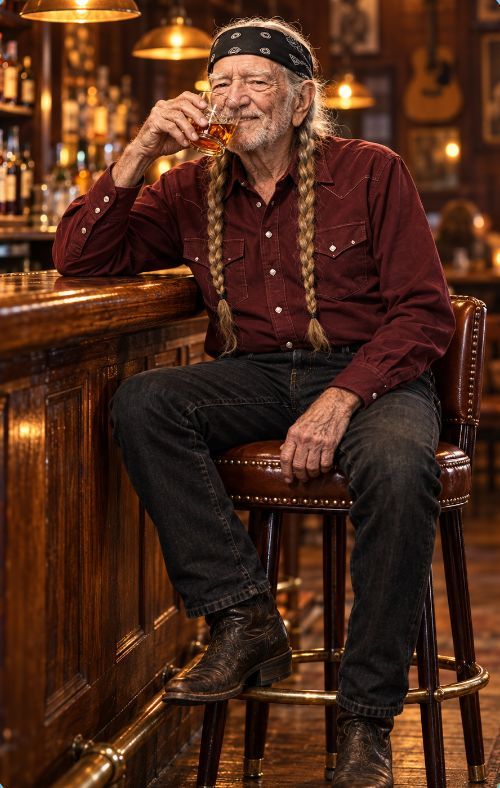
There are voices we recognize before a song has properly begun. A few unhurried notes, a phrase that seems to arrive just behind the beat, and suddenly we know exactly who is singing. Willie Nelson has that rare gift. His voice does more than carry a melody; it creates the feeling that someone familiar has pulled up a chair and decided to tell us the truth.
At 93 years old, Nelson remains a remarkable presence in American music. Yet the most meaningful way to celebrate him is to listen carefully to what he has given us, without turning speculation about his health into the center of his story. His official website continues to list future performances, including appearances at Stagecoach in 2027—a reminder that his musical journey still has chapters ahead.
For longtime listeners, his appeal has never depended on a flawless voice. What matters is the understanding inside it. Nelson can make a familiar line sound like a thought occurring for the first time. He allows a pause to linger. He places a word slightly outside the expected rhythm. Where another singer might emphasize a feeling, he often leaves room for the listener to discover it.
That is why “On the Road Again” can feel larger than its cheerful momentum. Beneath the easy movement is something many older listeners understand: the pleasure of having a purpose, familiar companions, and somewhere still to go. The road becomes a place of belonging. Music becomes the work that keeps people connected.
Then there is “Always on My Mind,” a performance whose emotional strength lies in its restraint. Nelson sounds like a man considering the distance between what he felt and what he managed to express. For anyone who has looked back on a conversation left unfinished, that distinction carries considerable weight. His singing makes room for regret without allowing it to overwhelm the song.
The same quality gives “Blue Eyes Crying in the Rain” its lasting tenderness. His delivery invites close attention rather than demanding it. The listener follows the melody almost instinctively, discovering how much feeling can live inside a spare musical setting.
But Nelson’s legacy also reaches beyond the recordings. In 1985, he joined Neil Young and John Mellencamp in organizing the first Farm Aid concert to raise awareness of the loss of family farms and help farming families remain on their land. The organization has since raised more than $90 million to support its mission. That is a substantial, documented expression of the generosity people associate with him.
There is a natural connection between that commitment and his music. Both ask us to pay attention to ordinary lives: people working through uncertainty, protecting what they love, and hoping their efforts will leave something worthwhile behind. His songs offer companionship; his advocacy gives that concern a practical form.
Perhaps this is why Willie Nelson’s enduring legacy feels so personal. Listeners have carried his recordings through long drives, quiet evenings, difficult separations, and family gatherings. Over time, those songs become attached to our own memories. We hear him, and we remember who we were when we first listened.
He deserves our appreciation now, expressed with the same honesty that makes his finest performances matter. Play the song you have always loved. Share it with someone younger. Tell the story of where you first heard it.
And if you leave Willie Nelson a few kind words, let them begin with something simple: Thank you for the music—and for giving it a purpose beyond the stage.