Introduction
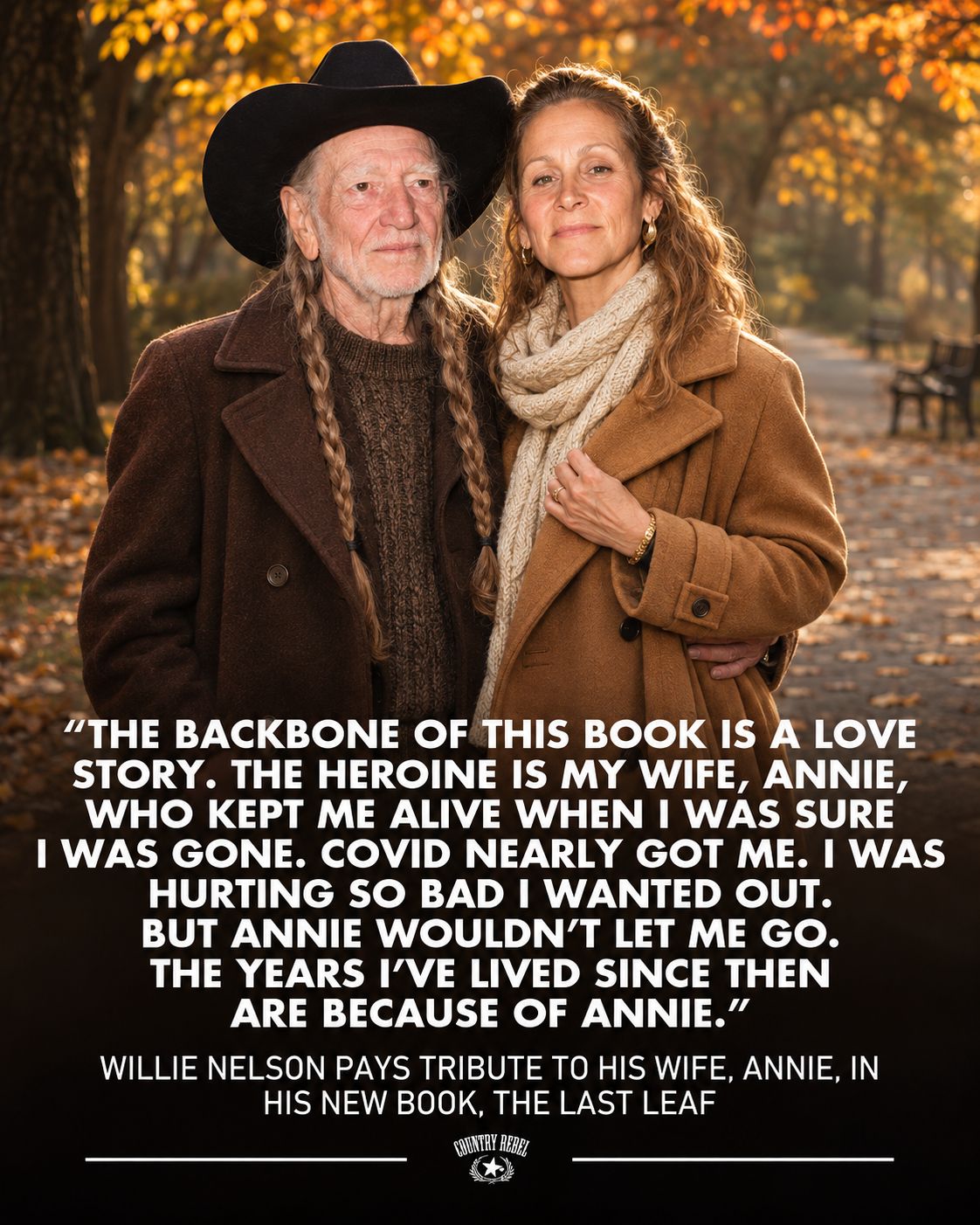
For generations, Willie Nelson has given listeners songs that seem to understand them before they understand themselves. His voice carries the wear of passing years, yet it retains that familiar warmth—the feeling that an old friend has pulled up a chair and decided to tell the truth. At 93 years old, his continuing creative life is remarkable. But in his new book, The Last Leaf, one of the most meaningful stories concerns the woman who has shared so much of that journey: his wife, Annie. The book brings together his reflections on creativity, aging, and their enduring partnership.
Longtime admirers know Willie as an independent spirit, a musician whose phrasing follows its own unhurried path. He can linger behind the beat, leave a little space around a word, and make a familiar melody feel newly discovered. That musical freedom has always been part of his appeal. Reading about the importance of companionship in his life adds another dimension to the man listeners have come to know through his records.
Annie Nelson occupies a deeply personal place in that story. Married since 1991, the couple have built a life together across decades of change. In a recent PEOPLE interview about the book, Willie credited her with helping him survive his severe 2022 battle with COVID-19. His acknowledgment was direct and deeply moving: “She saved my life.”
Those few words deserve room to settle. For readers who have cared for a spouse, waited through an illness, or discovered how much strength another person can lend, their meaning will feel familiar. Gratitude often becomes more precise with age. The grand gestures matter, certainly, but so do the daily acts of attention: noticing when something is wrong, remaining patient through difficult hours, and finding the resolve to keep helping.
That is what makes this chapter of Willie’s story so affecting. Audiences see the performer beneath the lights. A lasting partnership includes the hours beyond the applause, when ordinary needs and difficult decisions take precedence. His tribute invites us to consider how much of a public life depends upon private care.
The publisher describes The Last Leaf as an exploration of both his continued artistic energy and a relationship that has grown deeper over time. It presents Annie as a spirited companion whose character meets his own, giving the book warmth and humor alongside its reflections on mortality. That balance feels fitting for Willie: seriousness delivered without losing the ability to smile.
For older listeners, there is particular resonance here. Many have grown alongside his music, carrying it through marriages, family gatherings, departures, and homecomings. His songs have become part of their personal histories. Now, his words about Annie offer another reason to listen closely—not for a dramatic revelation, but for the recognizable voice of a man acknowledging what another person has meant to his life.
Willie Nelson’s tribute to Annie gives his remarkable longevity a human face. Beyond the recordings and the applause stands a husband expressing profound thanks. After so many years of finding the right words for a song, he has found a few that carry extraordinary weight: a simple acknowledgment of the woman beside him, and of the life they continue to share.