Introduction

In 2026, asking whether people still love Elvis Presley almost feels unnecessary. Some artists belong to a season, a decade, or a passing trend. Elvis belongs to memory itself. His music does not simply return when an old record is played; it rises again, as vivid as ever, carrying with it the feeling of a world that once gathered around radios, television screens, jukeboxes, and living rooms to hear a voice unlike anything that had come before.
Nearly fifty years after his passing in 1977, Elvis Presley remains more than a famous name. He remains an emotional landmark. His impact was never tied to a specific year or moment in history. It stretched beyond the 1950s, beyond the 1960s, beyond the lights of Las Vegas, and beyond the walls of Graceland. What he gave to music was not only style or fame, but feeling — that rare ability to make a song sound as though it had been pulled directly from the heart.
For older listeners, Elvis is not merely part of entertainment history. He is part of personal history. His voice may recall a first dance, a family gathering, a Saturday night television broadcast, or a quiet moment when a song said what words could not. It lives in the soft crackle of old vinyl records, in photographs tucked away in albums, and in memories that still feel close whenever the first notes begin.
Yet the remarkable thing is that Elvis has not remained frozen in the past. Through streaming platforms and restored footage, millions are still discovering him. Younger listeners who never saw him perform are finding the same fire, tenderness, and sincerity that once shook the world. They hear a voice filled with confidence, but also with vulnerability. They see an artist who could command a stage, then turn a simple lyric into something deeply human.
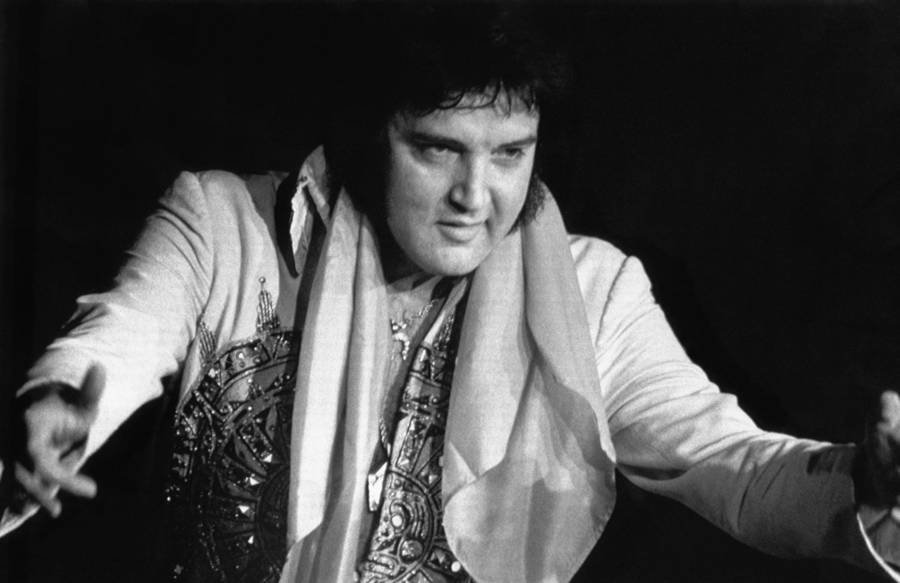
To love Elvis in 2026 is not simply an act of nostalgia. It is an acknowledgment of lasting artistry. Trends fade, technology changes, and public taste moves quickly, but genuine emotion survives. Elvis endured because he sang with conviction. Whether he was delivering a gospel standard, a rock and roll anthem, a country-flavored ballad, or a tender love song, he gave himself fully to the moment.
He was a young man from Tupelo who reshaped global culture, yet the heart of his appeal was always personal. Beneath the title of “King” was a performer who understood longing, faith, loneliness, joy, and devotion. That is why his music still feels alive. It does not sound like a museum piece. It sounds like someone reaching across time.
Time has not weakened the connection. It has deepened it. In 2026, Elvis Presley is still loved because his voice continues to remind people of something honest and lasting. He was not just heard. He was felt. And that is why, generation after generation, the world keeps listening.