Introduction
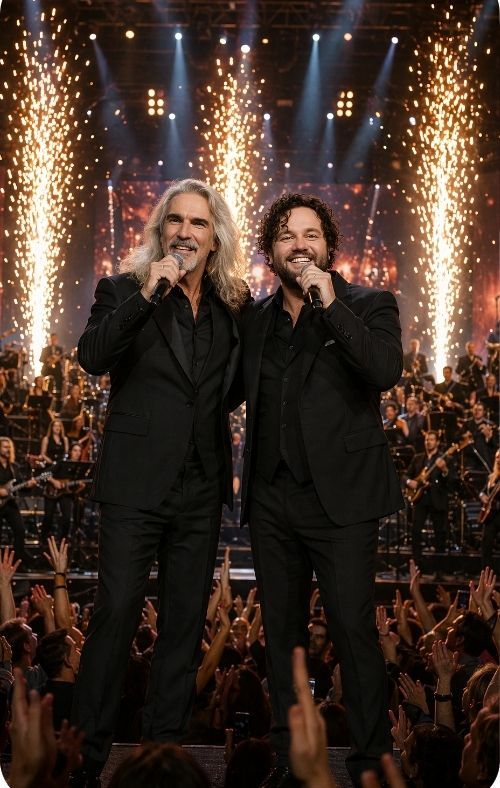
In the world of gospel music, audiences often remember the voices first. They remember the force, the range, the emotional power, and the moments when a song seems to lift beyond performance and become something almost sacred. That is certainly true of Guy Penrod and David Phelps, two of the most admired voices associated with modern gospel’s most beloved traditions. Yet the deeper story surrounding these men is not found only in recordings, concert halls, or standing ovations. It is found in the lives they built away from the spotlight. That is what makes this reflection so moving. It asks us to look beyond fame and recognize something far more lasting: the quiet, steady inheritance of faith, family, and example.
What makes Guy Penrod and David Phelps so meaningful to older listeners is not only that they sang with excellence, but that they seemed to represent something larger than career success. Their music was never merely technical. It carried conviction. It carried reverence. It carried the sense that gospel, at its best, is not about performance alone, but about a life aligned with the message being sung. That is why this reflection lands with such force. It reminds us that the true measure of a spiritual legacy is not how loudly the world applauds, but how deeply one’s values take root in the next generation.

In the case of Guy Penrod, the portrait is especially powerful because it centers on a large family shaped not by celebrity culture, but by humility, discipline, and quiet devotion. There is something deeply reassuring in that image. In an age that often celebrates visibility above substance, Guy Penrod’s story points in another direction. It suggests that a meaningful life is built in daily faithfulness, in the home, in the habits of work, prayer, responsibility, and love. His legacy, then, is not simply that he sang with strength and soul, but that he modeled a way of living that could be passed on to his children. That kind of inheritance is not flashy, but it endures.
By contrast, David Phelps represents a different but equally compelling expression of legacy. His musical gifts have always seemed extraordinary, marked by intelligence, emotional depth, and striking vocal command. But what gives his story added weight is the way his family has become part of the ministry itself. Here, the legacy is visible not only in values, but in shared creative purpose. His children are not standing at a distance from the music; they are participating in it, helping extend what he built into something collective and living. That image carries its own beauty. It shows that faith can be expressed not only in private steadiness, but also in shared service, artistry, and visible commitment.
What unites these two stories is the truth at the heart of this reflection: real ministry is not only what happens on stage, but what is lived out in everyday life. That sentence deserves attention because it speaks to something many older readers understand deeply. Public success can impress, but private faithfulness is what defines a life. A great singer may move thousands for an evening, but a faithful father, a grounded home, and children shaped by conviction can influence generations. That is a different kind of greatness—less theatrical, perhaps, but far more profound.
This is why the reflection resonates beyond gospel music itself. It is not only about two admired artists. It is about what remains when the spotlight fades. It is about the kind of success that cannot be measured by charts, headlines, or public recognition. The lives of Guy Penrod and David Phelps suggest that the most meaningful achievements are often the ones built quietly over time: children raised with character, homes anchored by belief, and examples that continue speaking long after the singer leaves the stage. That is not a lesser legacy than fame. In many ways, it is the higher one.

In the end, the lasting power of this story comes from its moral clarity. The text reflects on Guy Penrod and David Phelps not simply as celebrated gospel singers, but as fathers whose deepest legacy lives through their children. That idea transforms them from admired performers into something even more valuable: witnesses to a life of purpose. It argues that their true impact was never limited to applause or stage success, but was built through faith, family, and the values they passed on at home. One family may embody quiet ministry, another visible musical service, but both testify to the same enduring truth. Although the two families follow different paths, both reveal the same message: real ministry is not only what happens on stage, but what is lived out in everyday life. And that may be the most beautiful note of all—one that continues long after the music ends.