Introduction
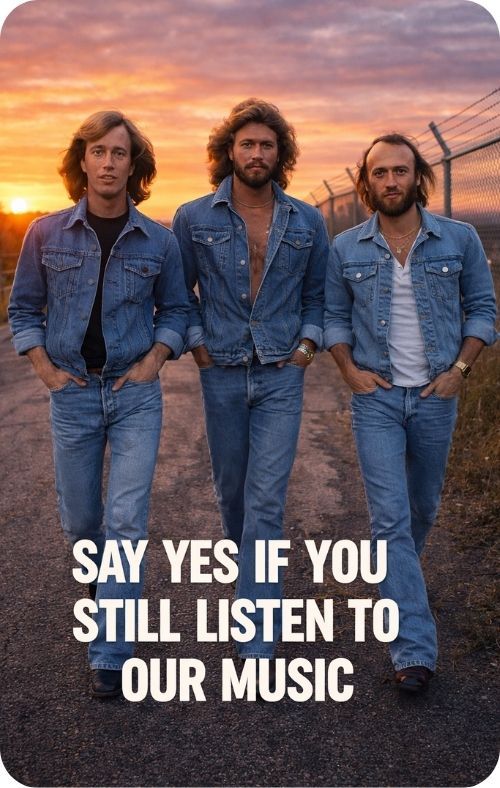
Some songs do not simply entertain us. They find us at strange and quiet moments in life—when we are reflecting on the past, trying to understand old regrets, or recognizing how easily misunderstanding can shape a person’s story. Bee Gees – I Started A Joke is one of those rare songs. It has never depended on noise, glamour, or grand production to hold the listener. Instead, it rests on something far more lasting: sorrow, vulnerability, and the haunting realization that a person can become trapped inside consequences they never fully intended.
For older listeners, this song carries a particular kind of weight. It belongs to an era when pop music could still sound intimate, philosophical, and emotionally exposed without feeling self-conscious. The Bee Gees were capable of writing great melodies, of course, but what made them special was their ability to bring tenderness and thoughtfulness into songs that might otherwise have been dismissed as simple melancholy. In Bee Gees – I Started A Joke, they created something that feels almost confessional. It sounds like a man looking back at the moment life changed—and realizing, too late, that he never fully understood what he had set in motion.
That is the power of this song: it works on more than one level. On the surface, it is deeply sad, built around irony and regret. But underneath, it speaks to something universal. Most people, especially those who have lived long enough to carry memory seriously, understand what it means to be misunderstood—or to misunderstand oneself. We know what it is like to say something lightly and later realize it landed heavily. We know what it is like to become, for a time, the outsider in a room that once felt familiar. This song captures that ache with extraordinary gentleness.
Robin Gibb’s lead vocal is central to why the performance endures. His voice does not simply deliver the lyric; it seems to float inside it, fragile and otherworldly, as though the song is arriving from a place beyond ordinary conversation. There is pain in the performance, but it is never forced. He does not plead with the listener. He does not dramatize the sadness. He allows the emotion to unfold in a way that feels almost unbearably honest. That restraint is what gives the song its dignity. In many ways, Bee Gees – I Started A Joke is a lesson in how to sing sorrow without reducing it to sentimentality.
Another reason the song remains so compelling is that it never fully explains itself. It leaves room for interpretation, and that is part of its magic. Some hear it as a lament about isolation. Others hear guilt, spiritual searching, or even the collapse of innocence. The Bee Gees were especially gifted at creating songs that invited listeners to bring their own lives into the music. That openness is why the song continues to resonate across generations. A younger listener may hear sadness. An older listener may hear recognition.
And perhaps that is why the song still lingers so powerfully today. It reminds us that emotional truth is often quiet. Regret does not always come with dramatic language. Sometimes it comes in reflection, in silence, in a melody that seems to drift through memory long after the record has stopped spinning. Bee Gees – I Started A Joke has exactly that quality. It feels less like a performance than a private reckoning set to music.
In the end, this is not merely a song about sadness. It is a song about human frailty—about unintended damage, loneliness, and the strange distance between what we mean and what the world hears. The Bee Gees turned those ideas into something hauntingly beautiful. For listeners who value songs with emotional intelligence, poetic ambiguity, and a voice that can carry heartbreak without ever raising itself too high, Bee Gees – I Started A Joke remains not just memorable, but unforgettable. It is one of those songs that does not age. It deepens.