Introduction

There are songs that confirm what the public already believes about an artist, and then there are songs that blow that image apart in less than three minutes. The Osmonds – Crazy Horses belongs firmly in the second category. Released in October 1972 as the title track from the group’s Crazy Horses album, the single marked one of the most surprising turns in 1970s pop: a family act many listeners associated with polished harmonies and teen-idol appeal suddenly charging into a harder, louder, more aggressive sound. The song reached No. 14 on the Billboard Hot 100 and climbed as high as No. 2 on the UK Singles Chart, proving this was not just an experiment—it was a statement.
What makes The Osmonds – Crazy Horses so memorable, even now, is the force of its opening impact. It does not arrive politely. It bursts forward with grit, urgency, and a kind of controlled chaos that still catches first-time listeners off guard. For older music lovers especially, that shock is part of the pleasure. We think we know where a group belongs in the history of popular music, and then a record like this reminds us that artists are often far more adventurous than their reputation suggests. In the Osmonds’ case, “Crazy Horses” became the moment when they pushed beyond the limits of being seen merely as clean-cut pop stars and showed they could carry real rock energy. Contemporary accounts and later commentary note that the track helped expand their audience beyond screaming teen fans and toward more rock-oriented listeners as well.
But the song’s power is not only musical. One reason it has lasted is that beneath the pounding sound lies a serious idea. Jay Osmond later explained that the “crazy horses” in the lyric were a metaphor for gas-guzzling cars and environmental destruction—the image of machines “smoking up the sky” rather than an actual tale about horses at all. That ecological angle gave the song a deeper edge, even if some authorities at the time misunderstood it; reports from later retrospectives note that the single was even banned in some places because officials wrongly interpreted the lyrics as drug references. That misunderstanding only adds to the legend now. It shows how unusual the song was for its moment: too loud, too strange, too pointed to fit neatly inside the expectations people had for the band.
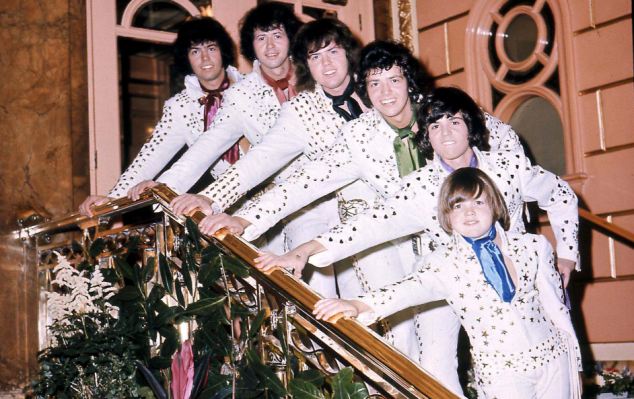
There is also something admirable about the family’s artistic courage here. The song was written by Alan, Merrill, and Wayne Osmond, and it reflected the group’s desire to make more of their own music rather than simply record material chosen for them. Merrill later recalled that the song came together quickly in rehearsal, driven by Wayne’s heavy riff and a shared instinct to make something bolder than what audiences expected. Jay took the lead vocal on the track—the group’s only hit single to feature him in that role—which gives the performance an extra sense of identity and toughness.
For readers who grew up in the era when radio could still surprise you, The Osmonds – Crazy Horses remains a thrilling reminder that pop history is full of sudden left turns. It is a record that sounds rebellious without losing musical discipline, theatrical without becoming silly, and forceful without forgetting melody. More than fifty years later, its reputation endures because it captured a rare thing: the sound of a famous group refusing to stay in the box the world built for them. That is why “Crazy Horses” still feels exciting. It is not merely a hit from 1972. It is the sound of reinvention, risk, and a band proving that sometimes the safest-looking artists can make the most unexpected noise of all.