Introduction
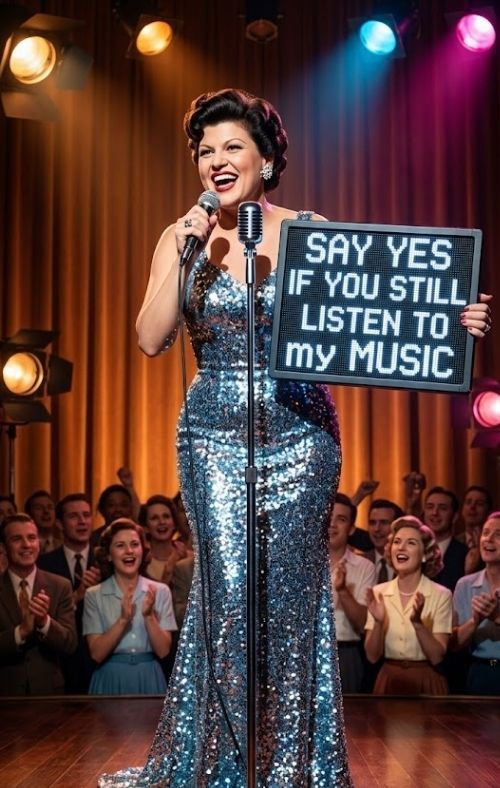
Some songs do not merely survive the passage of time—they deepen with it. Patsy Cline – Crazy is one of those rare recordings. Decades after it first entered the American songbook, it still feels intimate, wounded, elegant, and astonishingly alive. For older listeners especially, this is not simply a classic country performance. It is a memory piece, a late-night confession, and a reminder of an era when great singers did not have to overstate emotion to make it unforgettable. Patsy Cline understood that true heartbreak did not need to be dramatized. It only needed to be sung honestly.
What makes Patsy Cline – Crazy so enduring is the remarkable balance at its center. On one hand, the song is deeply fragile. It speaks from a place of confusion, longing, and emotional vulnerability. On the other hand, it is delivered with extraordinary control. Patsy Cline never sounds desperate in the ordinary sense. She sounds dignified, even while standing in the ruins of disappointment. That contrast is what gives the song its lasting power. It is not simply about pain. It is about pain carried with grace.
For many listeners who grew up with country and pop standards of the 1950s and 1960s, this song represents something larger than its own lyrics. It belongs to a musical generation that valued phrasing, restraint, and interpretive intelligence. Patsy Cline did not just sing notes; she inhabited every line with purpose. Her voice in this recording has that rare velvet quality—smooth, rich, and emotionally intelligent. She bends certain phrases just enough to let the listener feel the ache without ever forcing it. That level of subtlety is one of the reasons the song still resonates so strongly with mature audiences. It respects the listener. It assumes that the heart understands more than language alone can explain.
There is also something quietly extraordinary about the emotional perspective of the song. “Crazy” is not a performance of anger or theatrical betrayal. It is inward-looking. It lives in the private chamber of the mind where someone replays a love they cannot let go of, even while knowing better. That is part of what makes it feel so universal. Almost everyone, at some point in life, has experienced that strange contradiction—knowing a feeling is unreasonable, yet feeling it all the same. Patsy Cline captures that human contradiction with remarkable tenderness. She does not mock the weakness in the lyric. She dignifies it.
Another reason Patsy Cline – Crazy remains so beloved is that it occupies a unique place between country and traditional pop. It carries the soul of country music, but it is dressed with the polish and sophistication of a great American standard. That crossover elegance helped make Patsy Cline more than just a star of her genre. She became a voice that could reach listeners across generations, backgrounds, and musical preferences. Even today, “Crazy” can speak to a lifelong country fan just as easily as it can move someone who normally prefers classic pop ballads. That kind of reach is rare, and it usually happens only when a performance touches something fundamental in the human spirit.
For older, thoughtful listeners, the song often grows more meaningful with age. In youth, it may sound like romantic sadness. Later in life, it sounds like wisdom wrapped inside regret. The listener begins to hear not only the sorrow in the words, but the acceptance beneath them. Patsy Cline seems to understand that heartbreak is part of life’s design. She does not fight that truth. She sings through it. That may be why the song continues to feel comforting even in its sadness. It tells the truth about love without bitterness.
In the end, Patsy Cline – Crazy endures because it offers something modern music too often forgets: emotional elegance. It is vulnerable without becoming messy, powerful without becoming loud, and devastating without losing its composure. Patsy Cline turned a simple song of longing into a permanent piece of American feeling. And for those who still value music that speaks softly yet leaves a lasting mark, “Crazy” remains exactly what all great classics should be—timeless, truthful, and impossible to forget.