Introduction
Behind Donny & Marie’s Famous Smiles: The Pressure America Didn’t Always See
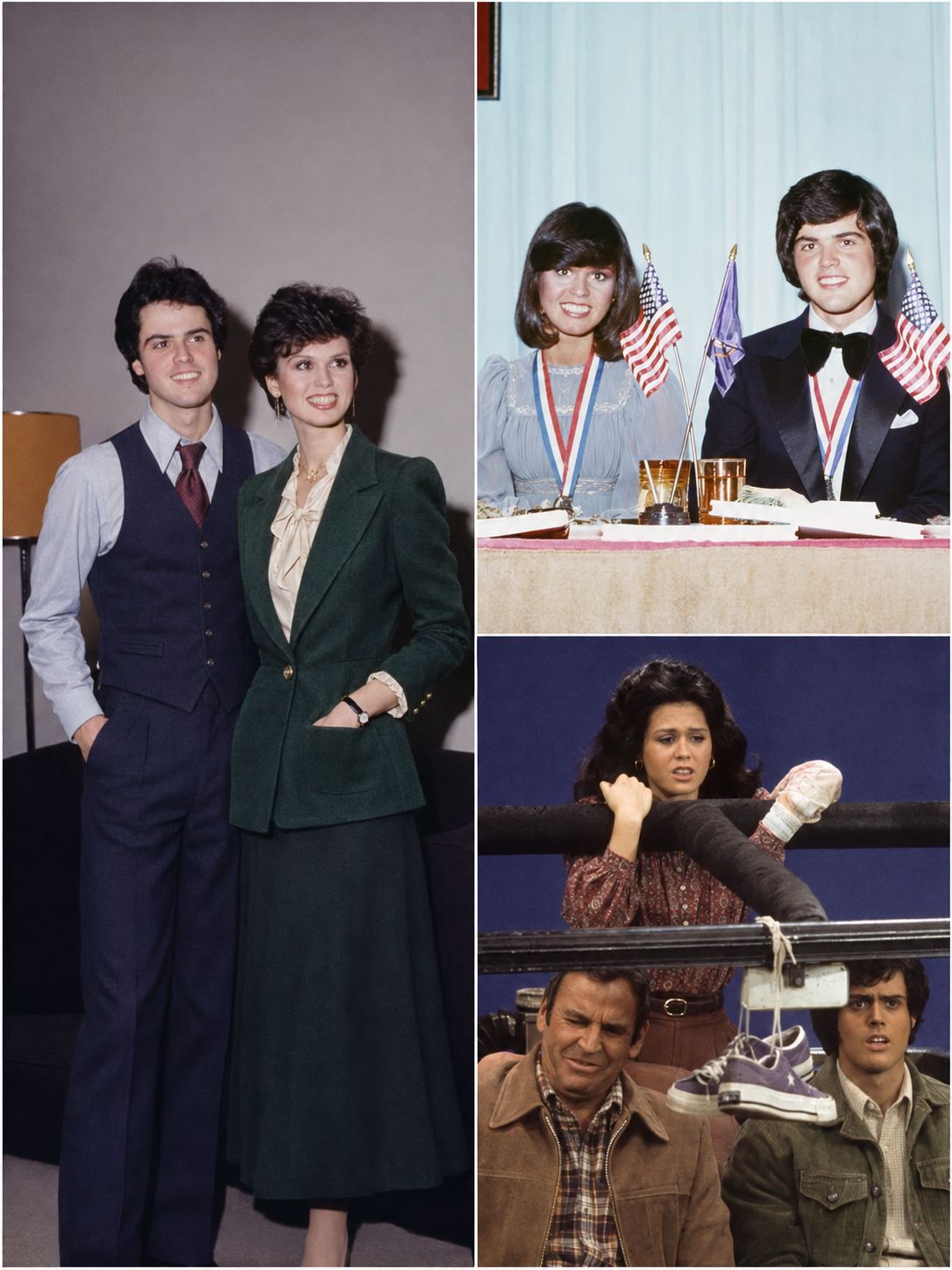
For many Americans, Donny & Marie Osmond bring back memories of a television glowing in the living room, familiar melodies, and an evening the whole family could enjoy together. Their playful exchanges and polished performances offered a special kind of comfort. Donny had an easy charm; Marie brought warmth, wit, and a voice that could give a simple melody emotional depth. Together, they made entertainment feel welcoming—and, at times, almost effortless.
Yet effortless performances can require extraordinary effort. Behind the costumes, rehearsed jokes, and bright studio lights were two young people learning to grow up while millions watched. Their story invites us to look beyond the familiar smiles and consider the demands of becoming a household name before adulthood has properly begun.
When Donny & Marie arrived on ABC in 1976, Donny was eighteen and Marie was sixteen. The series continued until 1979, combining music, comedy, and guest appearances in the tradition of the television variety show. For viewers, it became a cheerful weekly appointment. For its young hosts, it meant carrying major professional responsibilities at an age when most people were still discovering who they wanted to become.
From a musical perspective, their appeal rested on more than youthful popularity. Their contrasting personalities gave their performances movement and character. Donny’s bright delivery and Marie’s expressive phrasing created a partnership in which a glance, a pause, or a teasing exchange could matter almost as much as the notes. They understood how to bring an audience into a performance, making a large television production feel surprisingly personal.
That closeness also helps explain why their story remains compelling. Audiences often develop lasting affection for performers they first encounter in childhood or early adulthood. We remember where we were, who sat beside us, and what life felt like when those voices became familiar. Over time, the entertainers become part of our own family memories.
But affection from an audience cannot remove professional uncertainty. Reflecting on the beginnings of the show, Donny Osmond has described worrying that weekly television exposure might hurt his recording career. That concern reveals something the finished performances could easily conceal: a young singer could enjoy enormous visibility while still wondering what it would mean for his future.
Marie Osmond, meanwhile, has publicly recalled painful criticism about her appearance from a producer during the television years. Her account adds a sobering dimension to those sparkling images, reminding us how harsh the expectations placed on a young performer could be. The audience saw confidence on screen without necessarily knowing what had been said behind the scenes.
For older listeners, these experiences may deepen an already familiar affection. With time, we come to understand that a cheerful presence does not tell us everything about a person’s life. We recognize the work involved in meeting obligations, weathering criticism, and finding the confidence to continue.
That is what makes Donny & Marie’s enduring appeal worth revisiting. Their music and humor remain a pleasure, while their experiences give those memories greater depth. Behind the famous smiles were young artists facing demanding circumstances—and learning, in public, how to keep moving forward.